Can an overbite cause headaches? It can play a part. A bite that does not fit together properly, which dentists call malocclusion, can make the jaw muscles and jaw joints work harder than they should, and for some people that strain shows up as tension in the temples, the face or the head. A bad bite is far from the only cause of headaches, and plenty of people with an overbite never get them. But if your headaches come with jaw soreness, clenching or worn teeth, your bite is worth having checked.
This article explains what malocclusion is, how a misaligned bite may be linked to headaches, the signs that point toward your teeth and jaw, and how bite problems and jaw pain are evaluated at the Timonium office of Dr. Steven W. Haywood, DDS. It is general information, not a diagnosis. Frequent or severe headaches should always be discussed with your physician as well.
What is malocclusion?
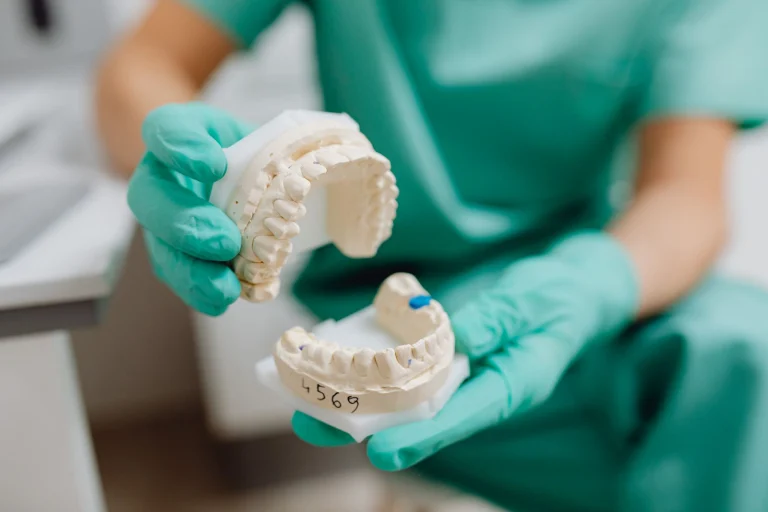
When you close your mouth, your upper and lower teeth are meant to meet in a stable, even way. The upper front teeth sit slightly in front of the lower front teeth, and the back teeth fit together so the force of chewing is shared across the whole mouth. Malocclusion simply means the teeth and jaws do not meet that way. It is common, it ranges from barely noticeable to obvious, and it can come from the size and position of the jaws, crowded or spaced teeth, missing teeth, older dental work or long-standing habits.
Common types of bite problems
- Overbite or deep bite. The upper front teeth overlap the lower front teeth too far. In a deep bite, the lower front teeth can be almost hidden when you close.
- Overjet. The upper front teeth stick out ahead of the lower teeth. Many people call this an overbite too.
- Underbite. The lower teeth sit in front of the upper front teeth when you bite down.
- Crossbite. Some upper teeth sit inside the lower teeth, at the front or the back, which can nudge the jaw to one side as you close.
- Open bite. The front or side teeth do not touch when the back teeth are together.
- Crowding and spacing. Overlapping teeth or gaps change how the rest of the teeth fit together.
How a misaligned bite may be linked to headaches
The connection runs through the temporomandibular joints, the two jaw joints just in front of your ears, and the muscles that open and close your mouth. One of those chewing muscles, the temporalis, fans out across the side of the head at the temple, which is exactly where many people feel a tension headache.
Every time you swallow, chew or clench, your teeth guide where your jaw ends up. If the upper teeth and lower teeth do not meet evenly, the muscles may have to work to steer the jaw into a position where they do, and the jaw joint may be loaded unevenly. Over time, some people develop tired, tender jaw muscles, and that muscle tension in the jaw and temples can feel like a headache. This is one reason a misaligned bite is so often discussed alongside TMJ problems.
Teeth grinding and clenching add to the strain
Teeth grinding and clenching, often at night or under stress, push extra force through the same muscles and joints. The practice’s TMJ page describes grinding and clenching as placing excessive force on the teeth, wearing enamel away and introducing small cracks. A poor bite is not the only reason people grind, but the two often turn up together, and people who wake with a sore jaw or a morning headache sometimes find grinding is part of the picture.
What the link does not mean
A bad bite does not cause every headache, and correcting a bite is not a guaranteed cure for chronic headaches. Headaches have many possible causes, including stress, sleep, posture, eyesight, medications and medical conditions that need a physician’s care. The fair way to put it is that a misaligned bite and jaw strain may be one contributor for some people, and a dental evaluation can help show whether that applies to you.
Signs your headaches may be connected to your bite or jaw
None of these proves the cause on its own, but a pattern of several is worth raising with a dentist:
- Headaches or facial aching that are worse when you wake up
- Tenderness in the jaw muscles or at the temples
- Clicking, popping or stiffness when you open wide
- A jaw that feels tired after chewing or a long conversation
- Front teeth that look flattened, chipped or worn, or fillings that keep breaking
- A bite that feels “off,” or teeth that do not seem to fit together the same way each time
- Someone has told you that you grind your teeth in your sleep
The practice’s page on TMJ and TMD treatment lists tenderness in the jaw, chronic facial pain, frequent head or neck aches and dento-facial migraine headaches as signs that can point to a temporomandibular joint disorder. These are not normal, and you do not have to simply live with them.
Some situations need prompt attention. A jaw that locks open or closed, or sudden, acute jaw joint pain, can need emergency dental treatment, so call the office. A sudden, severe headache, or a headache that comes with symptoms such as vision changes, weakness or confusion, is a medical matter: seek medical care right away.
Is it worth fixing an overbite?
For many people it is, and the reasons go beyond headaches. The practice’s orthodontics page explains that with proper alignment and a correct bite, pressure is spread evenly when you bite down and each tooth works as intended, which reduces the potential for excessive wear and breakage as you age. Straight, uniform teeth are also easier to clean, which supports long-term oral health.
Whether treatment makes sense for you depends on how your bite is affecting your teeth, your jaw and your comfort, and on your own goals. A mild overbite with no wear and no symptoms may simply be watched. A deep bite that is wearing down the upper front teeth, or a crossbite that shifts the jaw to one side, is a stronger reason to act.
How do you know if your overbite is a problem?
Clues include lower front teeth that bite up into the gum behind the upper teeth, visible wear or chipping on the front teeth, jaw discomfort, or trouble biting through food with the front teeth. A dentist can also see what you cannot, such as how the teeth fit when the jaw is relaxed and how the jaw joints respond when you open and close.
How bite problems and jaw pain are evaluated in Timonium
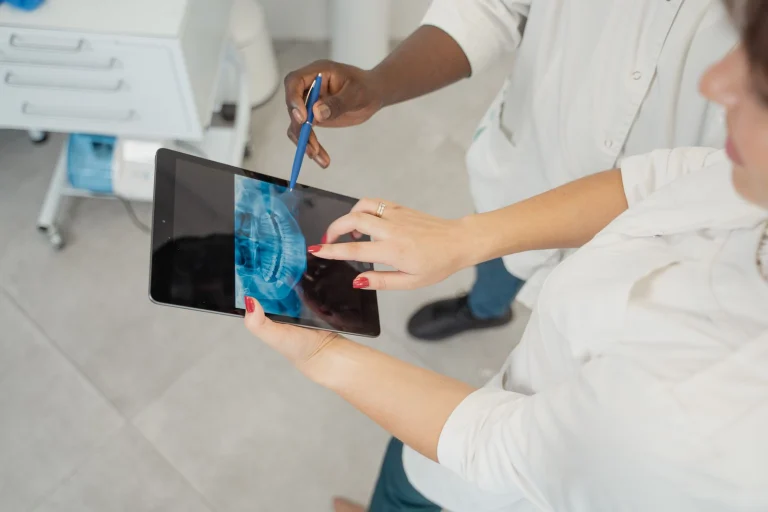
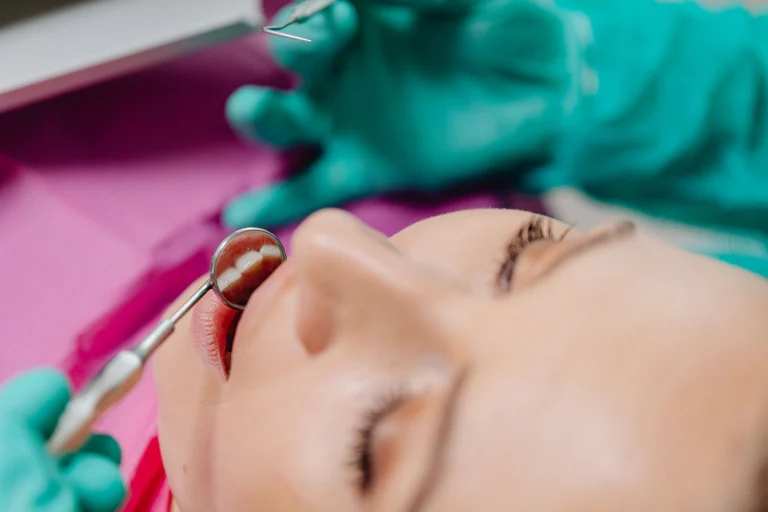
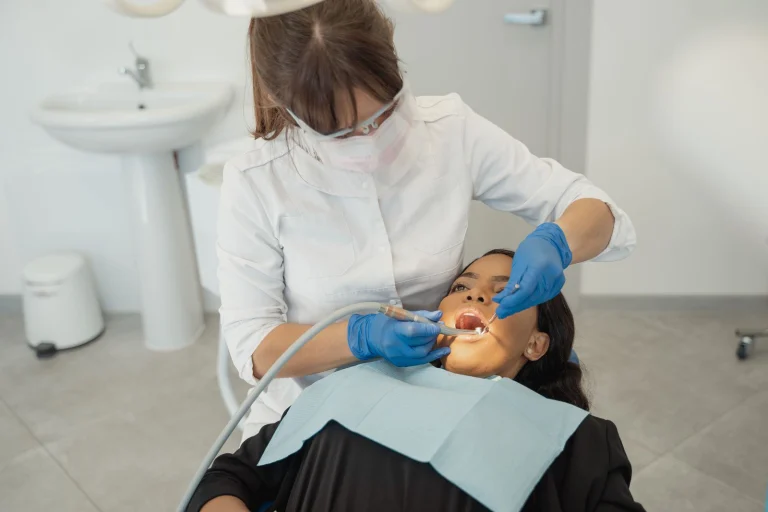
At the office of Dr. Steven W. Haywood, DDS, a full evaluation of your problems and concerns always comes before any treatment. Assessing the health of the jaw joint is part of the practice’s thorough restorative approach, and an orthodontic evaluation looks at crowding, spacing, positioning and signs of bite problems such as TMJ disorder or grinding. Dr. Haywood has pursued advanced TMJ and reconstructive training at the Peter Dawson Institute.
Depending on your symptoms, the evaluation can include:
- Bite analysis with jaw recordings
- CT imaging of the joint with a Green CT scanner, which emits a much lower dose of radiation than less eco-friendly scanners
- Doppler sounding to listen for joint abnormalities
- Sleep analysis
There are several professional approaches to jaw joint care, including neuromuscular dentistry and older, established approaches that center the jaw joint in a position called “CR,” and there is no clear consensus in the profession on which is perfect. That is why the evaluation comes first and the treatment options follow from what it finds.
Treatment options for a misaligned bite
For some people the priority is calming the jaw muscles and joints. For others it is changing how the teeth fit together. Often it is both, in stages.
Splints, orthotics and bite adjustments
TMJ treatment at the practice may include deprogramming splints, occlusal orthotics or appliances, and occlusal equilibration, a careful adjustment of how the biting surfaces meet. Because a TMJ disorder has usually developed over a long period, treatment is a therapy managed over time rather than a quick fix. If grinding is part of the problem, custom clear bite guards can help control tooth wear; see protecting your smile.
Orthodontic treatment: clear aligners and braces
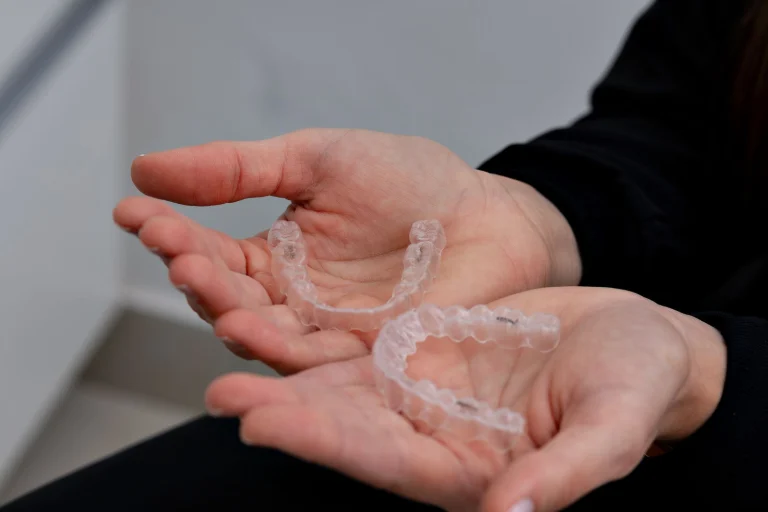
When teeth need to move to correct the bite, orthodontic treatment is the long-term route. Invisalign clear aligners are not only cosmetic: when there are bite issues to correct, they may be the right way to improve both how the teeth look and your oral health, and your bite is evaluated before anything is recommended. Aligners are worn at least 22 hours a day, each set for about two weeks, and treatment can take 18 to 24 months depending on the complexity of the case.
Metal braces are also offered and suit complex orthodontic work, including adjusting the bite and function of the teeth as well as crowding, positioning and gaps. For teenagers, Invisalign Teen is available, and the best time to consider orthodontics is once the permanent teeth have grown in.
What is the fastest way to fix an overbite?
There is no single fastest route, because the right treatment depends on what is causing the overbite. For patients in orthodontic treatment, the practice offers AcceleDent Aura, a mouthpiece and activator used for 20 minutes a day that can speed up tooth movement. Your timeline is set at your consultation, once Dr. Haywood has looked at your teeth and bite.
When jaw surgery comes up
For some adults, a bite problem comes from the size or position of the jaw bones themselves rather than the teeth, and orthodontics alone may not be enough. In those cases jaw surgery, performed by an oral surgeon, is sometimes discussed alongside orthodontic treatment. Your evaluation will show whether that conversation is relevant to you at all.
Is it ever too late to fix an overbite?
Adults can correct bite problems too. Orthodontic care at the practice is for teens and adults alike, and many adults who put off treatment did so because of how metal braces look, which is a large part of why clear aligners appeal. What tends to change with age is the rest of the picture: older fillings, worn teeth or gum health may need attention as part of the plan.
Frequently asked questions
Can an underbite cause headaches?
It may contribute for some people, in much the same way as an overbite. If the teeth do not meet evenly, the jaw muscles and joints can be under extra strain. An underbite does not guarantee headaches, and an evaluation is the way to find out whether your bite is involved.
Can Invisalign help with headaches?
Invisalign is a way to move teeth and correct certain bite issues. It is not a headache treatment. If a misaligned bite is adding to jaw strain, correcting the bite may be one part of a wider plan, and that plan starts with an evaluation of the teeth, the bite and the jaw joints.
Should I see a dentist or a doctor about my headaches?
Often both. A physician should assess frequent or severe headaches. If you also notice jaw pain, clicking, grinding or worn teeth, a dentist can check your bite and jaw joints and share what they find.
How long does TMJ treatment take?
Treating a TMJ disorder is more of a therapy than a quick fix, because the condition has usually built up over a long time. Care is managed to your individual needs, with the goal of letting you chew, eat, speak, smile, laugh and sing without discomfort.
How does insurance work, and can I pay over time?
The practice is out of network with insurance companies. You pay at the time of your visit, and the office files the claim on your behalf so your plan can reimburse you for covered care. Health savings and flex plans are welcome. Financing is available through CareCredit, with no-interest options for up to 12 months, and Cherry, with plans from 3 to 24 months, and Invisalign can also be paid monthly in the office after a down payment. See financing options.
Have your bite and jaw checked in Timonium
If recurring headaches come with jaw tension, clicking, grinding or worn teeth, it is worth finding out whether your bite is part of the story. Dr. Steven W. Haywood, DDS has more than 35 years of experience and cares for patients from Timonium, Towson, Hunt Valley and Baltimore. Request an appointment or call (410) 453-9399. The office is at 108 W Timonium Rd, Ste 200, Timonium, MD 21093.
Ready to see your future smile?
Book a bite and jaw evaluation in Timonium if headaches come with jaw pain.