Crooked, gapped or uneven teeth can be fixed in two basic ways: move the teeth into a better position with Invisalign or braces, or change how the teeth look with bonding, veneers, crowns or gum reshaping. Moving teeth takes months but corrects their position and bite. Reshaping can transform a smile in as little as one or two visits but does not change where the teeth sit. The right choice depends on your bite, how crooked the teeth are, your timeline and whether color or shape also bother you.
This guide compares the options for crooked teeth in Timonium, MD at the office of Dr. Steven W. Haywood, DDS, and explains how to decide between straightening and reshaping, or combining both.
Why crooked and gapped teeth are worth treating
- Cleaning. Teeth that overlap or twist leave places for bacteria to collect, so they are harder to keep clean. Straight, uniform teeth are easier to clean.
- Wear and breakage. With proper alignment and a correct bite, pressure is distributed evenly when you bite down, reducing the potential for excessive wear and breakage as you age.
- Your bite. Crooked teeth are not always only cosmetic. Signs such as TMJ disorder or grinding can hint at bite problems worth evaluating.
- Confidence. Spaces and uneven teeth can bother you every time you smile, and many adults put off straightening because of how metal braces look.
Option 1: move the teeth
Invisalign clear aligners
Invisalign straightens teeth with a series of custom, clear aligners made of a BPA-free material. Each set is worn for about two weeks, at least 22 hours a day, and makes small, progressive movements. You take the aligners out to eat, drink, brush and floss, so you keep eating normally and cleaning your teeth as usual. Invisalign treatment can take 18 to 24 months, depending on the complexity of your case, and it can address crowding, gaps and bite issues.
Dr. Haywood is an Elite Invisalign Provider, a rank based on education and volume of experience. Invisalign Teen is designed for teenagers, and Invisalign Express is a thrifty way to achieve minor tooth movements when a full course of treatment is more than your smile needs. For a day-to-day look at aligners, read Invisalign in real life.
Metal braces
Metal braces are the most familiar and most economical option, and they suit complex orthodontic work: adjusting the bite and function of the teeth as well as crowding, positioning and gaps. The practice offers both braces and Invisalign, so the recommendation can follow your case rather than a single product. Compare approaches on the orthodontics page or in clear braces in Timonium.
Option 2: reshape how the teeth look
Instant orthodontics uses cosmetic treatments such as porcelain veneers, bonding, crowns, and tooth and gum reshaping to transform crooked, discolored or gapped teeth in as little as one or two visits, whether you want a subtle improvement or a dramatic change.
Dental bonding
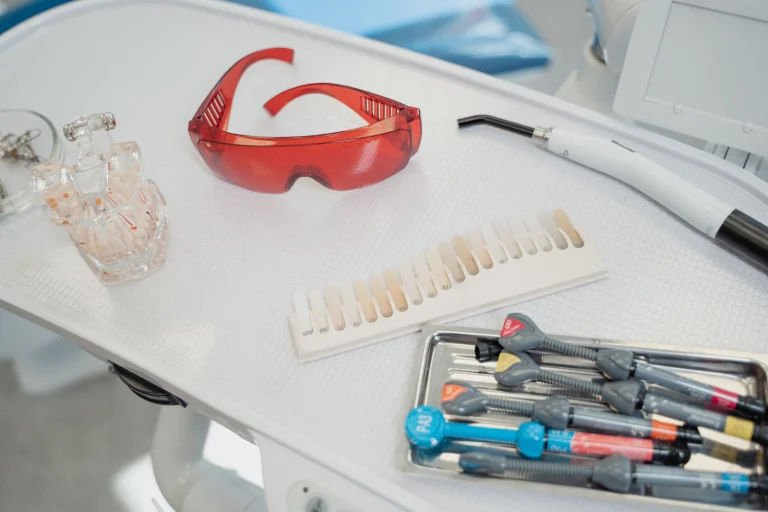
Dental bonding applies tooth-colored composite resin directly to the tooth to close gaps, make your smile look more even and change the shape of teeth. It is done in a single visit, typically with no anesthesia, and is one of the most affordable cosmetic procedures. Composite can stain and averages 8 to 10 years before it needs replacing, so it suits small corrections and budgets well.
Porcelain veneers
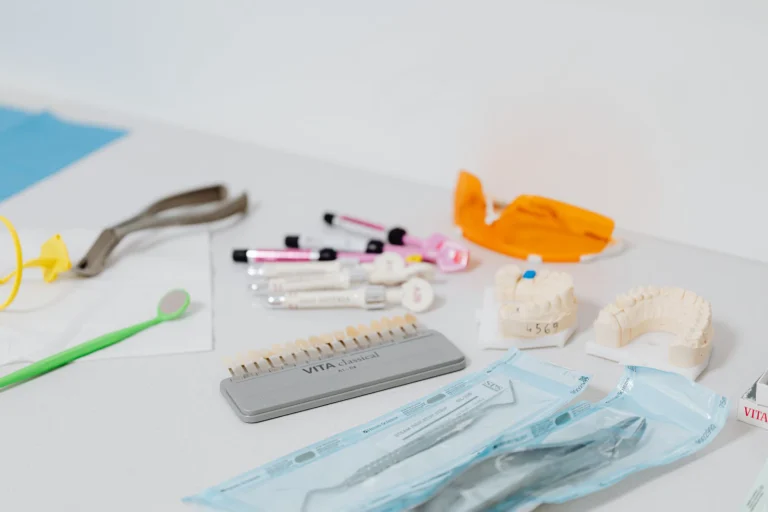
Porcelain veneers are thin, translucent shells bonded to the front of the teeth. They can make crooked teeth look straighter, which is why some adults choose them over braces. You try a test-drive set before the final veneers are made, porcelain resists stains better than natural teeth or composite, and with good care veneers can last for decades.
Prepless veneers
For qualified patients, prepless veneers close gaps and spaces and straighten teeth without braces, with little or no drilling, preserving most if not all of your natural enamel. A new smile can be finished in as little as 1–2 weeks. Not everyone is a candidate, and teeth that are too far out of position may need Invisalign first.
Crowns
When a crooked tooth is also heavily filled or damaged, a porcelain crown can restore its shape and protect it, and a crown can enhance the shape of a tooth when veneers are not a suitable solution.
Gum reshaping
Sometimes teeth look uneven because the gum line is uneven. A gum lift moves the gum line up on the upper teeth with a dental laser or radiosurgery for ideal tooth proportions.
Move or reshape? How to decide
Moving the teeth often makes sense when
- your bite needs correcting, not only the look of your teeth
- crowding is significant
- your teeth are healthy and you would rather not cover them
- you have time for treatment to run its course
Reshaping often makes sense when
- the teeth are only mildly crooked or have small gaps
- the same teeth are also chipped, worn or discolored
- you have a deadline and cannot wait months
Combining both
Many smiles benefit from both. Invisalign can shift teeth into a better position before a veneer makeover begins, so the veneers can stay thin and conservative, and Invisalign is often combined with veneer makeovers at the practice. If you have a date in mind, see big-day timelines by treatment.
One patient’s choice
A patient named Greg described choosing reshaping over braces: “My teeth were very crooked and I wanted a better smile… I chose veneers and some minor cosmetic gum surgery because I really did not want braces in my 20s! The results speak for themselves.” That is one path, not the only one. Your exam decides what suits your teeth.
How your options are planned
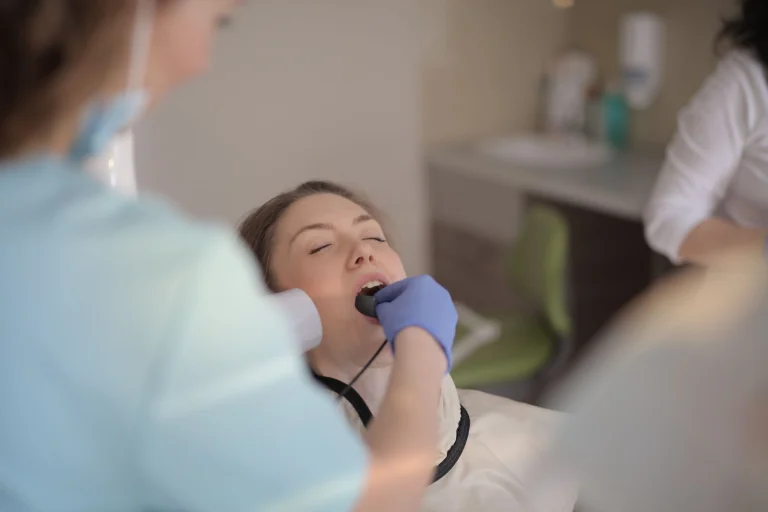
- Evaluation. Dr. Haywood evaluates crowding, spacing, positioning and signs of bite problems, then talks through which options suit you.
- A preview. For cosmetic changes, your digital photos are changed on the cosmetic imaging computer, so you can see a before and after first.
- A personalized plan. Whether it is Invisalign, braces, bonding, veneers or a combination, the plan is built around your needs, comfort and budget, and nothing starts until you approve it.
If you are still deciding how much change you want, read matching a smile makeover to your personality.
Cost, insurance and payment options
Costs depend on the treatment. Bonding is one of the most affordable cosmetic procedures, prepless veneer fees are set per tooth after a smile evaluation, and Invisalign can be paid in monthly payments in the office after a down payment. The practice is out of network with insurance companies: you pay at the time of service, and the office files the claim on your behalf so your plan can reimburse you for anything it covers. Health savings and flex plans are welcome, and financing is available through CareCredit, with no-interest options for up to 12 months, and Cherry, with plans from 3 to 24 months.
Frequently asked questions
Can severely crooked teeth be fixed?
Often, yes, but usually by moving them. Metal braces suit complex orthodontic work, and whether Invisalign can handle your case depends on the movement your teeth need, which a consultation answers.
How much does it cost to fix one crooked tooth?
It depends on the fix. Bonding a single tooth is one of the most affordable options, a veneer is priced per tooth, and Invisalign Express is designed for minor movements. Your fee is set after an exam.
Can veneers fix my bite?
No. Veneers and bonding change how teeth look, not where they sit. When the bite needs correcting, aligners or braces come first.
Am I too old for Invisalign?
For many adults, Invisalign is a good choice. Aligners are clear, barely noticeable and removable, which is why adults who avoided metal braces often choose them.
Straighter, more even teeth in Timonium
Find out whether moving, reshaping or both suits your smile. Request an appointment or call (410) 453-9399. The office of Dr. Steven W. Haywood, DDS is at 108 W Timonium Rd, Ste 200, Timonium, MD 21093, and patients come from Timonium, Towson, Hunt Valley, Baltimore and Shrewsbury, PA. Explore all cosmetic dentistry in Timonium.
Ready to see your future smile?
Find out whether straightening, reshaping or both suits your smile at a consultation in Timonium.