The American Dental Association, usually called the ADA, was founded in 1859. It is a professional organization of dentists, run by its members, and for well over a century and a half it has worked to raise the standards of the dental profession and to help the public understand how to care for their teeth and gums. You have probably seen its name on a toothpaste box or heard it quoted in a news story, but most people are not sure what the ADA actually does, what its Seal means, or how it relates to the dentist they see twice a year.
This article explains what the American Dental Association is and what it does, what it is not, how it fits with holistic or integrative dentistry, and how professional standards show up at a checkup at the Timonium office of Dr. Steven W. Haywood, DDS.
What is the American Dental Association?
The ADA is a membership organization for dentists in the United States. Membership is voluntary. Dentists join because the association offers professional resources, continuing education, a shared code of ethics and a collective voice on issues that affect patients and the profession.
The ADA works together with state and local dental societies. In Maryland, the state society is the Maryland State Dental Association. Dr. Haywood belongs to the American Dental Association, the Academy of General Dentistry, the Maryland State Dental Association, the Crown Council and the American Academy of Cosmetic Dentistry, and is a Fellow of the International Congress of Oral Implantologists. Learn more about Dr. Haywood and the team.
A brief look back to 1859
In the middle of the 1800s, dentistry was still a young profession, and training varied widely from one practitioner to the next. A group of dentists came together in 1859 to form a national association that could set shared standards, support education and promote the idea that dentistry is a health profession, not simply a trade. That founding idea still describes much of what the organization does today.
What does the American Dental Association do?
The ADA’s work reaches patients in ways that are easy to miss. Here are the main areas.
Sets ethical standards for its members
The ADA publishes a code of ethics and professional conduct for member dentists. It covers matters such as respecting patient autonomy, doing no harm, being honest with patients and treating people fairly. It gives patients a baseline for what they should be able to expect from a member dentist.
Supports dental education and accreditation
Dental schools and many other dental education programs in the United States are accredited by the Commission on Dental Accreditation, which operates under the ADA’s umbrella. Accreditation is one reason a dental degree means something consistent from one school to another.
Helps define the dental specialties
The list of recognized dental specialties is maintained by a national commission established by the ADA. If you have ever wondered why an orthodontist or a periodontist is called a specialist while a general dentist is not, that recognition process is the reason. Read what are the 12 dental specialties?
Publishes science and public information
The ADA publishes a scientific journal for dentists and consumer information for patients on topics such as brushing, flossing, diet and oral health through every stage of life. Guidance is reviewed and updated over time, so the organization’s own website, ada.org, is the place to find its current wording on any topic.
Advocates for oral health
The association speaks on public policy that affects dental care, from access to care to how dental benefits work, and it supports community programs that encourage people to look after their teeth.
The ADA Seal of Acceptance, explained
The ADA runs a voluntary Seal of Acceptance program for certain oral care products. A company that wants the Seal submits evidence about its product, and the ADA evaluates whether the product’s safety and its claims are supported. A Seal is a sign that a product was reviewed. It is not a guarantee that the product is right for every person.
Which products carry the Seal can change, so check the ADA’s own website for current information rather than relying on older articles or packaging you saw years ago. It also helps to read the ingredient list and ask your dentist whether a product suits your teeth, your gums and your health goals. That matters here, because the practice avoids fluoride, so some everyday recommendations you hear elsewhere may differ from the conversation you have in this office. If you are thinking about whitening products in particular, read tooth whitening safety: the ADA and your dentist.
What the ADA is not
- It is not a government agency. The ADA does not license dentists. Each state licenses its own dentists through a state dental board.
- It is not a product regulator. Government agencies regulate drugs and medical devices. The Seal program is separate and voluntary.
- It is not a guarantee of identical care. Member dentists share a code of ethics, but they still make their own clinical choices about materials, techniques and treatment plans with each patient.
- Not every dentist is a member. Membership is a choice, so it is one useful piece of information about a dentist, not the only one.
The American Dental Association and integrative dentistry
People searching for holistic, biological or integrative dentistry often ask where the ADA stands. Holistic dentistry is not one of the recognized dental specialties. Dentists who practice it are licensed dentists who choose materials and methods with the whole body in mind, and they may belong to mainstream organizations as well as holistic dental associations.
Mainstream organizations, including the ADA, have long supported the use of fluoride and have regarded amalgam as an acceptable filling material. Dr. Haywood’s practice takes a different path:
- No amalgam. The practice never uses amalgam fillings. Fillings are tooth-colored composite, and old amalgam fillings are removed under rigorous safety protocols that follow the best practices of holistic dental associations, to minimize exposure to mercury vapor. See mercury-free dentistry.
- No fluoride. The practice avoids fluoride and offers calcium rebuilding treatments instead to help strengthen enamel for patients of all ages.
- Materials chosen for your body. Restorations are non-toxic, metal-free and biocompatible, and Dr. Haywood avoids nickel and bisphenol plastics as well as mercury.
- A closer look at gum health. Bacterial DNA testing identifies the specific bacteria behind periodontal disease, so treatment can be more personalized.
In other words, belonging to professional organizations and practicing holistically are not in conflict. You can read more on holistic dentistry in Timonium and what a biological dentist does.
How professional standards show up at your checkup
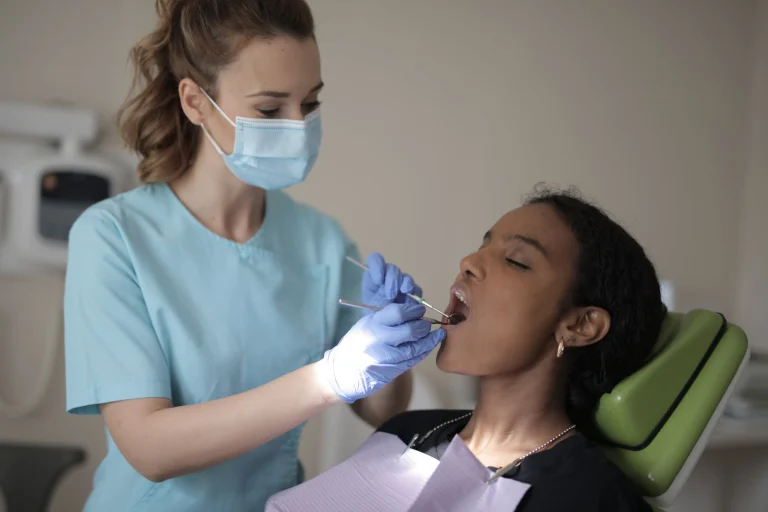
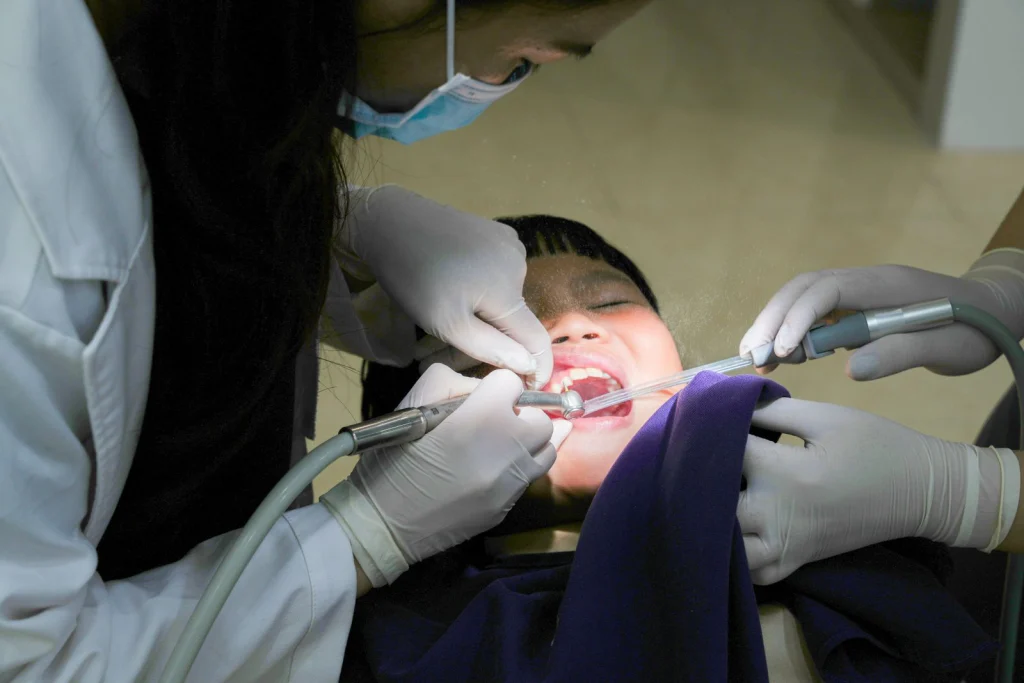
For patients, the value of professional standards is in the details of an ordinary visit. At the Timonium office, that looks like this:
- Unhurried cleanings. A professional cleaning every six months is recommended, and cleaning appointments here last a full 60 minutes.
- Careful diagnostics. Digital X-rays use as much as 90 percent less exposure than film, intraoral cameras show you what Dr. Haywood sees, and DIAGNOdent laser detection can find decay at its earliest stages, sometimes before it shows on an X-ray. See dental technology.
- Oral cancer screening. A quick, pain-free screening is part of your regular checkup, and the practice recommends that all patients over eighteen be screened every year. Read about oral cancer screening.
- Clean rooms. Every treatment room is cleaned and sterilized after each patient.
- Experience and training. Dr. Haywood graduated with distinction from the University of Detroit dental school in 1987, completed a U.S. Air Force advanced residency and trained in cosmetic dentistry at NYU’s Aesthetic Continuum, with more than 35 years of experience.
Preventive visits are part of general dentistry at the practice. For the full picture of cleanings, sealants and gum care, see dental cleanings and preventive care or the case for preventive dentistry.
Paying for your visit
The practice is out of network with all dental insurance providers. You pay at the time of your visit, and the office files the claim on your behalf so your plan can reimburse you for whatever it covers. Health savings and flex plans are welcome, and financing is available through CareCredit, with no-interest options for up to 12 months, and Cherry, with plans from 3 to 24 months. See financing options.
Frequently asked questions
When was the American Dental Association founded?
The American Dental Association was founded in 1859, when dentists came together to form a national professional organization for the field.
What does the ADA Seal of Acceptance mean?
It means the ADA reviewed evidence about a product’s safety and claims under its voluntary Seal program. It is a helpful signal, but it doesn’t mean a product is the best choice for everyone, so ask your dentist what suits you.
Is Dr. Haywood a member of the ADA?
Yes. Dr. Haywood is a member of the American Dental Association, the Academy of General Dentistry, the Maryland State Dental Association and the Crown Council, a member of the American Academy of Cosmetic Dentistry and a Fellow of the International Congress of Oral Implantologists.
Does the ADA recognize holistic dentistry as a specialty?
No. Holistic, biological or integrative dentistry is not one of the recognized specialties. It describes an approach to care that a licensed dentist chooses, with materials and methods selected with the whole body in mind.
Book a checkup in Timonium
If you want a dentist who pairs professional training with a whole-body approach, start with a checkup and a conversation about your goals. Request an appointment or call (410) 453-9399. The office of Dr. Steven W. Haywood, DDS is at 108 W Timonium Rd, Ste 200, Timonium, MD 21093, and patients come from Timonium, Towson, Hunt Valley and Baltimore. New patients are always welcome.
Ready to see your future smile?
Looking for a dentist with professional training and a whole-body approach? Book a checkup in Timonium.