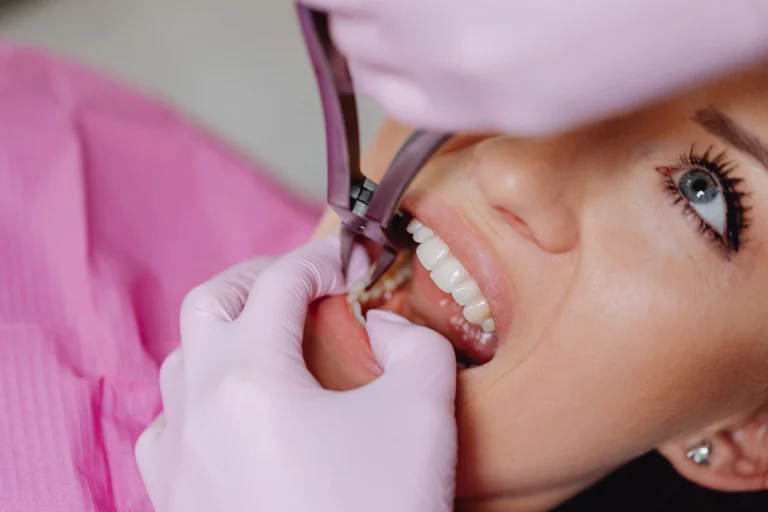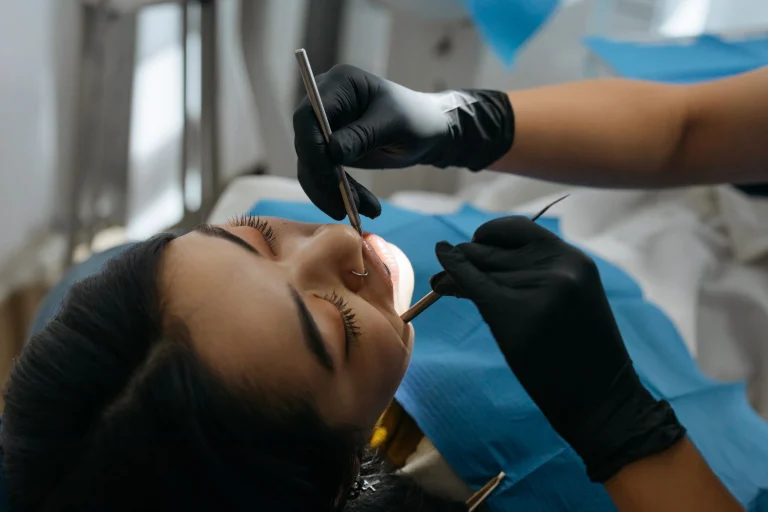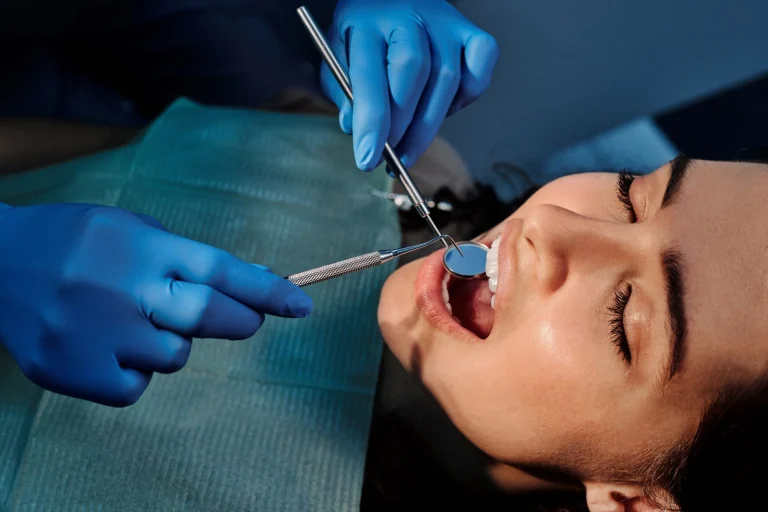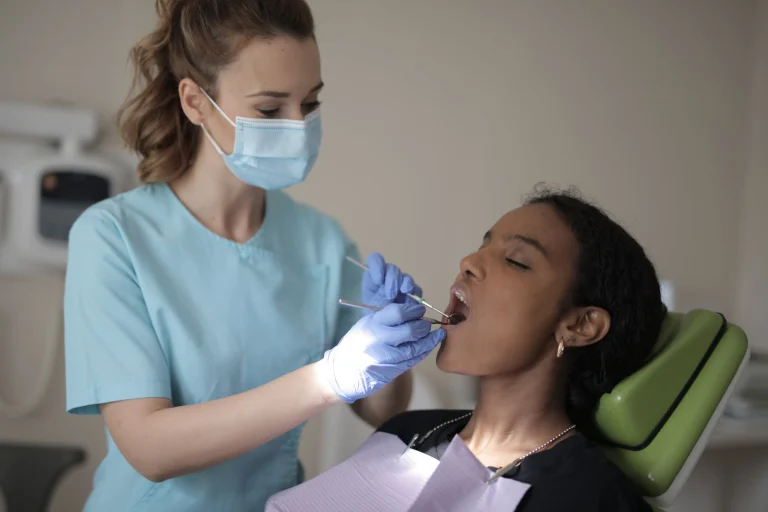
A standard of excellence for crowns and fillings means more than a repair that looks fine on the day you leave. At the Timonium office of Dr. Steven W. Haywood, DDS, it means finding the problem clearly, keeping as much of your natural tooth as possible, using tooth-colored and mercury-free materials, getting the fit and the bite right, and looking after the work for years afterward. This article explains each part of that standard, so you know what to expect from any crown, bridge, inlay, onlay or filling at the practice, and what to ask about wherever you have dental work done.
How Dr. Steven Haywood defines excellence in restorative care
Restorative dentistry repairs or replaces teeth that have been damaged by decay, cracks, wear or loss. Dr. Haywood has practiced for over three decades across Timonium, Towson and the greater Baltimore area, after graduating with distinction from the University of Detroit dental school in 1987 and being hand-picked for the U.S. Air Force’s advanced residency program. Further training includes NYU’s Aesthetic Continuum and advanced TMJ and reconstructive training at the Peter Dawson Institute.
That background shows up in a simple idea: keep what you can, replace what you can’t, and explain every option before any work begins. The seven standards below put that idea into practice.
Standard 1: A diagnosis you can see for yourself
Good restorative work starts with an accurate picture of the tooth. You should never have to take a recommendation on faith.
- Digital X-rays appear immediately and can be shown on a screen in the treatment room, so Dr. Haywood can point to exactly what is being discussed.
- Intraoral cameras zoom in on each section of your mouth, making a crack, a stained groove or a failing filling edge easy to understand.
- DIAGNOdent, a laser pen, can detect small amounts of decay at the earliest stages, sometimes before it shows on an X-ray.
Seeing the images helps you make a confident decision, and it helps you tell a small problem from a large one. Read more about dental technology at the practice.
Standard 2: The most conservative repair that will do the job
Every time a tooth is drilled, some healthy structure is lost for good. That is why the most conservative restoration that will do the job is always the first recommendation.
Fillings for small cavities
A small area of decay is repaired with a tooth-colored composite filling, completed in a single visit. Air abrasion can remove small areas of decay with a thin stream of air and silica, preserving more of your natural tooth.
Inlays and onlays before crowns
When part of a tooth is damaged, a bonded inlay or onlay can restore its strength while keeping healthy structure that a traditional crown would remove. Onlays are sometimes called “inside crowns” because they are strong while conserving the healthy parts of a damaged tooth. Research has shown that the less a tooth is reduced, the longer it survives. See inlays and onlays: less invasive than a crown.
Crowns when a tooth truly needs one
A porcelain crown is reserved for a tooth that has been extensively damaged, a filled tooth with cracks that hurt when you chew, or a tooth that has had a root canal. In those cases a crown can save a tooth that would otherwise need to be pulled.
Standard 3: Materials chosen with your whole body in mind
Dr. Haywood never uses amalgam fillings or other materials that could be harmful, and is fundamentally opposed to the use of mercury in dental fillings. The practice specializes in all-ceramic, tooth-colored crowns, bridges, inlays and onlays. Fillings use a special composite mixed at the time of treatment to match the color of your natural teeth.
As a holistic practice, it also avoids nickel and bisphenol plastics. If you want extra reassurance, restorations here are non-toxic, metal-free and biocompatible. Old silver fillings are removed under rigorous safety protocols designed to minimize exposure to mercury vapor. Learn more about mercury-free dentistry.
Standard 4: A precise fit
A beautiful crown that doesn’t seal well at its edges is not excellent work. Fit is where much of the quality of a restoration is decided.
Crowns and bridges
Crowns and bridges are usually completed in two appointments. At the first, the tooth is prepared and an impression is taken. That impression dictates the precision of the final crown or bridge, so Dr. Haywood may take more than one to get it right. A temporary protects the tooth in between. At the second visit, the permanent crown is checked for an ideal fit before it is bonded and polished. The practice does not rush this step; read same-day crowns or two visits? for why.
Inlays and onlays
Inlays and onlays follow the same careful two-visit process. The follow-up appointment is when the new restoration is checked for fit, approved, bonded to the tooth and polished to a natural sheen.
Fillings
Composite is bonded to the tooth, shaped to your bite and polished. Because it is fully set when you leave, you can chew on it as soon as the anesthetic wears off.
Standard 5: A bite that feels balanced
A restoration can look perfect and still feel wrong if it hits before your other teeth. If a new filling, crown or bridge feels like you are biting on it first or harder, call for a simple adjustment. Left alone, a high spot can leave you with a sore tooth.
For patients with teeth worn down by grinding, the bite comes first: worn and broken teeth are rebuilt with crowns once the bite is set in the right position. Custom bite guards, clear and made for you, help protect that work from grinding afterward. See TMJ and bite care.
Standard 6: Comfort at every step
Excellent dentistry is hard to receive if you are tense in the chair. The practice is spa-like and built to be anxiety-free, with paraffin wax hand treatments, aromatherapy and a Nespresso station. Laughing gas is offered as a complimentary service and wears off so you can drive yourself home. Oral conscious sedation is a pill taken about an hour before your visit, and you will need a ride. A gentle micro-air filling process is available for people of all ages. See sedation dentistry.
Standard 7: Care that continues after the appointment
- Clear instructions. Written post-op instructions cover numbness, normal sensitivity, temporary crowns and cleaning under a bridge with floss threaders.
- Temporaries that stay put. If a temporary crown comes off, place a little Fixodent inside, put it back on and call during business hours to have it re-cemented. Don’t leave it off, even if you have no discomfort.
- Regular checkups. A cleaning and exam every six months lets worn edges and early decay around dental work be caught while repairs are still small. Cleaning appointments last a full hour.
- Help when something goes wrong. Dr. Haywood is available anytime for true dental emergencies for existing patients and their friends and families. If a crown ever feels loose, read loose crown? warning signs before it comes off.
What we ask of you
The best restorations still depend on the mouth around them. You can help your dental work stay healthy by brushing twice a day, cleaning between your teeth daily, going easy on sticky candy and ice, wearing your bite guard if you have one, and keeping your checkups. Tell the team if something feels different, even if it doesn’t hurt.
Paying for your care
Every fee is discussed before treatment begins. The practice is out of network with all dental insurance companies: you pay at the time of your visit, and the office files the claim on your behalf so your plan can reimburse you for what it covers. Health savings and flex plans are welcome, and financing is available through CareCredit, with no-interest options up to 12 months, and Cherry, with plans from 3 to 24 months. See financing options.
Frequently asked questions
Is Dr. Steven Haywood accepting new patients?
Yes. New patients are always welcome. Call (410) 453-9399 or request an appointment online.
Why would I get an onlay instead of a crown?
An onlay restores the damaged part of a tooth while conserving the healthy parts a crown would remove, and it is equally strong. Crowns are recommended when a tooth is too damaged for a more conservative repair.
Will I see my X-rays before treatment?
Yes. Digital X-rays and intraoral camera images can be shown on a screen in the treatment room, so you can see what is being recommended and why.
What if my new crown or filling doesn’t feel right?
Call the office. A restoration that touches before your other teeth usually needs only a simple adjustment, and it is better to fix it early than to wait for the tooth to get sore.
Experience the standard in Timonium
Whether you need a single filling or several crowns, request an appointment or call (410) 453-9399. The office of Dr. Steven W. Haywood, DDS is at 108 W Timonium Rd, Ste 200, Timonium, MD 21093, serving Timonium, Lutherville, Cockeysville, Towson and Baltimore. Explore every option in restorative dentistry.
Ready to see your future smile?
Book a visit in Timonium and see how your crowns and fillings are planned.