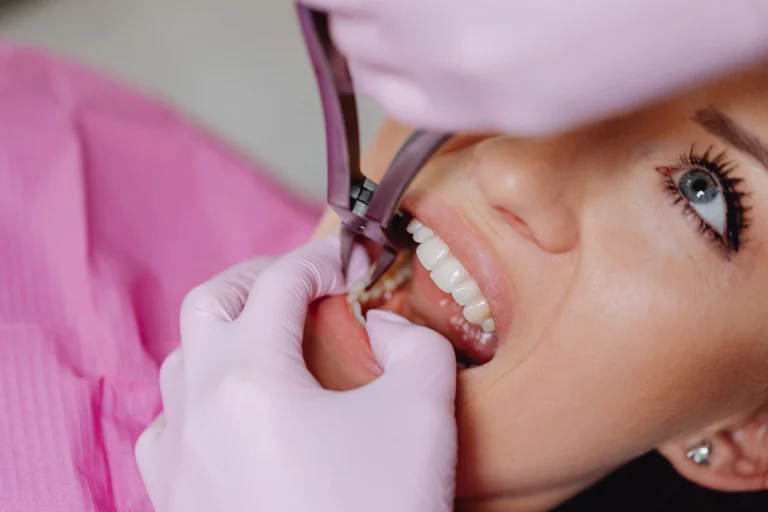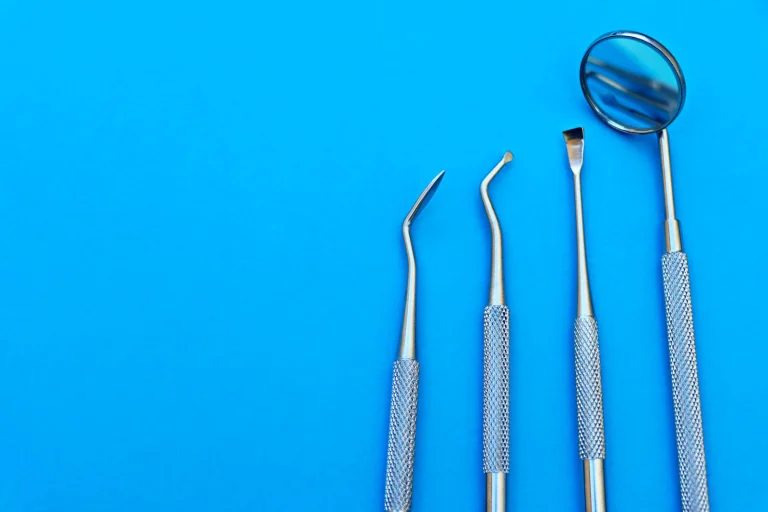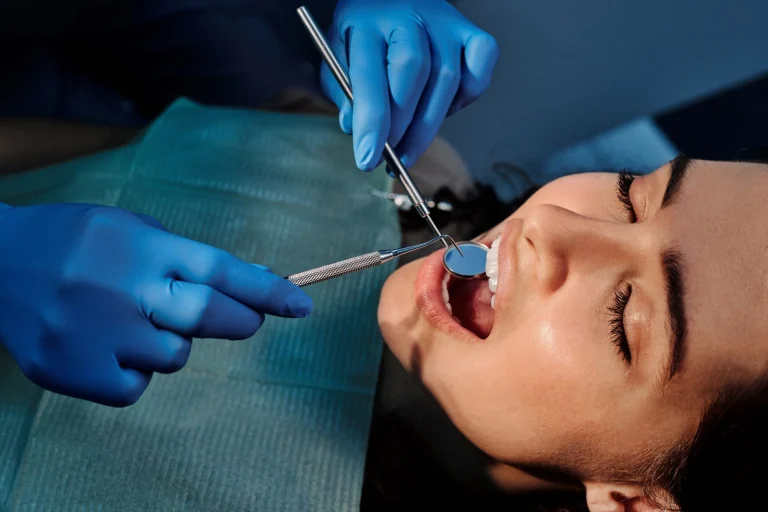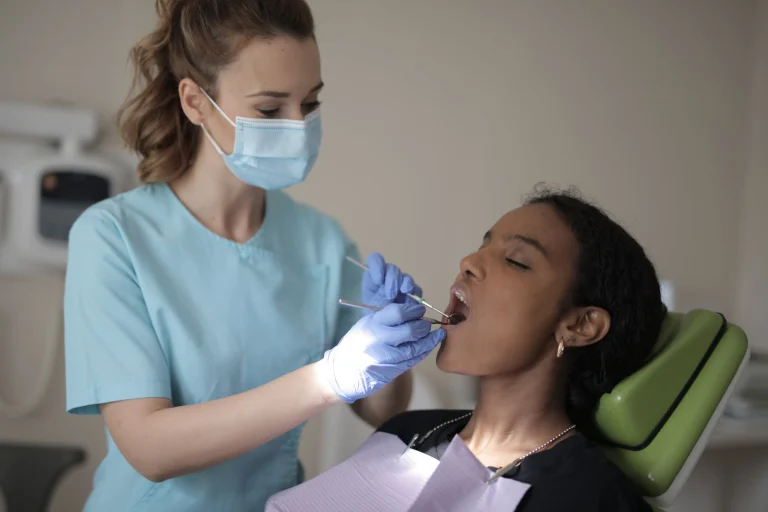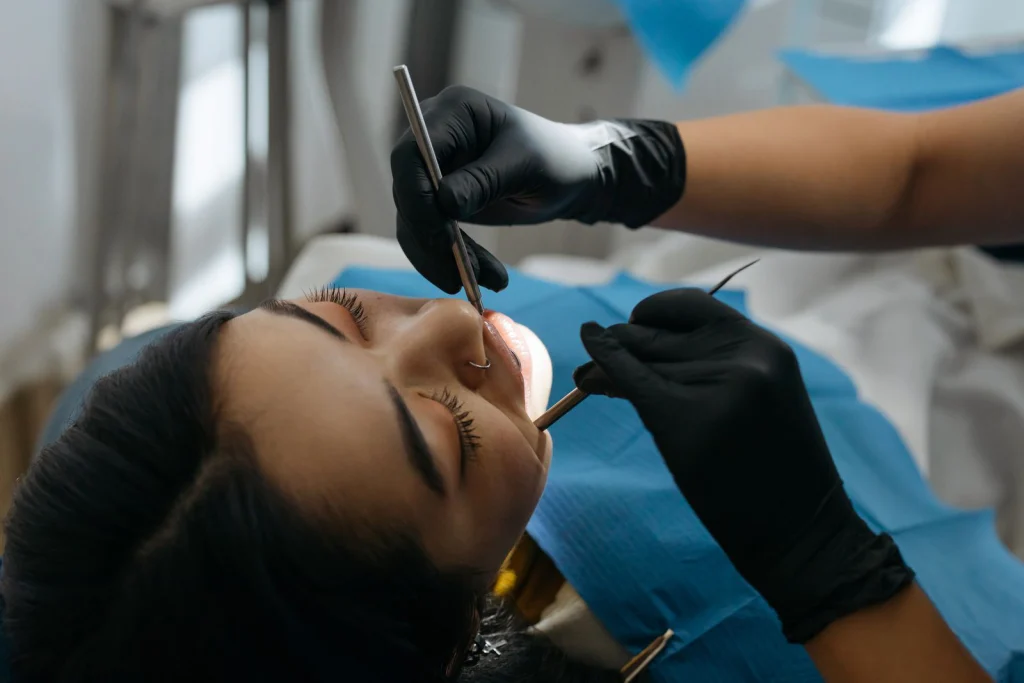
Don’t put off your dental exam, even if nothing hurts. Many of the problems an exam looks for, including early decay, gum disease, a hidden infection and changes in the soft tissues of the mouth, cause little or no pain at first. An exam catches them while they are small and simpler to treat. At a holistic practice, the exam also looks beyond the teeth: your health history, diet, medications and habits, the materials already in your mouth, and the bacteria behind any gum problems.
This guide from the Timonium office of Dr. Steven W. Haywood, DDS explains why people delay exams, what can stay silent without one, what a routine exam and cleaning include, and what a holistic approach adds. For how often to come in, see how often you should get a dental checkup.
Why people put off dental exams
Most people who skip exams are not ignoring their health. Life gets busy, nothing hurts, and a checkup slides down the list. Other common reasons include:
- “My teeth feel fine.” Comfort is not the same as health, as the next section explains.
- Worry about what might be found. Avoiding the exam does not make a problem go away; it only lets it grow.
- Cost. A regular exam usually costs far less than treating a problem that was left too long.
- Dental anxiety. If fear is the reason, read how to get past fear of the dentist.
- Concern about materials or treatments. Some people delay because they do not want mercury fillings or fluoride. A holistic practice is built for exactly that concern.
Problems that can stay silent without an exam
Early tooth decay
A cavity usually does not hurt until it is fairly deep. DIAGNOdent, a laser used at the practice, can detect small amounts of decay at the earliest stages, sometimes before it shows on an X-ray, so problems can be treated before discomfort develops.
Gum disease
Gum disease is often called a silent disease because it can progress without much pain. Signs such as bleeding, receding gums or bad breath are easy to overlook. Caught early and treated as a serious infection, it can be managed and controlled.
Infection inside a tooth
A dental abscess does not always hurt, but it can be seen on an X-ray. Found early, it can be treated before it spreads.
Changes in the soft tissues
An oral cancer screening checks the soft tissues of the mouth, throat and tongue for anything abnormal. The practice recommends that all patients over eighteen be screened once a year. See oral cancer screening.
Worn or failing fillings
Over time fillings can wear away, fracture or fall out, and a filling that is worn at the edges or pulling away can let decay develop underneath it.
Grinding and clenching
Grinding and clenching place excessive force on teeth, wearing the enamel and introducing small cracks, often without you noticing.
What a routine exam and cleaning include
The practice recommends a professional cleaning every six months, and cleaning appointments last a full 60 minutes. Your check-up uses digital X-rays, which use as much as 90 percent less radiation exposure than film, and intraoral cameras that zoom in on each section of your mouth. Images appear on a screen in the room so you can see what Dr. Haywood sees. An oral cancer screening is part of your regular general dentistry appointment. Learn more about dental cleanings at the practice.
Beyond routine dental exams: what a holistic approach adds
A holistic dentist chooses materials and treatments with your whole body in mind. At this practice, that shapes the exam in several ways.
Your health history, diet, medications and habits
Your first visit is an unhurried consultation. Dr. Haywood asks about your diet, medications and habits, from sugar and acidic foods to tobacco and alcohol, because each one affects your oral and overall health. The aim is to find the root cause of a problem, not just treat the symptom.
A careful look at the fillings you already have
If you have old silver amalgam fillings, the exam is a chance to talk about them. The practice never places amalgam, and when old mercury fillings are replaced they are removed under rigorous safety protocols designed to minimize your exposure to mercury vapor. See mercury-free dentistry.
Materials tested before treatment
If treatment is needed, the materials used are non-toxic, metal-free and biocompatible, chosen with your overall health in mind. Dr. Haywood also avoids nickel and bisphenol plastics.
The bacteria behind gum problems
Rather than treating gum disease as one generic condition, bacterial DNA testing identifies the specific bacteria involved. Laser and ozone therapy can then clear bacteria and infection from the gums without chemicals.
A 3D view when it is needed
Cone beam CT scanning gives a full three-dimensional view of your teeth and jaw. It is used to assess existing root canals in far more detail than a flat X-ray shows and to plan implant placement.
Stronger enamel without fluoride
Fluoride is optional here: patients who prefer to avoid it can have calcium rebuilding treatments instead. Non-fluoride calcium rebuilding treatments are offered instead to help strengthen enamel for patients of all ages, and xylitol mints and lollipops can also help reduce decay risk.
For the bigger picture of how the mouth and body connect, read healthy teeth and body: holistic dentistry in Timonium.
How to keep your exams on track
- Book the next one before you leave. A date in the calendar is much harder to drift away from.
- Complete forms ahead of time. New patients can fill out forms online before the first visit.
- Tell the team if you are anxious. Laughing gas is offered as a complimentary service, and other sedation options are available.
- Pick a time that works. Hours are Monday 8:30 AM to 6:30 PM, Tuesday 8:30 AM to 5 PM, Wednesday 8:30 AM to 3:30 PM, Thursday 8:30 AM to 4:30 PM and Friday 8:30 AM to 4 PM.
Does holistic dental care cost more?
Holistic, or biological, dentistry does not cost more than standard dental care. The practice is out of network with all dental insurance companies: you pay at the time of your visit, and the office files the claim on your behalf so your plan can reimburse you for what it covers. Health savings and flex plans are welcome, and financing is available through CareCredit, with no-interest options for up to 12 months, and Cherry, with payment plans from 3 to 24 months. See financing options.
Frequently asked questions
How often should I have a dental exam?
The practice recommends a professional cleaning every six months, with your check-up at the same visit. Some people need to come more often, depending on their gum health and other factors.
Do I need an exam if nothing hurts?
Yes. Early decay, gum disease and some infections can cause little or no pain at first, and an exam finds them while they are easier to treat.
Will my old silver fillings be removed at my exam?
Not automatically. The exam is a chance to look at them and talk through your options. If you choose to replace them, safe amalgam removal protocols are followed.
Is a holistic dentist the same as a biological dentist?
Yes. Holistic and biological dentistry both consider how dental health and dental materials affect the whole body. Read more about biological dentistry.
Book your holistic dental exam in Timonium
If it has been a while, or if you have been waiting for a practice that shares your concerns about materials, now is a good time. Request an appointment or call (410) 453-9399. The office of Dr. Steven W. Haywood, DDS is at 108 W Timonium Rd, Ste 200, Timonium, MD 21093, and patients come from Timonium, Towson, Hunt Valley and Baltimore. Learn more about holistic dentistry at the practice.
Ready to see your future smile?
Book a dental exam with a holistic, mercury-free dentist in Timonium.