Holistic dentistry starts from a simple idea: your mouth is not separate from the rest of your body. What happens in your gums, and what materials go into your teeth, can matter for your overall health. At the Timonium office of Dr. Steven W. Haywood, DDS, that idea shapes every visit, from the first conversation about your health history to the material chosen for a single filling.
This article explains how oral health and whole-body health connect, and what that connection means in practice when you see a holistic dentist in Timonium. If you want the protocol-by-protocol view, read the benefits of holistic dentistry. For an overview of the service itself, see holistic dentistry at the practice.
Your mouth is an entry point to the rest of your body
The mouth is where food, drink and much of what we take in first meets the body. It is also home to bacteria, most of them harmless and some of them not. Holistic dental care treats the mouth as an entry point: bacteria and toxins that start there can contribute to chronic disease elsewhere, so keeping your mouth healthy is part of keeping your whole body healthy.
Healthy gums and a healthy body
Gum disease is the clearest example. Periodontal disease is the leading cause of tooth loss in adults, and it worsens as it progresses through its stages. The health of your gums has also been linked to serious health risks such as diabetes and cardiac disease. Early gum disease often sends quiet signals: sore, swollen or bleeding gums, bad breath, tooth sensitivity, painful chewing, or gums that seem to be pulling back from the teeth. On their own these signs don’t necessarily mean you have gum disease, but they are a good reason to have your gums checked.
What goes into your mouth stays there for years
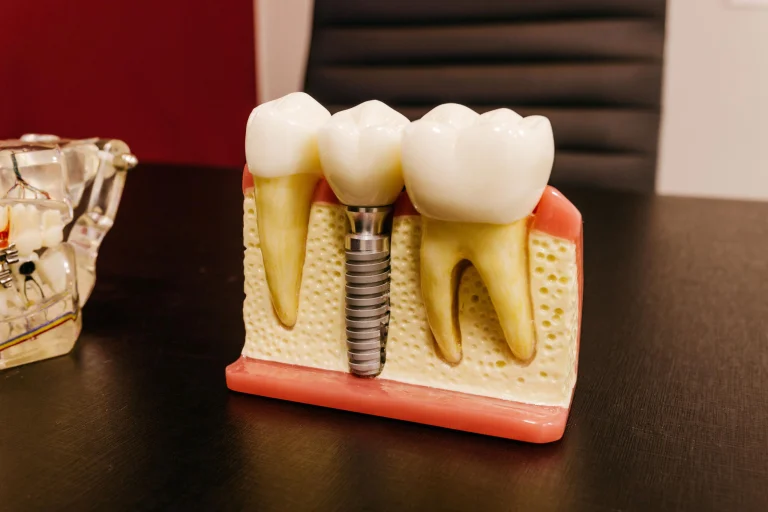
A filling, crown or implant is not a one-day decision. Dental materials sit in your mouth for years, in contact with your gums, your saliva and your bite. That is why a holistic dentist looks closely at what those materials are made of and whether they suit your body, rather than defaulting to whatever is standard. Avoiding toxic materials is not an extra step added on at the end; it is part of how the treatment is planned from the start.
Diet, medications and daily habits
Your mouth also reflects how you live. Sugars and acidic foods, tobacco, alcohol and the medications you take all affect your oral health and your overall health. A biological approach asks about these things, because each one can change what is happening in your mouth and which treatment makes sense for you.
What holistic dentistry means at this practice
Holistic dentistry, biological dentistry and natural dentistry are different names for the same approach: dental care that considers how your dental health and dental materials affect your entire body. Rather than treating only a symptom or a sore tooth, a holistic dentist looks for the root cause of the problem and considers the emotional, mental and physical factors in your overall health. You can read more about the terms on the biological dentist page.
At Dr. Haywood’s practice, that philosophy turns into specific, practical choices:
- No mercury. Dr. Haywood never uses amalgam fillings and is fundamentally opposed to mercury in dental fillings.
- No nickel or bisphenol plastics. The practice avoids them and uses non-toxic, metal-free and biocompatible materials instead.
- Materials chosen for your body. Restorations are non-toxic, metal-free and biocompatible, with no mercury, nickel or bisphenol plastics.
- Diagnostics that look beneath the surface. Bacterial DNA testing and cone beam CT scanning show what a quick look cannot.
- Minimally invasive care. Treatment aims to preserve your natural teeth and avoid drilling where possible.
How the mouth-body connection shapes your care
It starts with an unhurried conversation
Your first visit is a consultation, not a race to the drill. The team takes time to understand your health concerns, your dental history and your goals before recommending anything. Dr. Haywood asks about your diet, medications and habits because each one affects your oral and overall health. If you already know you are worried about old fillings, fluoride or a tooth that has bothered you for years, this is the time to say so.
A clear picture of what is happening beneath the surface
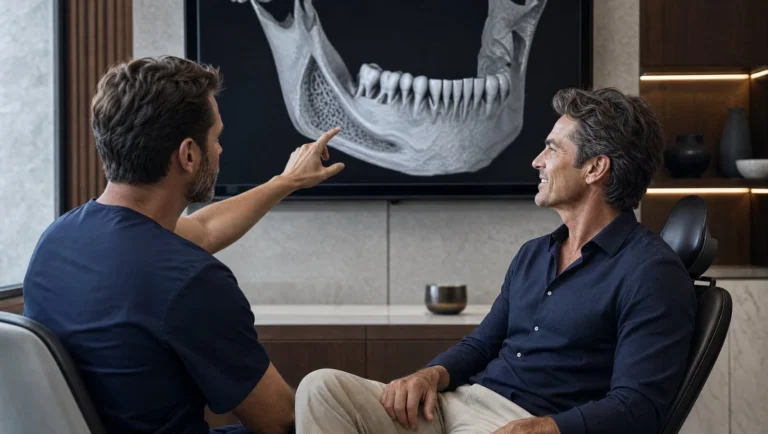
Whole-body care depends on accurate information. Cone beam CT scanning gives Dr. Haywood a full three-dimensional view of your teeth and jaw, and the practice uses a Green CT scanner, which emits a much lower dose of radiation. Digital X-rays mean as much as 90 percent less exposure than traditional film, and DIAGNOdent laser detection can find small amounts of decay at the earliest stages, sometimes before it shows on an X-ray. Bacterial DNA testing identifies the specific bacteria behind gum disease, because different bacteria call for different treatment. See the practice’s dental technology.
Materials chosen for your body
Every material that goes into your mouth is chosen for biocompatibility, with no mercury, nickel or bisphenol plastics. When a tooth needs a filling, it is restored with a tooth-colored composite that is mixed at the time of treatment to match your natural teeth and bonded in place. Learn more about mercury-free dentistry in Timonium.
Old mercury fillings, handled with care
Many adults still have silver amalgam fillings from years ago. If you and Dr. Haywood decide to replace them, old amalgam fillings are removed under rigorous safety protocols that follow best practices established by holistic dental associations, designed to minimize your exposure to mercury vapor during the procedure. The teeth are then restored with mercury-free, biocompatible materials.
Keeping as much natural tooth as possible
A conservative approach is part of whole-body care. Air abrasion uses a thin, steady stream of air and silica to gently remove small areas of decay while preserving more of your natural tooth structure, with no heat, pressure or vibration. Treating a problem at its root, so it does not keep coming back, supports long-term wellness better than repairing the same tooth again and again.
Gum health is whole-body health
Because gum health is linked to your overall health, preventive care matters here. The practice recommends a professional cleaning every six months, and cleaning appointments are a full 60 minutes. When gum disease is present, treatment removes the harmful bacteria that are causing it, with a plan developed individually for you. Laser and ozone therapy clear bacteria and infection from the gums without chemicals, which tends to mean faster healing. Read more about gum disease treatment.
Gum infection that is caught early can be managed and controlled, and treatment can even reverse its early stages. That is one of the most practical ways good dental health supports the rest of your body.
What does a holistic dentist do about root canals?
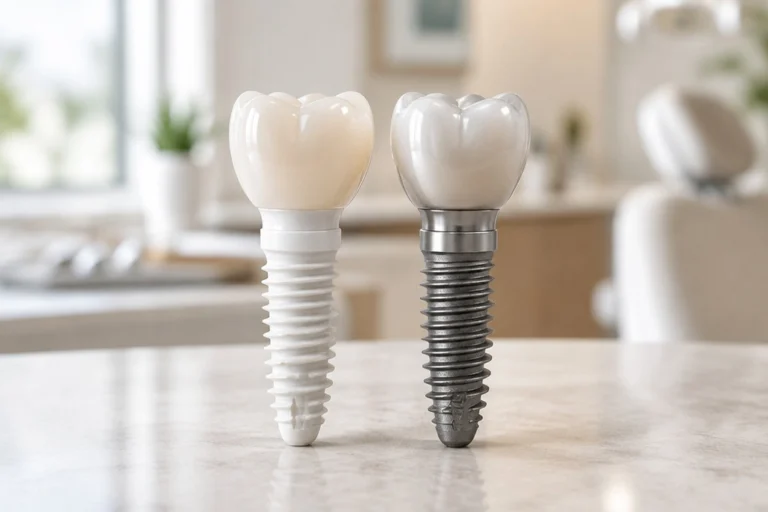
Root canals are one of the most common questions patients bring to a holistic dentist. At this practice, the answer starts with a closer look. Cone beam CT scanning shows existing root canals in far more detail than a flat X-ray, so Dr. Haywood can assess what is happening around the tooth and weigh your options with your overall health in mind. If a tooth cannot be saved, the same 3D imaging is used to plan dental implants, and ceramic implants are available for patients who want to avoid metal.
Does holistic dental care cost more?
Biological dentistry does not cost more than standard dental care. The practice is out of network with all dental insurance companies: you pay at the time of your visit, and the office files the claim on your behalf so your plan can reimburse you for what it covers. Health savings and flex plans are welcome, and financing is available through CareCredit, with no-interest options for up to 12 months, and Cherry, with payment plans from 3 to 24 months. See financing options.
Frequently asked questions
Is a holistic dentist the same as a biological dentist?
Yes. Holistic, biological and natural dentistry all describe care that considers how your mouth and your dental materials affect the rest of your body.
Does holistic dentistry replace regular checkups and cleanings?
No. Holistic care is part of a full-service practice, and every service is available in the same Timonium office. You still have checkups, cleanings and fillings when you need them; the difference is how the materials and treatments are chosen.
Do you use fluoride?
Fluoride is optional here: patients who prefer to avoid it can have calcium rebuilding treatments instead. Instead of fluoride treatments, non-fluoride enamel rebuilding is offered to strengthen teeth naturally.
Can a holistic dentist help if I am nervous about dental visits?
Yes. New patients are welcome, the office is spa-like, and laughing gas and oral sedation are available if dental visits make you anxious.
Do patients come from outside Timonium?
Yes. Patients come to the Timonium office from Towson, Hunt Valley, Baltimore and Shrewsbury, PA for mercury-free care and the diagnostics behind holistic dentistry.
See a holistic dentist in Timonium
If you want dental care that looks at your mouth and your whole body together, request an appointment or call (410) 453-9399. Dr. Steven W. Haywood, DDS has over 35 years of experience, and the office is at 108 W Timonium Rd, Ste 200, Timonium, MD 21093. New patients are always welcome, and your first visit starts with a conversation about your health, your concerns and your goals.
Ready to see your future smile?
See a holistic dentist in Timonium who looks at your mouth and your whole body together.