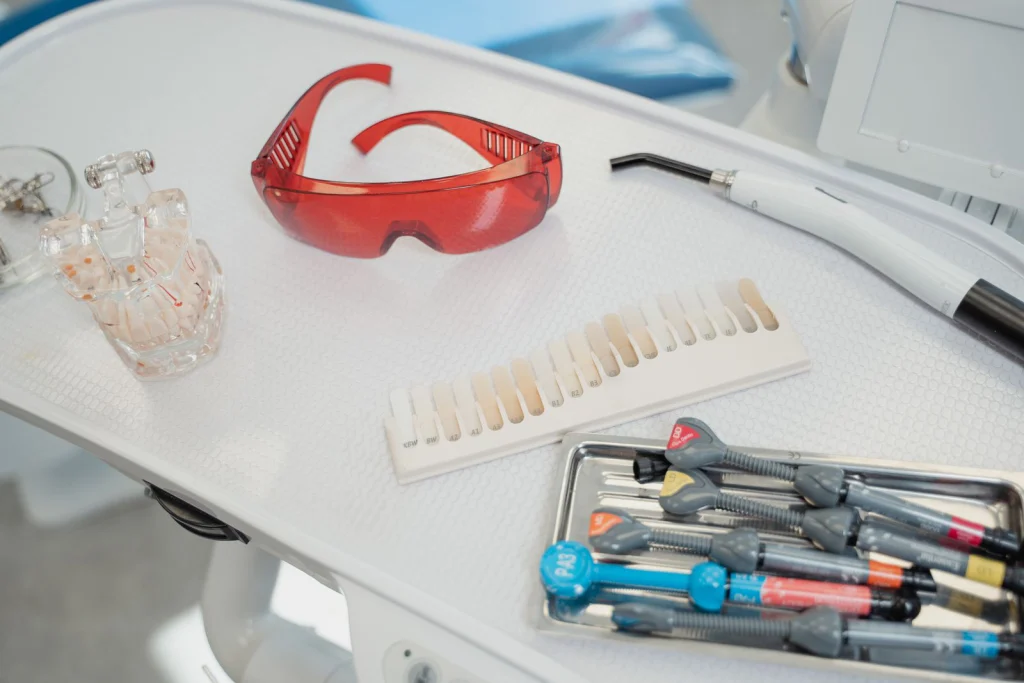
White fillings are tooth-colored fillings made from composite resin, matched to your natural teeth and bonded to the tooth. Silver fillings, also called amalgam, are a metal mixture that contains mercury. Both repair cavities, but they differ in how they look, how they attach to the tooth, how they age and what they are made of. At the Timonium office of Dr. Steven W. Haywood, DDS, every filling is a white, mercury-free filling: the practice never uses amalgam.
This article compares white fillings and silver fillings side by side, explains what to consider if you already have old silver fillings, and describes how white fillings are placed and cared for.
What each type of filling is made of
Silver amalgam fillings
Amalgam fillings have been used in dentistry for a very long time. They are a blend of metals held together with mercury, which gives them their silver color. Amalgam is packed into a prepared cavity and hardens over time. Views on amalgam differ across dentistry. Dr. Haywood is fundamentally opposed to the use of mercury in dental fillings and never uses amalgam or other materials that could be harmful.
White composite fillings
Tooth-colored fillings use a special composite that is mixed at the time of treatment to match the color of your natural teeth. Because it is bonded to the tooth, the filling is stable and blends in with your smile instead of drawing attention to it.
White fillings vs. silver fillings, side by side
Appearance
This is the difference most people notice first. A silver filling is visible as a gray or dark patch whenever you laugh, and metal can discolor and age teeth over time. A white filling offers a seamless transition between tooth and filling and won’t stand out against your smile.
How the filling holds on
Amalgam is packed into the tooth and held largely by the shape of the cavity. Composite is bonded to the tooth. The practice lists no risk of leaks and a decreased risk of fracture among the benefits of tooth-colored fillings.
Setting and eating afterward
Composite fillings are fully set when you leave the office, so you can chew on them as soon as the anesthetic completely wears off. Silver fillings take longer to reach their full set strength; the practice’s post-op guidance for silver fillings is not to eat on that side for eight hours.
Visits
Tooth-colored fillings are completed in a single visit.
What they contain
Amalgam contains mercury. Composite is mercury-free. At the practice, the composite used is non-toxic, metal-free and biocompatible.
Should you replace old silver fillings?
Many adults still have silver fillings placed years ago. Whether to replace them is a decision you make with Dr. Haywood after an exam. Before any procedure, Dr. Haywood looks at how it will affect both your smile and your overall health, including the amalgam fillings you already have.
Reasons people replace silver fillings
- Wear and breakdown. Over time fillings can wear away, fracture or fall out. A filling that is worn at the edges or pulling away can let decay develop underneath it.
- A filled tooth that hurts to chew. Discomfort in a filled tooth is often caused by tiny cracks on the chewing surface.
- Appearance. Metal can make teeth look darker and older.
- Health concerns. Metal fillings have been linked to illness because of their mercury content, which is why some patients prefer a mercury-free mouth.
How safe amalgam removal works
Old mercury amalgam fillings are removed under rigorous safety protocols that follow best practices established by holistic dental associations, designed to minimize your exposure to mercury vapor. The teeth are then restored with mercury-free materials. Read more about mercury-free dentistry and holistic dentistry at the practice.
What replaces a large silver filling
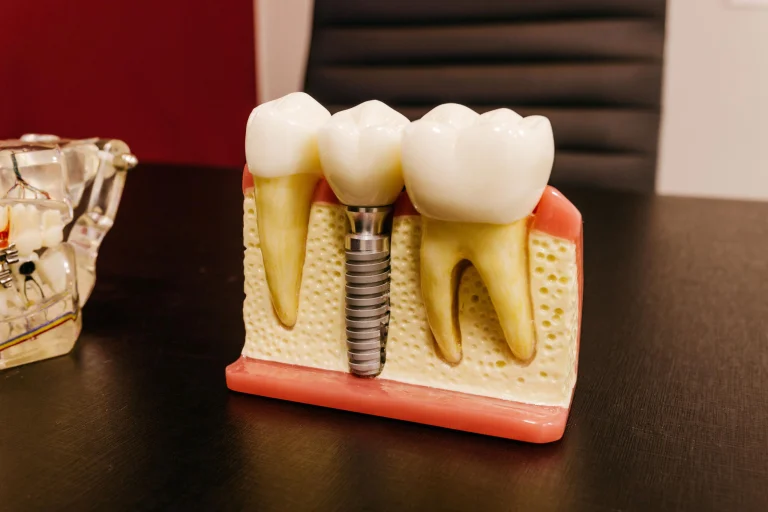
A small old filling can usually be replaced with a white composite filling. A large one often leaves a tooth weakened, and removing it may reveal cracks or decay. In that case a bonded, tooth-colored inlay or onlay can restore strength while keeping more healthy tooth than a crown, and a porcelain crown protects a tooth that is extensively damaged. See inlays and onlays: less invasive than a crown.
How a white filling is placed
- Finding the decay. DIAGNOdent laser detection and digital X-rays help spot decay early, and intraoral camera images let you see the tooth on screen.
- Removing it gently. Only the damaged part of the tooth is removed. Air abrasion can remove small areas of decay with a thin stream of air and silica, with no heat, pressure or vibration.
- Matching and bonding. The composite is mixed to match your teeth, bonded in place, shaped to your bite and polished.
For patients who feel anxious with conventional methods or have extremely sensitive teeth, the office offers a comfortable micro-air filling process for people of all ages, and laughing gas is offered as a complimentary service. See dental technology.
Caring for white fillings
- Right after treatment. Avoid chewing and hot drinks until any numbness wears off. Some sensitivity to hot, cold and pressure is normal. If the filled tooth touches before your other teeth, call for an adjustment. See post-op instructions.
- Staining. Composite resin can pick up stains, so rinse with water after coffee, tea, cola or red wine when you can’t brush.
- Daily cleaning. Brush and clean between your teeth every day. Yes, you can floss a filling; see when do you need a dental filling?
- Protection. Avoid chewing ice or opening packages with your teeth, and ask about a custom bite guard if you grind.
- Checkups. Regular visits let worn edges be caught before decay starts underneath.
Cost, insurance and financing
Your fee depends on the size and number of fillings and is discussed before treatment. The practice is out of network with all dental insurance companies: you pay at the time of your visit, and the office files the claim on your behalf so your plan can reimburse you for what it covers. Plans vary in how they treat tooth-colored fillings and filling replacement, so check your benefits. Health savings and flex plans are welcome, and financing is available through CareCredit, with no-interest options up to 12 months, and Cherry, with plans from 3 to 24 months. See financing options.
Frequently asked questions
Are white fillings as good as silver fillings?
For most cavities, white composite fillings are an excellent choice: they are bonded to the tooth, match your natural color and are completed in one visit. Larger areas of damage are better served by an inlay, onlay or crown, whatever the original filling material.
Do you ever use silver fillings?
No. Dr. Haywood never uses amalgam fillings. Every filling at the practice is tooth-colored and mercury-free.
Do I have to replace all of my silver fillings?
That is a decision you make with Dr. Haywood after an exam, based on the condition of each filling and your health priorities.
Is removing a silver filling safe?
Old amalgam is removed under rigorous safety protocols based on best practices established by holistic dental associations, designed to minimize exposure to mercury vapor.
Talk about your fillings in Timonium
If you have a new cavity, or old silver fillings you have been wondering about, request an appointment or call (410) 453-9399. The office of Dr. Steven W. Haywood, DDS is at 108 W Timonium Rd, Ste 200, Timonium, MD 21093, serving Timonium, Towson, Pikesville and Baltimore. See every option in restorative dentistry.
Ready to see your future smile?
Book a visit in Timonium to talk about new cavities or old silver fillings.