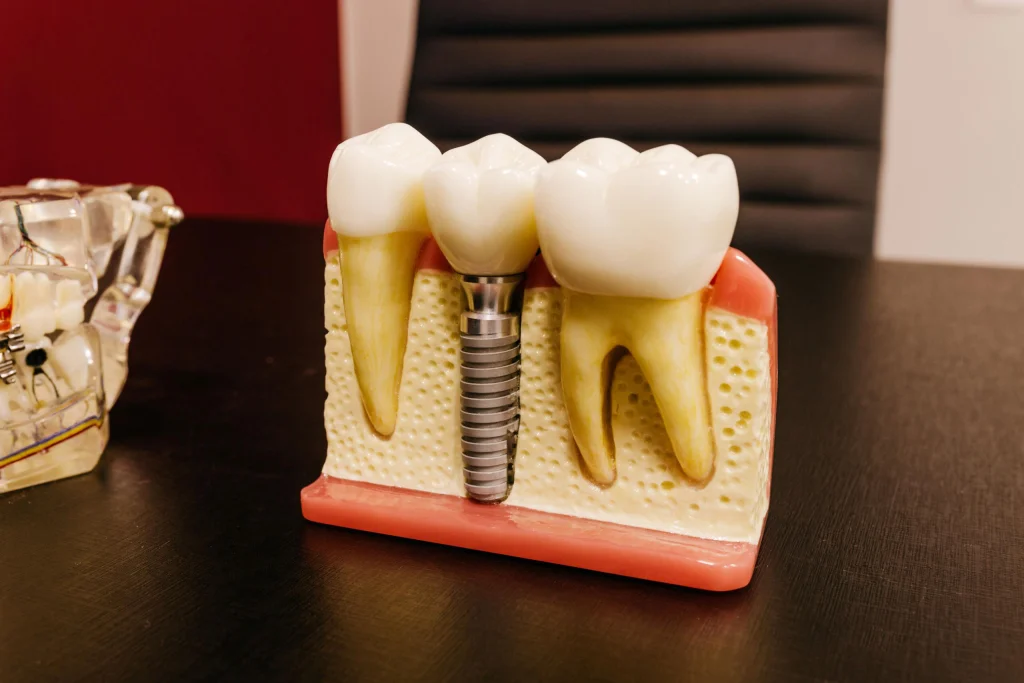
A dental implant bridge replaces several missing teeth in a row using two or more implants to hold three or more joined replacement teeth. Instead of placing an implant under every missing tooth, a few implants act as supports and the teeth between them rest on those implants, not on your natural teeth. At the Timonium office of Dr. Steven W. Haywood, DDS, an implant bridge can cost 20–30% less than placing an implant for each missing tooth.
This guide explains how an implant bridge works, where it fits best, how it compares with a traditional bridge, individual implants and a partial denture, what the treatment process looks like, and how to care for it.
How a dental implant bridge works
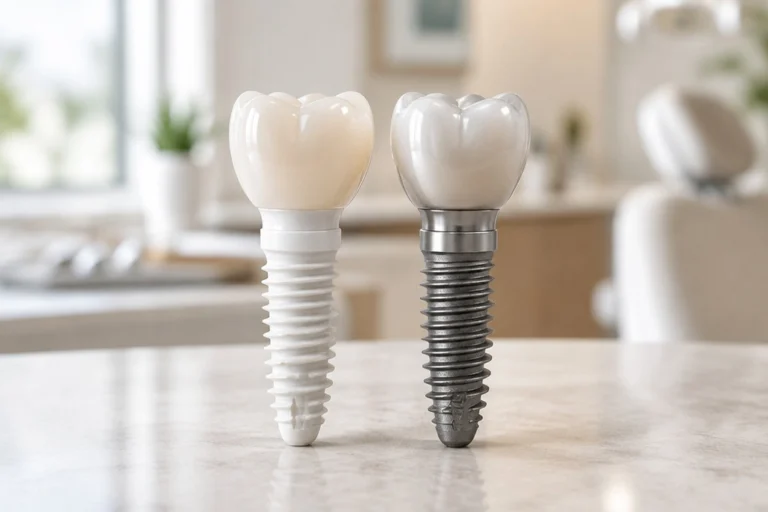
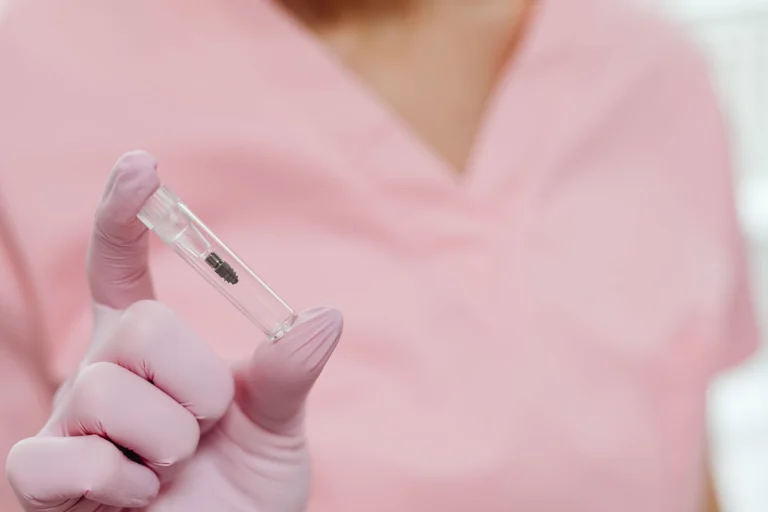
A dental implant is a titanium post placed in the jawbone to take the place of a tooth root. Bone fuses around it in the months after placement. With an implant bridge, two or more implants become the anchors, and a single restoration of joined teeth spans the gap between and over them.
- Supports: the implants carry the load, so the natural teeth on either side are not used as anchors.
- Attachment: implant bridges may be screwed in place or cemented in place.
- Quality: the bridge is made to the same quality as the practice’s dental crowns and is extremely strong.
- Service: any bridge can occasionally come off. Patients who are current with their regular care always have the bridge serviced at no cost.
When an implant bridge works best
An implant bridge is designed for a span of missing teeth in one area, rather than single gaps scattered around the mouth. It tends to be a good fit:
- In the back of the mouth, where most or all of the back teeth have been lost
- In the front, where 3 or 4 front teeth have been knocked out or lost to decay or gum disease
- For people who want restorations that act and feel like natural teeth
- Where gum tissue has been lost and avoiding extra surgery is key
Front teeth need extra planning, because the bone there is often thinner and less dense and the result shows every time you smile. Read about front tooth implants.
Implant bridge vs. traditional bridge
A traditional dental bridge is made of dental crowns on the teeth next to the gap, called abutment teeth, with an artificial tooth between them. It is usually completed in two appointments. The catch is that the neighboring teeth have to be prepared to carry the bridge, even when they are healthy.
An implant bridge leaves those neighboring teeth alone, because the implants do the supporting. It also replaces tooth roots, which helps prevent the bone deterioration that follows tooth loss. That is part of why traditional bridges are used less often than they once were: dental implants are the better alternative in most cases. Read more about dental bridges.
Implant bridge vs. an implant for every tooth
Replacing each missing tooth with its own implant and crown is ideal in many ways, but it is also the most expensive way to replace a series of missing teeth. A bridge saves the cost of one or more extra implants and the supporting post on each one. The trade-offs are practical:
- You can’t floss under any bridge without a floss threader, and some food can collect under the bridge itself.
- If a bridge is damaged, it is harder to repair than individual single tooth implants.
If you are missing one tooth rather than several, a single tooth implant is usually the more direct answer.
Implant bridge vs. a partial denture
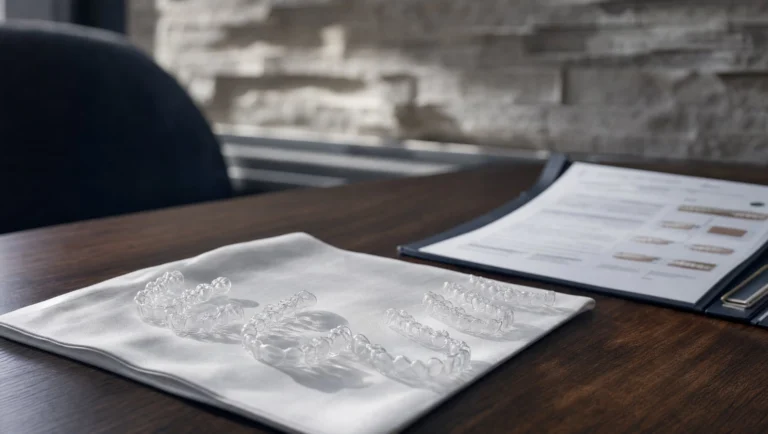
A removable partial denture is the least expensive way to replace missing teeth. It comes in and out, usually has metal clasps and can affect how you taste food. If you would rather have something removable but more secure, implants can hold a partial denture too, with no clips or wires showing, and a tooth can simply be added later if another is lost. Read about snap-on implant teeth.
Planning an implant bridge
Because a bridge depends on its implants lining up, the planning happens before surgery:
- Consultation and exam. Dr. Haywood examines the missing-tooth area, reviews your health history and talks through your goals and options. Active gum disease is treated first.
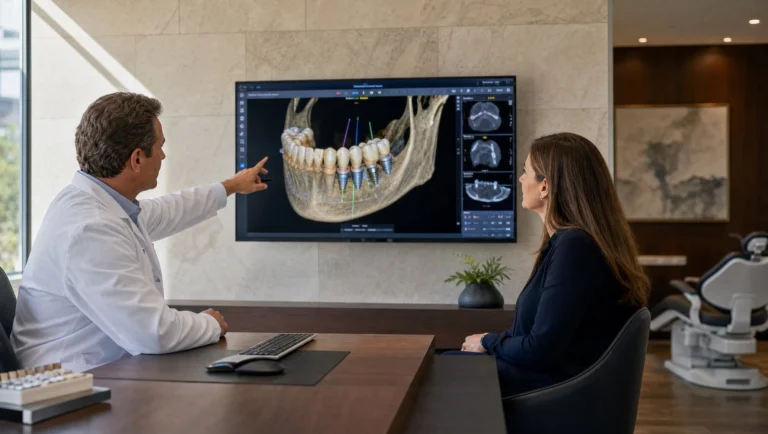
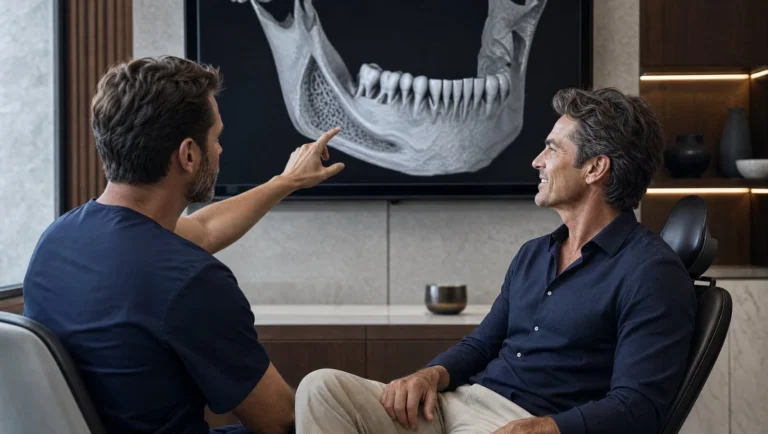
- A 3D cone beam CT scan. The in-office, low-dose Green CT scan shows the quantity and quality of your bone. If you need bone grafting, you’ll know at that same visit.
- A digital plan. The implants are placed virtually on screen. Guided surgery matters most when several implants need to be almost parallel to one another, as they do under a bridge. When a guide is advisable, it is 3D-printed in about 2–3 weeks and approved by Dr. Haywood. Read about computer-guided implant surgery.
- Implant placement. The implants are placed in the planned positions.
- Healing. Implants need at least 6–8 weeks of healing after surgery before they are restored, and the full process can take several months, longer if grafting comes first.
- Your bridge. The joined teeth are screwed or cemented onto the implants.
If dental surgery makes you anxious, laughing gas and oral conscious sedation are both available. Read about sedation dentistry.
Caring for an implant bridge
An implant bridge needs daily care and regular professional visits:
- At home: brush the bridge and clean under it with a floss threader every day. Interdental brushes and a water irrigator also help around implants.
- At the office: gum tissue attaches less firmly to an implant than to a natural tooth, so implant cleanings every 3–4 months are recommended, using titanium or plastic instruments that are safe for implants.
- If you grind or clench: the sideways forces of grinding can loosen implants, so a custom night guard is recommended.
Implants don’t decay, and current thinking is that they may last a lifetime when they are looked after.
What does an implant bridge cost?
Your fee depends on your case: how many teeth are being replaced, how many implants are needed, whether you need grafting or a surgical guide, and the materials chosen. Simple cases cost less than complex ones. An implant bridge can cost 20–30% less than placing an implant for each missing tooth, and your own fee is set after your exam and scan.
The practice is out of network with all dental insurance companies. You pay at the time of your visit, and the office files the claim on your behalf so your plan can reimburse you for what it covers. Health savings and flex plans are welcome. Financing is available through CareCredit, with no-interest options for up to 12 months, and Cherry, with payment plans from 3 to 24 months. See financing options.
Frequently asked questions
How many teeth can an implant bridge replace?
An implant bridge uses two or more implants to replace three or more teeth. How many teeth and implants suit your mouth depends on the length of the gap and the bone your scan shows.
Is an implant bridge the same as a Maryland bridge?
No. A Maryland bridge is a type of traditional bridge that bonds an artificial tooth to the backs of the neighboring teeth. An implant bridge is held by implants in the jawbone and does not rely on neighboring teeth.
Will an implant bridge feel like my own teeth?
Implant bridges are a good fit when you want restorations that act and feel like natural teeth. They are fixed in place and made to the same quality as the practice’s crowns.
What happens if my implant bridge comes off?
Screwed or cemented bridges can occasionally come off. If you are current with your regular care, the bridge is serviced at no cost.
Can I get a second opinion on an implant plan?
Yes. Patients often bring implant proposals from other offices, and second opinions here are complimentary.
Book an implant bridge consultation in Timonium
Dr. Steven W. Haywood, DDS has over three decades of experience in cosmetic, restorative and implant dentistry and is a Fellow of the International Congress of Oral Implantologists. Every phase, from the scan to the finished bridge, happens in one office. To find out whether an implant bridge is right for you, request an appointment or call (410) 453-9399. The office is at 108 W Timonium Rd, Ste 200, Timonium, MD 21093. Compare all your options on the dental implants in Timonium page.
Ready to see your future smile?
Missing several teeth in a row? Book an implant bridge consultation in Timonium.