Prepless veneers are the right choice for some smiles and the wrong one for others. They are ultra-thin porcelain veneers placed with little or no drilling, so they keep most, if not all, of your natural enamel. They work best on healthy teeth that are already in a good position and need a modest change, such as closing small gaps or brightening color. Teeth that are damaged, heavily filled, very dark or badly out of line usually need a different plan.
If you want a more beautiful smile but don’t want your healthy teeth ground down, this article explains how prepless veneers differ from traditional porcelain veneers, what makes someone a good candidate, where Invisalign fits in and what to ask before you decide. It also explains how Dr. Steven W. Haywood, DDS approaches veneers at the Timonium, Maryland office, where patients can choose between prepless and traditional options.
What prepless veneers are
A porcelain veneer is like a new layer of enamel on the face and edge of a tooth, improving both its appearance and its strength. Traditional veneers are bonded after the tooth has been prepared, which means some enamel is removed to make room for the porcelain. Prepless, or minimal-preparation, veneers are made thin enough to go on with little or no drilling, preserving most if not all of the natural tooth.
You may have heard brand names such as DURAthin, Lumineers or DaVinci. Dental veneers are made of the same materials, and those names are mostly marketing for the thinnest veneers. The practice offers prepless veneers including DURAthin veneers, and for ideal candidates who need no tooth preparation it uses the same materials and methods, with every veneer customized for you.
What prepless veneers can fix
For the right teeth, minimal-preparation veneers can:
- Close gaps and spaces between teeth.
- Brighten teeth without whitening.
- Make teeth look straighter without braces.
- Strengthen chipped or worn teeth without crowning them.
They are also more durable than cosmetic bonding, which uses composite resin sculpted directly on the tooth. Bonding is a good, affordable option for small repairs, but porcelain resists stains better and doesn’t break as easily. Compare the two on the dental bonding page.
Prepless vs. traditional veneers
The real difference is preparation: how much of your natural tooth is changed before the veneer goes on.
Traditional porcelain veneers
Traditional dental veneers involve reshaping some enamel so the porcelain sits naturally without looking bulky. Even so, a veneer can be as thin as a contact lens and does not require grinding down the whole tooth the way a crown does. It partially wraps the tooth and strengthens it. Traditional veneers are still the majority of veneer cases at the practice, because many patients have damaged teeth or older dental work that needs more extensive treatment.
Prepless veneers
Prepless veneers skip most or all of that preparation. Dr. Haywood always chooses the thinnest veneer and the most conservative approach that will give a natural result. The trade-off is that a veneer placed on an unprepared tooth adds a little thickness, so the tooth underneath has to be a good starting point.
Neither is automatically better
A thin veneer on the wrong tooth can look bulky or fail to hide what lies beneath it, and a traditional veneer on a tooth that didn’t need preparation removes enamel for no reason. The right choice depends on the smile in front of the dentist, not on the name of the veneer.
Who is a good candidate, and what rules you out
Candidacy comes down to the condition, color and position of your teeth and how much change you want.
Often a good fit
- Healthy teeth with sound enamel and little old dental work.
- Small gaps or spaces.
- Teeth that are slightly small, short or worn.
- Mild chips, or color you want brighter.
Often a reason to choose a different plan
- Damaged teeth or older dental work. These often need traditional porcelain veneers to strengthen them.
- Very dark teeth. A veneer may need to be more opaque or thicker in areas where the tooth underneath is very dark or damaged.
- Teeth that stick out or are crowded. Adding porcelain to a tooth that already projects forward can make it look fuller, not straighter.
- Gum problems. Veneers need healthy gums around them, so gum health comes first.
Your customized smile evaluation starts by checking whether a minimal-preparation approach suits your teeth. If it doesn’t, you will hear why, and what would work instead.
Where Invisalign fits in
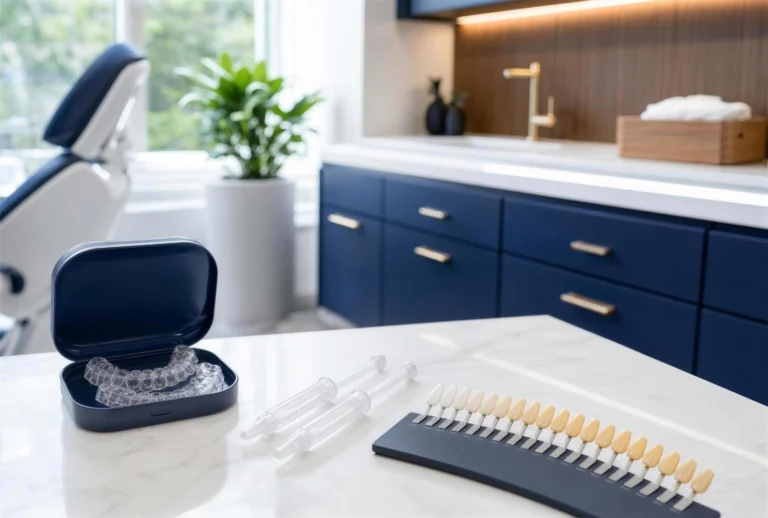
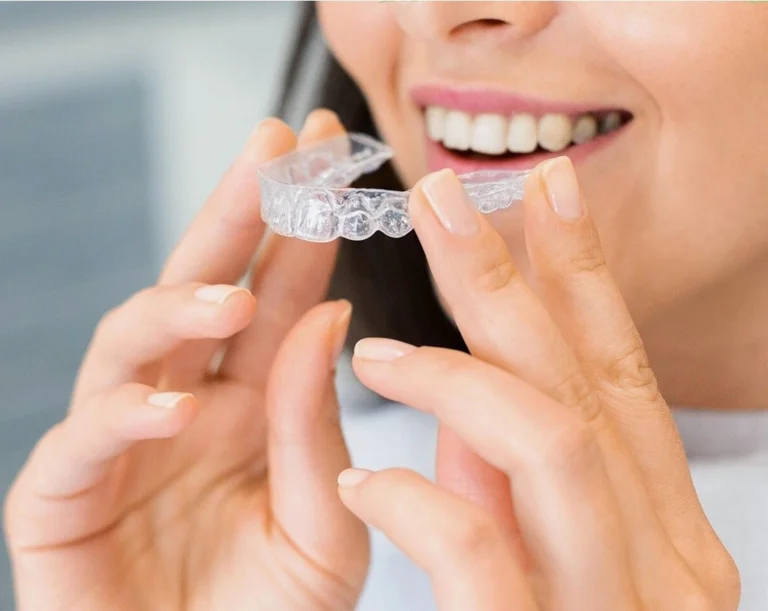
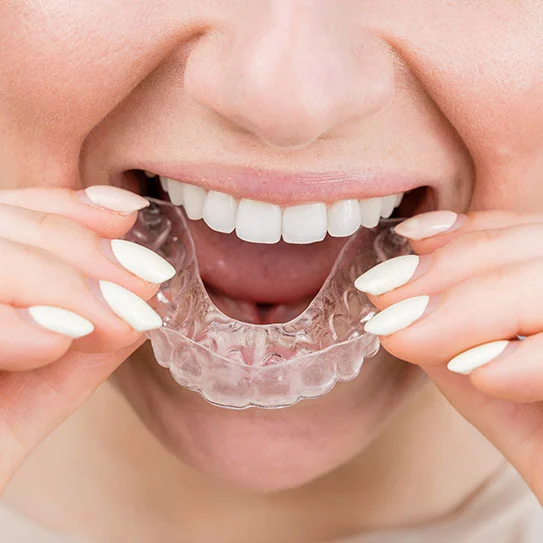
Sometimes a tooth isn’t a good prepless candidate because of where it sits, not its shape. If teeth need to move into a better position first, Invisalign clear aligners can shift them before any instrument touches them. That can make a more conservative veneer possible afterward, and Invisalign is often combined with veneer makeovers at the practice.
If you have assumed your teeth are too crooked for a conservative option, ask about this sequence before ruling prepless veneers out. Dr. Haywood is an Elite Invisalign provider, so aligners and veneers can be planned together in one office.
What makes veneers look natural
White teeth alone don’t make a smile look natural. Shape, proportion, color, translucency and how the teeth suit your face all matter. Dr. Haywood insists on a natural, never-fake look. Ultra-thin porcelain stays translucent and shiny like natural enamel once bonded, and each veneer blends colors and translucencies with the small details that make a tooth look like a tooth.
All veneers are made in the USA by a master ceramist, using US-certified laboratories chosen for their ability to customize exactly what suits each patient.
How veneer treatment works at the practice
- Talk about your goals. Your visit starts with a thorough exam and a conversation about what you would like to change. It helps to jot down what bothers you beforehand.
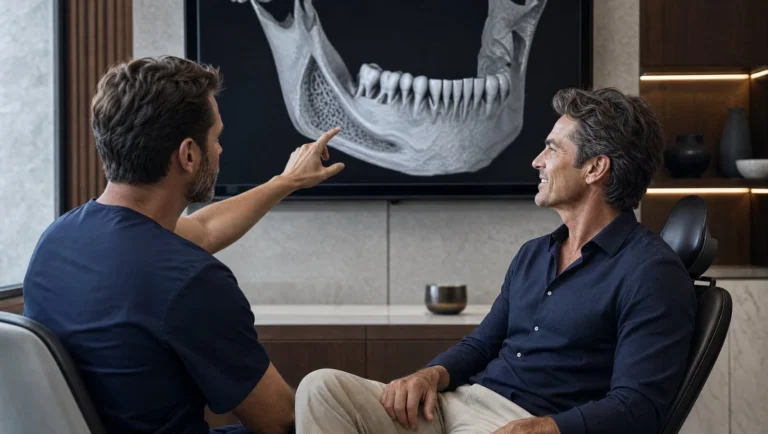
- Preview your smile. A smile evaluation on the cosmetic imaging computer shows possible changes before any treatment begins, so you can plan them together.
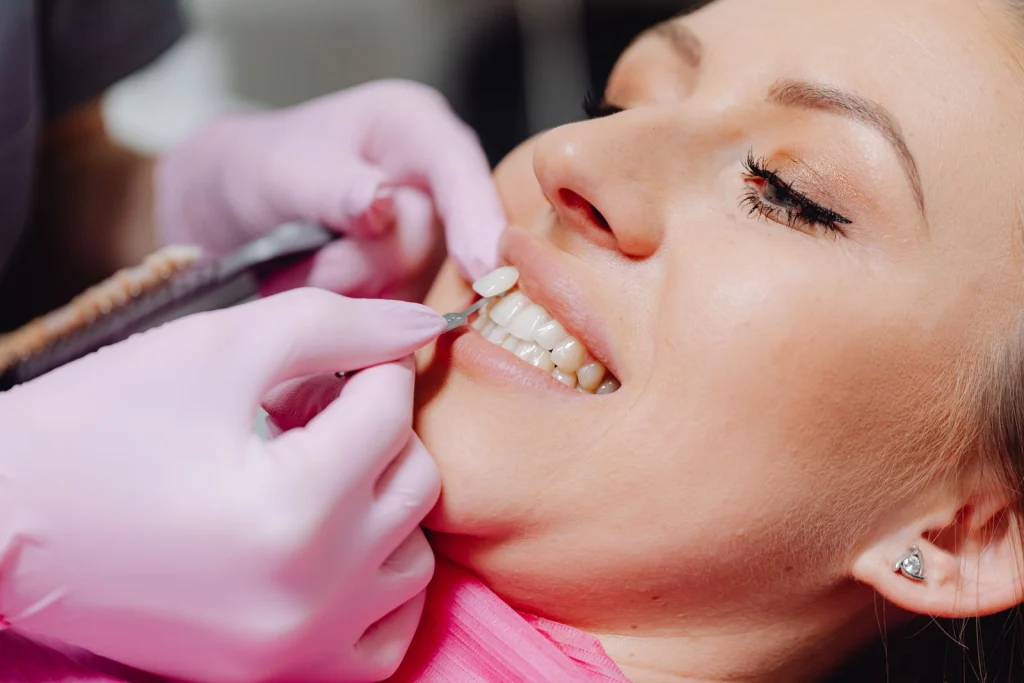
- Test-drive the look. Veneer treatment includes a trial “test drive” set, so you can evaluate the shape, color and look before the final set is made.
- Receive your custom porcelain. A prepless veneer smile can be finished in as little as 1–2 weeks, depending on your plan.
If dental visits make you anxious, tell the team. Sedation options, including laughing gas and oral conscious sedation, can help you stay comfortable.
How long veneers last and how to care for them
With good home care and professional care at the office, porcelain veneers can last for decades, and porcelain resists stains better than natural teeth or composite. The way you care for your smile is the best predictor of how long it lasts:
- Keep up with brushing, flossing and regular cleanings to protect your gums and oral health.
- Wear bite protection if recommended; it protects any cosmetic investment.
- Never use your teeth to open packages or cut things.
- Limit staining foods and whiten your natural teeth routinely.
If a veneer is damaged accidentally, it can typically be corrected easily, and veneers are warrantied for one full year.
What prepless veneers cost
There is no honest flat price for veneers in Maryland or anywhere else, because every smile needs a different number of teeth and a different plan. At the practice, fees are set per tooth and quoted after your customized smile evaluation. Payment options, financing and pre-payment discounts are available, and staging treatment can help if you use a flex spending account.
The practice is out of network with all dental insurance providers: you pay at the time of your visit, and the office files the claim so your plan can reimburse you for whatever it covers. HSA and flex plans are welcome. Financing is available through CareCredit, with no-interest options up to 12 months, and Cherry, with plans from 3 to 24 months. See financing options.
Questions to ask before you choose veneers
- Am I a candidate for prepless veneers, and if not, why?
- How much, if any, enamel would be changed on each tooth?
- Would Invisalign improve the position of my teeth first?
- How many teeth should be treated for a natural result?
- Can I preview the result and try a test-drive set?
- What will the complete treatment cost, and how can I pay for it?
Frequently asked questions
Do prepless veneers damage your teeth?
They are designed to preserve most if not all of your natural enamel, with little or no drilling. That is their main advantage over traditional veneers, which remove some enamel.
Are Lumineers and DURAthin veneers different from other veneers?
Dental veneers are made of the same materials, and the brand names mostly describe the thinnest veneers. What makes a smile beautiful is the skill and artistic vision behind each custom design, not the brand.
Can prepless veneers fix crooked teeth?
They can make mildly crooked teeth look straighter without braces. When teeth are further out of position, Invisalign can move them first, and then veneers can complete the smile.
How long does it take to get prepless veneers?
Your new smile can be finished in as little as 1–2 weeks. Your exact timeline is mapped out at your smile evaluation.
What if I’m not a candidate?
Traditional porcelain veneers, dental bonding, whitening or a combination may suit you better. Other cosmetic dentistry treatments, from crowns to dental implants for missing teeth, can be part of the same plan. See all cosmetic dentistry options.
Find out if prepless veneers are right for your smile
If you want a better smile but are worried about changing your natural teeth, ask the one question that matters: are you a candidate? Request an appointment or call (410) 453-9399 and mention prepless veneers. The office is at 108 W Timonium Rd, Ste 200, Timonium, MD 21093, and patients come for veneers from Timonium, Towson, Hunt Valley, Baltimore and Shrewsbury, PA.
Ready to see your future smile?
Book a smile evaluation in Timonium to find out if you are a prepless veneer candidate.