If you have been told you might need a bone graft before an implant, the first question is usually the simplest one: why would a missing tooth mean you need bone work at all? The short answer is that bone needs a tooth root to stay healthy, and once that root is gone, the bone around it can start to thin out. The longer answer, and what it means for your own treatment, is below.
What bone grafting is, and why an implant sometimes needs it first
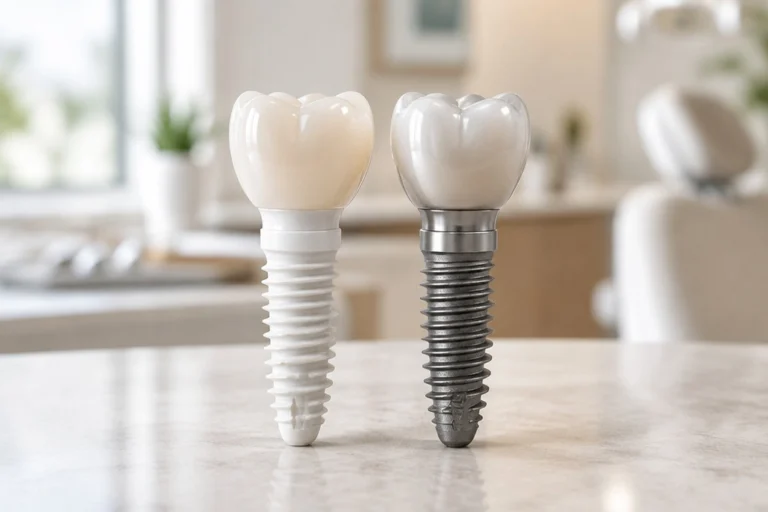
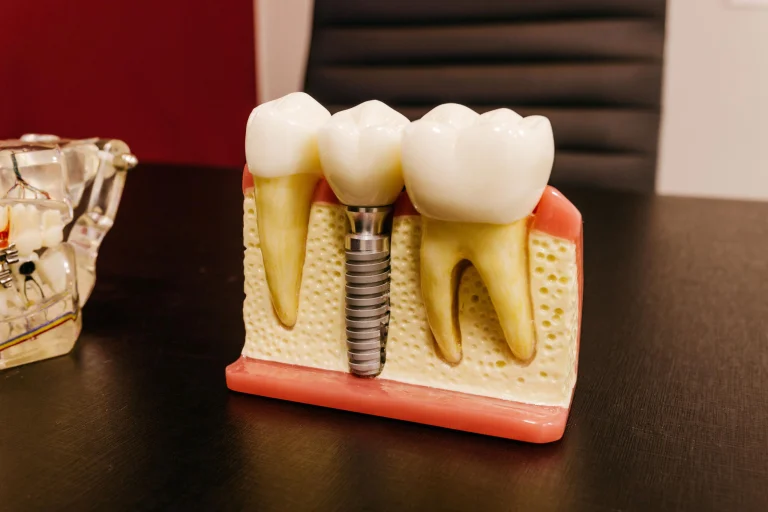
An implant only works if there is enough solid bone to hold it steady, the same way a fence post needs enough packed ground around it to stay upright. Bone loss after a tooth extraction, or after a tooth has been missing for years, can leave the bone too thin for an implant to be placed safely. Grafting can often build that bone back up, but it adds a step and a cost to the overall plan.
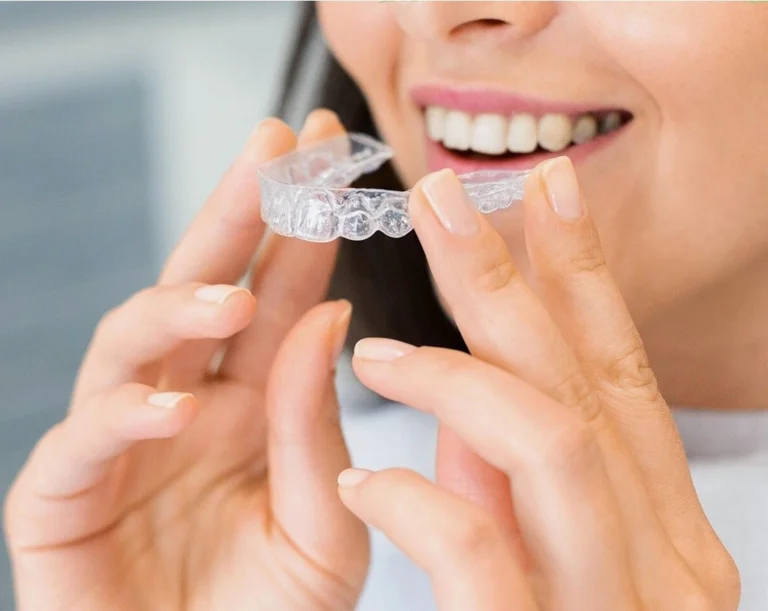
This matters most in two situations. The first is a tooth that has been gone for a while, where the bone has had time to shrink without a root to support it. The second is a tooth that is being removed now, where grafting can help preserve the socket so there is enough bone later. If a tooth has been missing a long time, or never developed in the first place, orthodontics and bone grafting are both considered as part of the plan, since moving teeth and building bone can go hand in hand.
None of this means every implant needs a graft. Plenty of patients have enough bone already and go straight to placement. The point of the steps below is finding out, early, which situation applies to you.
How we find out whether you need one
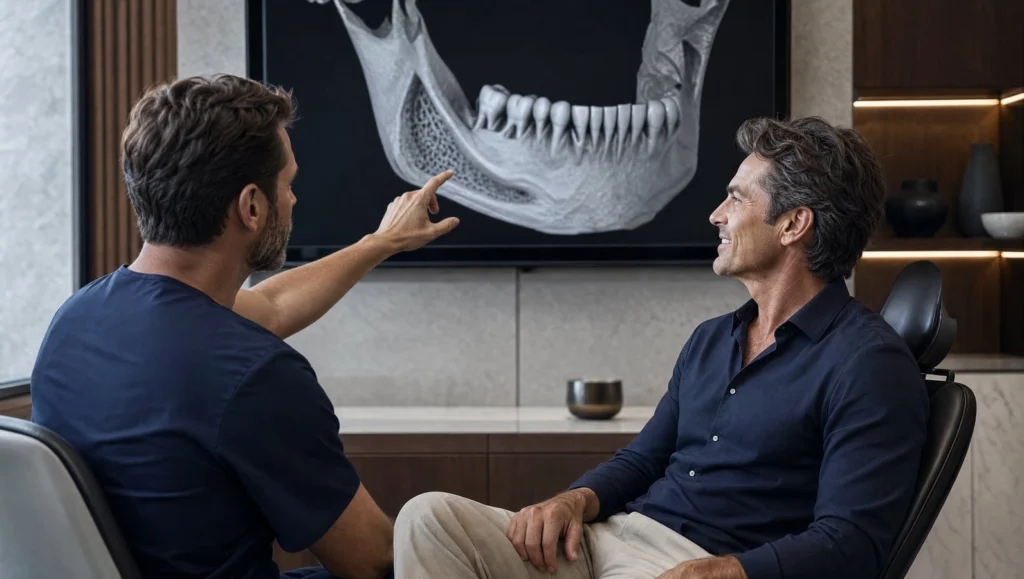
Not everyone needs a bone graft. The way to know is a 3D scan, not a guess based on how long a tooth has been missing or how the gum looks from the outside. The key test is a cone beam CT scan, and within minutes the scan shows the quantity and quality of your jawbone. If you need bone grafting, you'll know at that same visit, which means no surprises later in your treatment plan.
That single visit does double duty. It tells you whether grafting is part of your plan, and it also lets your implant be placed virtually on screen first, so the position and angle are worked out before anyone picks up an instrument. If you are weighing implants against other ways of replacing a missing tooth, it helps to understand root canal vs dental implant decisions as well, since that choice sometimes comes first.
What the graft is made of and what you'll notice afterward
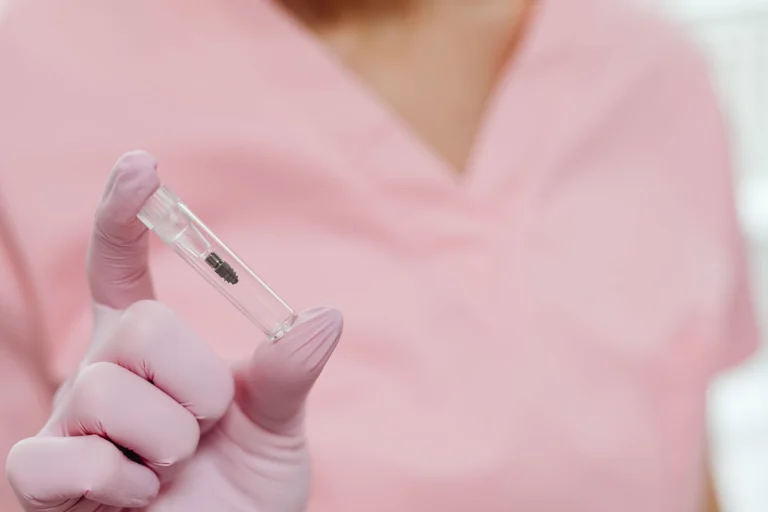
A bone graft is made of many fine particles, not a single solid piece. Once it's placed, it is normal to notice a few small granules in your mouth for the first several days. That is not a sign anything has gone wrong. It is simply part of how a particle-based graft settles in while the surrounding tissue heals over it.
Knowing this ahead of time matters, because the instinct when you feel something unfamiliar in your mouth is to investigate it with your tongue or fingers, or to look closely in a mirror. That instinct works against you here, for reasons covered next.
Caring for the graft site in the first few days
The first 3 to 5 days set the tone for how well a graft holds. To keep as much of the graft in place as possible, don't rinse vigorously or spit, don't press on the area with your tongue or fingers, and don't pull your lip back to look at the stitches. Each of those actions can dislodge particles that are still settling into place, undoing some of what the graft is meant to do.
Stitches are part of the same picture. Some stitches dissolve on their own; others have to be removed at the office. Either way, the stitches are doing a job, holding the gum tissue over the graft material while it integrates, and pulling at them to inspect the site defeats that purpose. If you are not sure whether your stitches are the dissolving kind or the kind that need a follow-up visit, that's worth asking before you leave the office rather than guessing at home.
Does bone grafting hurt?
This is usually the question underneath all the others. Pain after an implant procedure is described as negligible, and ice bags help with any soreness and swelling.
Swelling and tenderness are normal for a few days, and ice in the early period is part of managing that, alongside taking any medications as directed. None of this means discomfort is something you have to grit your teeth through. It means the discomfort that is normal has already been described, and it is on the mild end, not the end patients sometimes brace for before their first visit.
How long a graft takes to heal, and how it changes your overall timeline
Healing time is where patience matters most, because bone does not rebuild on the same schedule as soft tissue. Implants need at least 6–8 weeks of healing after surgery before a single tooth is restored, and full integration into the bone takes longer than that. From your first visit to your finished tooth, the whole process can take several months, and longer if grafting comes first.
That extra time when grafting is involved is not wasted time. It is the bone you needed, forming where it was previously too thin, so that when the implant is eventually placed, it has the same solid foundation an implant in naturally thick bone would have. If you are trying to plan around a wedding, a move or another date, it is worth having that conversation at your scan visit, since the practice will be able to tell you, case by case, what your own timeline looks like once grafting is factored in. For a broader walk-through of what happens at each stage, see dental implant procedures explained.
What else can affect success: gum disease and smoking
Two other things come up at this stage of planning, and both are worth raising honestly rather than leaving unsaid. Active gum disease is treated before implants are placed, since placing an implant into gum tissue that is still inflamed works against the healing you are trying to achieve. If you have been told you have gum disease, treating it first is not a delay for its own sake, it is what gets your mouth ready for the implant to succeed.
Smoking is the other factor. Smokers can have implants, though they are somewhat less successful, so this is a good time to talk openly about smoking rather than leave it out of the conversation. After surgery, smoking has to be avoided because it can dislodge the protective blood clot and delay healing, the same clot that protects an extraction site or a fresh graft while new tissue forms over it. If you smoke, mentioning it at your consultation means your plan and your aftercare instructions can account for it directly.
Can the implant go in at the same time as the extraction?
Often, yes. If a damaged tooth has to come out, the implant can often be placed immediately, at the time of the extraction. That single visit does two things at once, removing the tooth that is causing the problem and placing the implant into the socket it leaves behind, which can mean fewer surgical visits overall.
Grafting fits around this depending on what the scan shows. In some cases, bone quality supports placing the implant right away. In others, the socket needs to be built up with graft material first, with the implant following once that bone has had time to heal. Either way, the 3D scan at your consultation is what tells you, and your dentist, which path your own case calls for. If you are weighing implants against keeping a damaged tooth, the comparison in root canal vs dental implant may help frame that decision too.
Paying for a bone graft
The practice is out of network with all dental insurance companies. You pay at the time of your visit, and the office files the claim on your behalf so your plan can reimburse you for what it covers. That applies to bone grafting the same way it applies to the rest of implant treatment.
If cost is a concern, health savings and flex plans are welcome, and CareCredit offers no-interest options for up to 12 months while Cherry offers payment plans from 3 to 24 months. Both of those options exist specifically for patients who want to move ahead with treatment without paying the full amount up front, and the scan visit is a reasonable time to ask how either one would apply to your own plan. For a fuller picture of how overall implant costs are put together, see how much dental implants cost.
Getting a scan and starting your plan in Timonium
The only way to know whether you need a bone graft, and what your own timeline and plan will look like, is the scan visit itself. Patients come to the Timonium office from Timonium, Towson, Hunt Valley, Baltimore and Shrewsbury, PA, for exactly this reason: one visit, one scan, and a straight answer about what your case needs.
If you are missing a tooth, or have one that may need to come out, and want to know where bone grafting fits into your own plan, book a consultation or call (410) 453-9399. For more on how implants are planned and placed more broadly, see dental implants in Timonium, or if you are missing several teeth and are weighing your options, missing teeth replacement options and one tooth to a full mouth cover the range of situations grafting can come up in.
Ready to see your future smile?
Contact our Timonium dental office today to schedule your consultation.