“Dental implant procedures” covers more than the moment an implant is placed. Depending on your mouth, an implant plan can combine a 3D scan, a tooth extraction, a bone graft or sinus lift, guided placement, temporary teeth and the final crown, bridge or set of teeth. Some patients need only two or three of these steps; others need most of them.
This guide explains what each procedure is, why it might be part of your plan, and how it is handled at the Timonium, MD office of Dr. Steven W. Haywood, DDS, where every phase of implant care happens under one roof. If you want the practical side of preparing for surgery day, read getting ready for dental implant surgery.
The 3D scan and digital implant plan
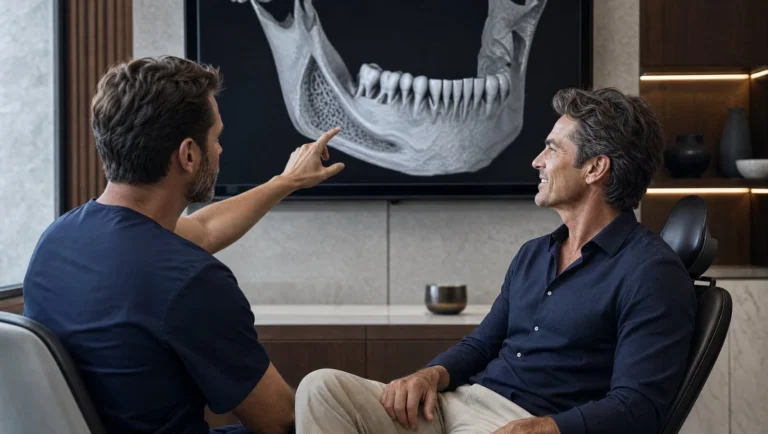
Every implant plan starts with a full exam, a talk about your health history and a clear picture of your bone. The key test is a cone beam CT scan, which takes a three-dimensional image instead of the flat picture of a conventional X-ray. The practice uses a low-dose Green CT scanner developed by VATECH, and the scan takes no longer than a panoramic X-ray.
Within minutes, software reconstructs your jaw and shows the quantity and quality of bone. Your implant can then be placed virtually on screen to simulate what is possible in surgery. If you need bone grafting, you’ll know at that same visit, so it is built into your plan from the start rather than discovered later.
Tooth extraction and immediate implant placement
If a damaged tooth has to come out, the extraction is often the first procedure in the plan. The tooth is gently separated from the ligament that holds it and removed from the socket. In many cases the implant can be placed immediately, at the time of the extraction, which saves a separate surgery.
When all remaining teeth in an arch need to come out for a full set of implant teeth, the extractions and implant placement happen in the same local office. Read more about tooth extractions.
Bone grafting and socket preservation
After a tooth is lost, or after it has been missing for years, the bone can become too thin to hold an implant. Grafting can often build it back up. Socket preservation is a related step: when a front tooth is removed, the socket is preserved with grafting, because the upper front jawbone can deteriorate rapidly if it isn’t.
A bone graft is made of many fine particles, and it is normal to notice a few small granules in your mouth for the first several days. To keep the graft in place, don’t rinse vigorously or spit for the first 3 to 5 days, don’t press on the area with your tongue or fingers, and don’t pull your lip back to look at the stitches. Some stitches dissolve on their own; others are removed at the office.
Sinus lift and sinus grafting
The upper back jaw sits just below the sinus. When there is not enough space there to place implants, a sinus lift makes room. It may be done with sinus grafting or on its own, depending on the available bone height, and when there is less than 10 mm of bone height, a sinus grafting procedure is planned.
The grafted bone is usually freeze-dried bone from tissue banks, which may be combined with synthetic bone or your own bone. Aftercare focuses on protecting the sinus from pressure: don’t blow your nose or sneeze with your mouth closed for several weeks, don’t drink through straws, and avoid flying in pressurized aircraft, scuba diving, blowing up balloons or playing wind instruments. Smoking should be avoided for at least two weeks.
Guided or freehand implant placement
Where an implant sits affects how it serves you and how it looks. For some cases, the digital plan is turned into a 3D-printed surgical guide, approved by Dr. Haywood, whose holes accept BioHorizons guided surgery drills so the implant goes exactly where it was placed on screen. A guide takes about 2–3 weeks to make once your treatment plan is accepted.
Guides matter most when there is very little bone, when a specific angle is needed, or when several implants must line up almost parallel. Front tooth implants are virtually always placed with guided surgery. Not every implant needs a guide, though; there are times when an experienced surgeon can place an implant better freehand. See computer-guided implant surgery.
Temporary teeth while you heal
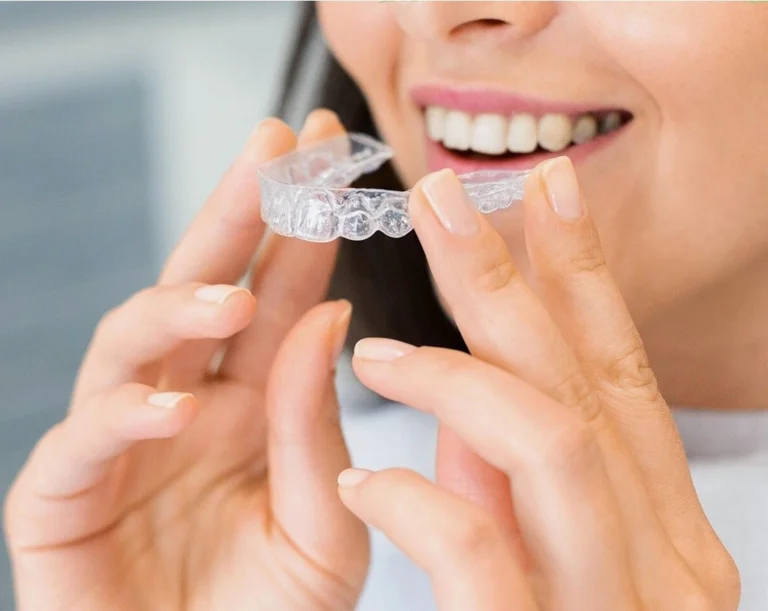
When a front tooth or a full arch is involved, temporary teeth let you smile and chew comfortably while the implants integrate with the bone. A back tooth is often left without a temporary while it heals, which can also reduce the overall expense. With full-arch treatment, implants can support a full set of teeth in one day, and whether that approach suits you depends on your scan and plan.
The abutment and your final teeth
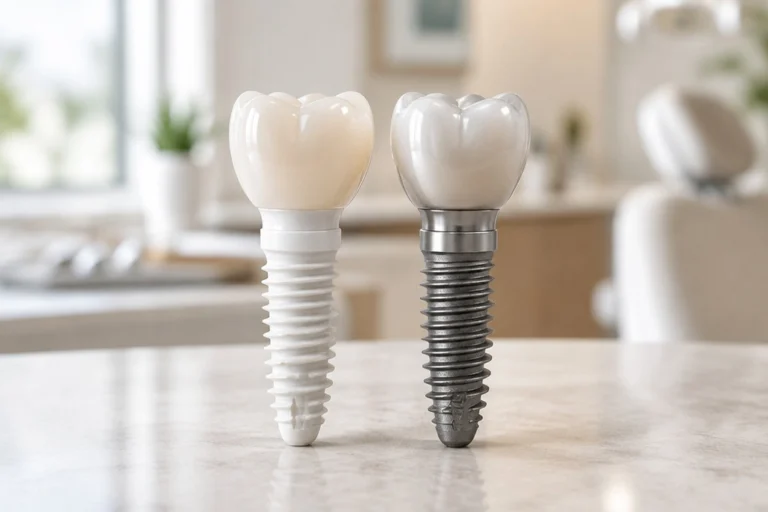
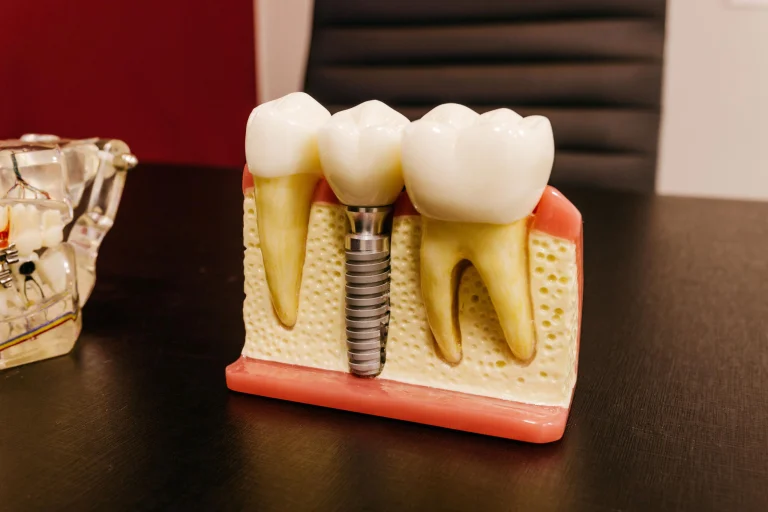
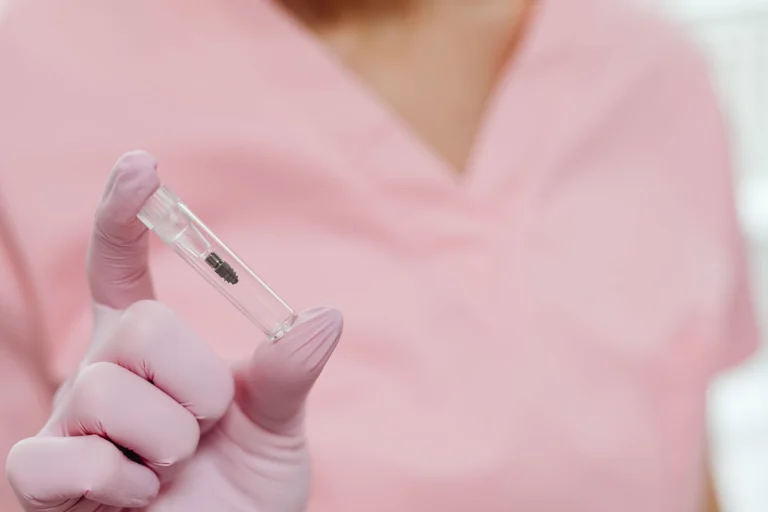
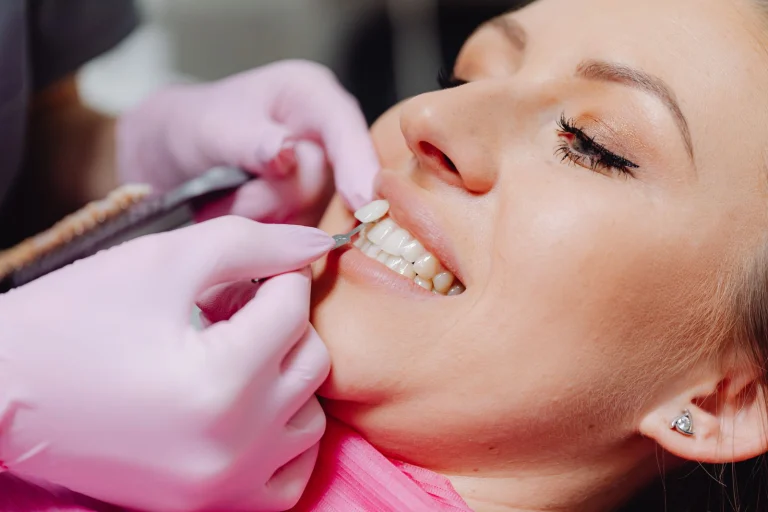
Implants need at least 6–8 weeks of healing after surgery before a single tooth is restored. Once the implant has integrated, the abutment and crown complete your new tooth. For several missing teeth, an implant bridge joins three or more teeth on two or more implants. For a full arch, you can choose snap-on implant teeth, which are removable, or fixed full-arch teeth, which are screwed or cemented onto at least four implants and supported by a custom CNC-milled titanium bar. With fixed teeth, a spare set is always made.
Repairing implants placed elsewhere
Poorly placed implants from other offices, ones that have failed or look unattractive, are seen regularly at the practice. Digital CBCT planning and guided placement are the cornerstones of fixing them. If you have an implant proposal from another office, including a large chain center, second opinions are always complimentary.
Sedation for implant procedures
If surgery makes you nervous, you can choose how relaxed you want to be. Laughing gas is offered as a complimentary service and wears off quickly enough for you to drive home. Oral conscious sedation is a pill taken about an hour before your appointment, so you’ll need a ride. See sedation dentistry.
Dental implants in Timonium, MD, for Baltimore and Towson patients
Patients come to the Timonium office for implant procedures from Towson, Hunt Valley, Baltimore and Shrewsbury, PA, because the CT scan, planning, extractions, grafting, implant placement and final teeth all happen in one local office. Dr. Haywood is a Fellow of the International Congress of Oral Implantologists and has over 35 years of experience. If you are planning a full arch, read full mouth dental implants near Baltimore.
Paying for implant procedures
Each procedure in a plan affects the fee, which is why an honest price comes after your exam and scan. The practice is out of network with all dental insurance companies: you pay at the time of your visit, and the office files the claim so your plan can reimburse you for what it covers. Health savings and flex plans are welcome. CareCredit offers no-interest options for up to 12 months, and Cherry offers payment plans from 3 to 24 months. Read how much dental implants cost in Timonium.
Frequently asked questions
How long do dental implant procedures take from start to finish?
A single tooth can be restored as little as 6–8 weeks after implant surgery, and the whole process can take several months. Grafting before placement adds time.
Will I need a bone graft?
Not everyone does. The 3D scan shows the quantity and quality of your bone, so you’ll know whether grafting is part of your plan at the scan visit.
Does implant surgery hurt?
Pain after an implant procedure is described as negligible. Ice bags help with soreness and swelling, and sedation is available during the procedure if you are anxious.
Can the implant go in the same day my tooth comes out?
Often, yes. When a tooth is being removed, the implant can frequently be placed at the time of the extraction. Your scan and exam show whether that suits your case.
Plan your implant procedures in Timonium
If you are missing teeth or have a tooth that can’t be saved, a consultation and 3D scan will show which procedures your plan needs and why. Learn more about dental implants in Timonium, request an appointment or call (410) 453-9399. The office is at 108 W Timonium Rd, Ste 200, Timonium, MD 21093.
Ready to see your future smile?
Find out which implant procedures your plan needs. Book a consultation in Timonium.