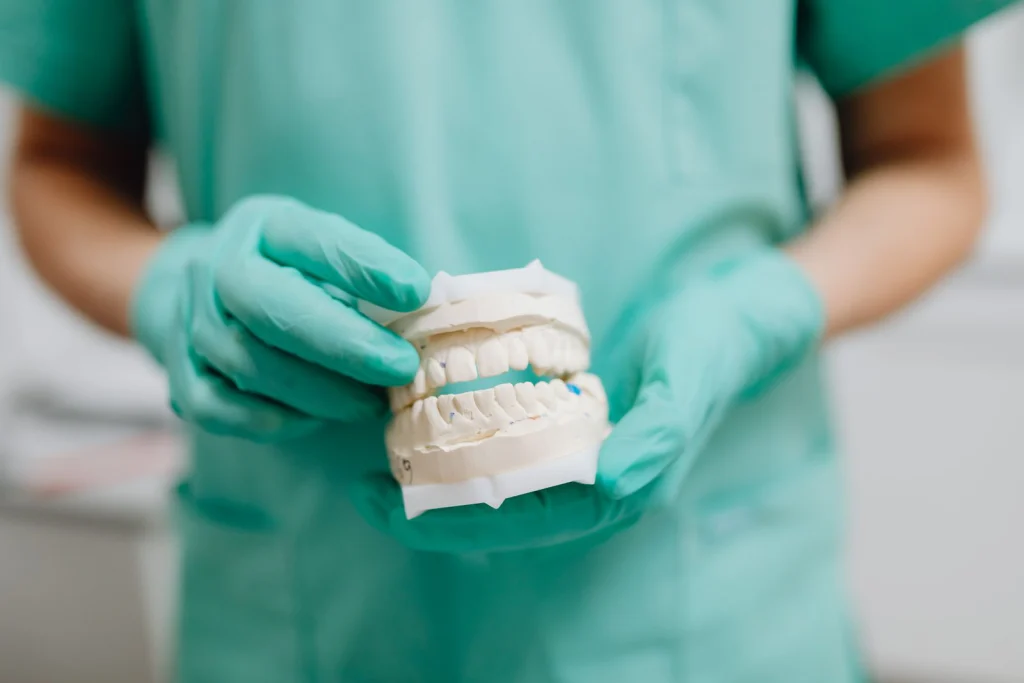
If you have missing teeth, there are more ways to replace them than most people realize: a removable partial denture, a full denture, a traditional dental bridge, a single tooth implant, an implant bridge, snap-on implant teeth or a fixed full arch of implant teeth. The right choice depends on how many teeth are missing and where, the health of the teeth and bone that remain, how you feel about removable teeth, and your budget.
This guide lays out every option side by side, what each one is good at and where it falls short, and how Dr. Steven W. Haywood, DDS helps patients in Timonium, MD choose between them.
Why replacing missing teeth matters
You need all of your teeth to chew and speak properly and to keep the rest of your teeth in alignment. After a tooth is lost, the teeth around the gap can shift. The bite can become misaligned, which can lead to problems such as TMJ disorder, and the cheeks or lips can sink in. Untreated gaps also significantly increase the risk of gum disease.
There is a slower change too. A tooth root keeps the jawbone around it in use, and when the root is gone the bone tends to shrink. Only an implant replaces the root as well as the visible tooth, which is why implants help prevent the bone deterioration that follows tooth loss.
Your options at a glance
- Removable partial denture: replacement teeth on a base that clips to your natural teeth. The lowest cost, but it comes in and out.
- Full denture: a complete set of removable teeth for an arch with no teeth left.
- Traditional bridge: a false tooth held by crowns on the teeth either side of the gap. Fixed, but it depends on the neighboring teeth.
- Single tooth implant: an implant, abutment and crown that replace one tooth, root and all, without touching the teeth beside it.
- Implant bridge: two or more implants holding three or more teeth joined together.
- Snap-on implant teeth: a removable set, full or partial, that clips onto implants.
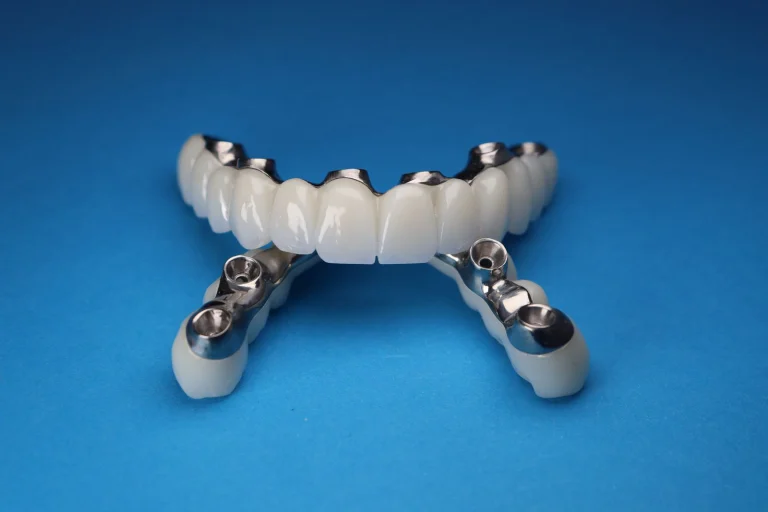
- Fixed full-arch implant teeth: a complete set screwed or cemented onto at least four implants.
Removable options
Partial dentures
A removable partial denture fills the gaps and helps keep your remaining teeth from drifting. It costs the least of the replacement options, but it comes in and out, usually has metal clasps and can affect how you taste food. Clips also put stress on the teeth they grip, which can eventually cost you that tooth.
There is a middle ground. Implants secure a partial denture better than clips, with no clips or wires showing in your smile. And if you lose another tooth later, a tooth can simply be added to a snap-on implant partial instead of starting over.
Full dentures
When no teeth can be saved on an arch, a full denture replaces them all. If teeth are being removed, immediate or transitional dentures can be delivered as soon as the remaining teeth come out. They act as a bandage over the sockets while the gums heal, and they are adjusted as healing changes the fit. Bone usually takes about a year to heal completely, so a new denture is relined in the office at three months and through the lab at a year.
How a denture is made matters. Dr. Haywood is specially trained in prosthodontics and makes dentures with the branching technique, learned from Dr. Jack Turbyfill and not taught in dental schools, with lab technicians personally trained by Dr. Turbyfill. Read about dentures in Timonium.
Fixed options
A traditional dental bridge
A bridge is made of two crowns and a pontic, an artificial tooth. The crowns fit over the teeth next to the gap, which have to be prepared for them, and the pontic fills the space. Bridges are usually completed in two appointments, and you need floss threaders or other aids to clean under the replacement tooth. Bridges are used less often than they once were, because implants are the better alternative in most cases. Read about dental bridges.
A single tooth implant
A single implant has three parts: the implant post that replaces the root, the abutment that supports the new tooth, and the crown. It replaces the whole tooth without affecting the teeth beside it, and in this office it is regularly less expensive and more conservative than a traditional bridge. The implant needs at least 6–8 weeks of healing before the tooth is restored, and the whole process can take several months. See single tooth implants, and if the gap is at the front of your smile, what a missing tooth says about you.
An implant bridge
When several teeth are missing in one area, two or more implants can support three or more teeth joined together. That saves the cost of extra implants and the post on each one, so an implant bridge can cost 20–30% less than an implant for every missing tooth. The trade-off is cleaning: you need a floss threader, because food can collect under the bridge. Read about the implant bridge.
Combining implants and dentures
Snap-on implant teeth
Snap-on teeth join a removable set to implants with snap connectors, so the teeth stay anchored while you eat and talk but still come out for cleaning. An upper set usually rests on four or five implants and leaves the palate uncovered. A lower set needs at least two, with four or more often preferred, and more implants can often be added later. A full upper snap-on set costs roughly 30% less than a comparable fixed set. See snap-on implant teeth.
Fixed full-arch implant teeth
A complete set of teeth screwed or cemented onto at least four implants chews the most like natural teeth. Only the practice removes them, usually every 3–4 months for cleaning, and a spare set is always made. They are the most costly option. See fixed full-arch implant teeth.
How to choose: matching the option to your situation
- One missing back tooth: a single implant is usually the conservative choice, because it leaves the neighboring teeth alone. A back tooth can often be left without a temporary while the implant heals.
- One missing front tooth: a front tooth implant takes more planning, because the bone there is often thinner, so smaller implants, custom ceramic abutments and computer-guided surgery are almost always used.
- Several teeth in a row: an implant bridge avoids an implant for every tooth.
- Gaps scattered across an arch, with good teeth left: an implant-secured partial keeps your useful teeth and avoids clasps.
- Most or all teeth missing, or failing: snap-on or fixed full-arch implant teeth, or a carefully made full denture. Compare the two implant styles in full mouth dental implants: fixed or snap-on.
- Already wearing a denture that slips: implants can often be added, or a new denture made. See living with implants vs. dentures.
For a single guide to every implant option, read dental implants in Timonium, from one tooth to a full mouth.
What happens at a consultation
You don’t need to arrive knowing which option you want. At a consultation, Dr. Haywood examines your mouth, reviews your health history and talks through your goals. For implant options, a cone beam CT scan shows the quality and quantity of your bone, and if bone grafting is needed you’ll know at that same visit. Active gum disease is treated before implants, and smokers can have implants, though they are somewhat less successful.
If a damaged tooth has to come out first, the goal is still to keep your natural teeth wherever possible, so all options are discussed before an extraction is recommended. After an extraction, the practice meets with you to plan how to fill the gap.
Insurance and financing
Costs vary with the option and your case, so a fee is set after your exam. For implants, see how much dental implants cost in Timonium. The practice is out of network with all dental insurance companies: you pay at the time of your visit, and the office files the claim so your plan can reimburse you for what it covers. Health savings and flex plans are welcome. CareCredit offers no-interest options for up to 12 months, and Cherry offers payment plans from 3 to 24 months. See financing options.
Frequently asked questions
What is the cheapest way to replace missing teeth?
A removable partial denture costs the least up front. It comes with trade-offs, including clasps, a removable fit and stress on the teeth it grips, so it is worth comparing with a single implant or implant bridge before deciding.
Is an implant better than a bridge?
In most cases, implants are the better alternative. A single implant leaves the neighboring teeth alone, replaces the root and helps prevent bone loss, and in this office it is regularly less expensive and more conservative than a traditional bridge.
Can I replace several missing teeth without an implant for each one?
Yes. An implant bridge uses two or more implants to hold three or more teeth, and a full arch can be supported on as few as four implants for fixed teeth or two for a lower snap-on denture.
What if I wait to replace a missing tooth?
The teeth around the gap can shift, the bite can change and the bone can shrink, which can make replacement more involved later. If bone has been lost, grafting can often build it back up.
Replace missing teeth in Timonium
Dr. Steven W. Haywood, DDS has over 35 years of experience in restorative and implant dentistry and is a Fellow of the International Congress of Oral Implantologists. Dentures, bridges and every phase of dental implant care in Timonium happen in one office. Request an appointment or call (410) 453-9399. The office is at 108 W Timonium Rd, Ste 200, Timonium, MD 21093.
Ready to see your future smile?
Missing one tooth or several? Book a consultation in Timonium to compare your options.