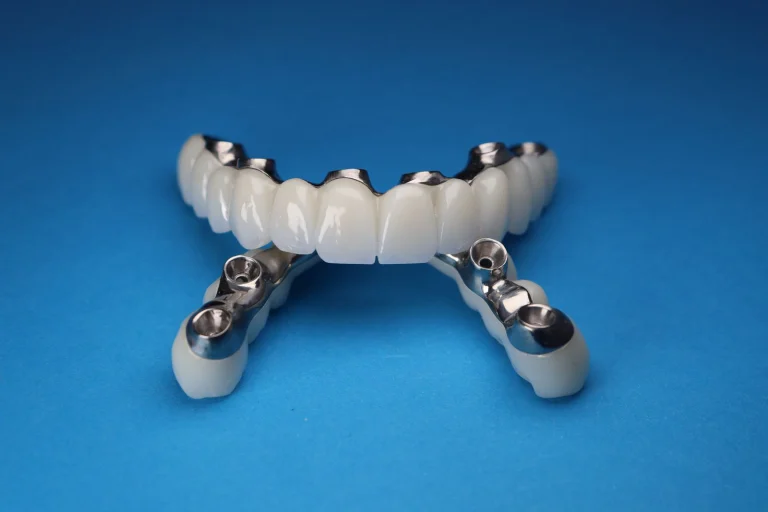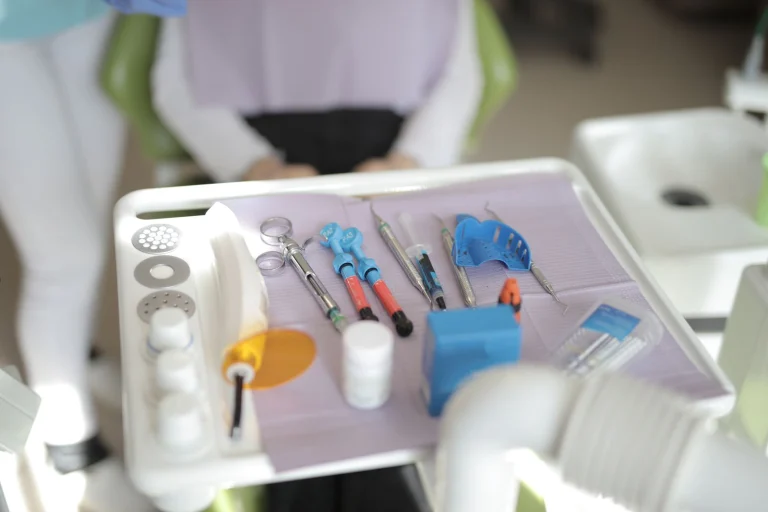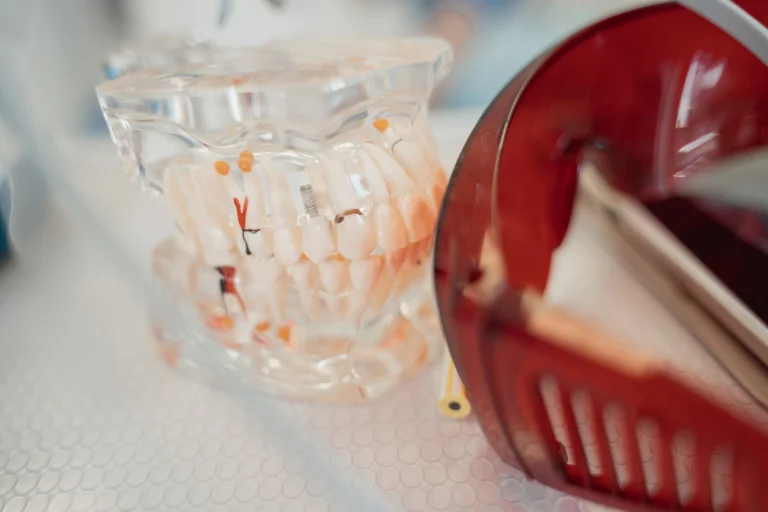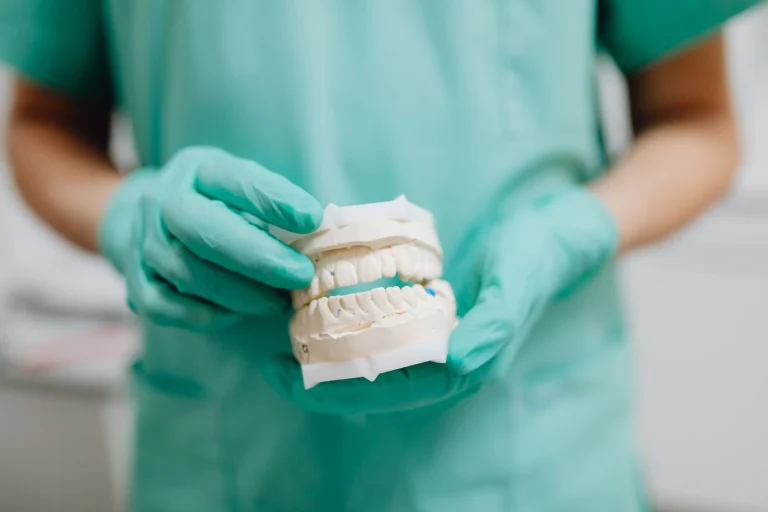
Living with dental implants is different from living with conventional dentures in the ways you notice every day: what you can eat, how freely you talk and laugh, how the roof of your mouth feels, and how much time goes into keeping your teeth in place. A denture rests on the gums and depends on suction, adhesive and practice. Teeth anchored to implants stay put, because the implants act as new roots in the jawbone.
This guide walks through a normal day with each, from breakfast to bedtime, so you can picture the difference before you decide. It is written for people in Timonium, Towson, Hunt Valley and Baltimore who wear dentures now, or who have been told dentures may be next, and want to know what implant teeth from Dr. Steven W. Haywood, DDS would actually change.
Eating: what changes at the table
With a conventional denture
Learning to eat with new dentures, particularly full dentures, is much like learning a new sport: it takes practice and patience. The practice’s own denture instructions suggest cutting food into small bites, starting with foods that are easy to chew, chewing slowly, and not planning your first meal with new dentures in public. Many people feel more comfortable using an over-the-counter adhesive.
Even once you are used to them, dentures have limits. They can cause sore spots on the gums, especially with harder foods or long wear. A lower denture has less to hold onto than an upper one, because the tongue and cheeks move it and there is no palate to create suction. Many denture wearers quietly stop ordering the foods that give them trouble.
With implant teeth
Implant-supported dentures don’t slip or click the way loose dentures can. Anchoring the teeth to implants can relieve many of the difficulties of conventional dentures, with stronger chewing and more comfort. How natural it feels depends on the type:
- Snap-on implant teeth stay anchored while you eat and talk, then come out for cleaning.
- Fixed full-arch teeth don’t move or wobble while eating, so chewing is the most natural of all the options.
One patient who had every tooth removed wrote in a review published on the practice’s website: “I can eat anything I want with no trouble.” Results vary from mouth to mouth, but that is the kind of change many implant patients are hoping for.
Speaking and laughing without thinking about your teeth
New denture wearers are encouraged to practice talking: talk to yourself, read aloud and sing. Most people sound normal within a short time. You may also salivate more when you first get a denture, which usually settles within minutes to a few days.
The harder part for many people is not how they sound but the background worry. Will the lower denture lift when I laugh? Will it click during a meeting? Implant teeth take that worry away, because they are held by the implants instead of resting on the gums. For a lower denture, the implant-supported denture is the standard of care recognized by the American Dental Association (ADA). Upper dentures can be secured to implants too, which greatly improves chewing ability in most cases.
Taste, comfort and the roof of your mouth
A conventional upper denture covers the palate. That full plate is bulky, and it can change how you sense food temperature and flavor. Some people also find a plate that reaches far back uncomfortable.
Implant teeth change this in two ways. An upper snap-on set is shaped like a horseshoe and doesn’t fully cover the palate, so it feels less bulky. Fixed full-arch teeth are the smallest full replacement style available. In both cases, the roof of your mouth is left more open than it is under a traditional upper plate.
Confidence and the shape of your face
When teeth are lost, the cheeks and lips can sink in over time. The reason is underneath: nothing replaces the tooth roots, so the jawbone under a denture tends to shrink, and a denture that fit well at first can gradually loosen. That is why dentures need relines. At the practice, a new denture is relined in the office at the end of three months, and again through the lab at the end of a year, as the gums and bone heal and change.
Implants help prevent the bone deterioration that follows tooth loss. That supports the jaw that shapes your lower face, and it is one of the main reasons implant teeth tend to keep feeling secure. Confidence is harder to measure, but for most people it comes down to this: you stop planning your day around your teeth.
A day in the life: care routines compared
Caring for a conventional denture
- Take the denture out and clean it after meals.
- Remove it for at least 8 hours a day, preferably at bedtime. Wearing it around the clock can cause sores and fungus underneath.
- Brush it and soak it in water, mouthwash or a denture cleaner, and never let it dry out, which can warp it.
- Clean it over a sink with a washcloth and some water in the basin, because the acrylic can break if dropped.
- Remove all adhesive every day, and keep seeing your dentist so the fit, the bite and your oral tissues are checked.
Caring for snap-on implant teeth
Snap-on teeth still come out for cleaning, so the daily rhythm is similar, with one big difference: once they are in, they stay anchored. The implants themselves need attention too. Gum tissue doesn’t seal around an implant as firmly as it does around a natural tooth, so professional cleanings every 3–4 months are recommended, using titanium or plastic instruments that are safe for implants.
Caring for fixed implant teeth
Fixed teeth never come out at home. You clean them in place, with tools such as interdental brushes, a water irrigator and an end-tuft or electric toothbrush. Because food collects underneath however carefully you clean, removing and cleaning the set at the office every 3–4 months is recommended in most cases. If you grind or clench, a custom night guard protects implants from damaging sideways forces. Read more about caring for dental implants.
When a well-made denture is still the right answer
Implants are not the only way to improve life with missing teeth. Many dentures are poorly constructed, and a denture made with care can fit and function far better than the one you have now. Dr. Haywood is specially trained in prosthodontics and makes dentures with the branching technique, learned from Dr. Jack Turbyfill and not taught in dental schools. Bring in your problem dentures, and you can compare a better denture with implant options side by side. Read about dentures in Timonium.
If implants are the direction you choose, two related guides help with the next step: how implant dentures work, and switching from a loose denture to implant teeth. If you are missing all your teeth on one or both arches, see full mouth dental implants: fixed or snap-on.
Paying for implant teeth
Snap-on implant teeth cost less than fixed teeth: a full upper snap-on set costs roughly 30% less than a comparable fixed set, and a lower snap-on set can start with two implants and add more later. Fixed full-arch teeth are the most costly option.
The practice is out of network with all dental insurance companies. You pay at the time of your visit, and the office files the claim on your behalf so your plan can reimburse you for what it covers. Health savings and flex plans are welcome. CareCredit offers no-interest options for up to 12 months, and Cherry offers payment plans from 3 to 24 months. Compare financing options.
Frequently asked questions
Will implant teeth feel like my natural teeth?
Fixed implant teeth feel the most like natural teeth, because they don’t move while you eat. Snap-on teeth are removable, but they stay anchored during chewing and are more comfortable than a denture resting on the gums.
Can I still use denture adhesive with implant teeth?
Implant teeth are held by the implants rather than by suction and adhesive, which is why they don’t slip or click. Your care instructions will cover exactly how to clean and look after your own set.
Do I need to take implant teeth out at night?
A conventional denture should come out for at least 8 hours a day. Snap-on implant teeth come out for cleaning. Fixed full-arch teeth stay in and are removed only by the practice, usually every 3–4 months for a thorough cleaning.
How long do dental implants last?
Implants that heal properly over the first 6–12 weeks after placement are considered to have lifetime potential, as long as they are looked after at home and at the office. The teeth attached to them can wear and need service over time.
Talk to Dr. Haywood about life after dentures
Dr. Steven W. Haywood, DDS has over 35 years of experience and is a Fellow of the International Congress of Oral Implantologists. Every phase of implant care, from the 3D scan to the finished teeth, happens in one Timonium office. To find out which option fits your mouth and your routine, see the full range of dental implants in Timonium, request an appointment or call (410) 453-9399. The office is at 108 W Timonium Rd, Ste 200, Timonium, MD 21093.
Ready to see your future smile?
Wondering what implant teeth would change for you? Book a consultation in Timonium.