A broken tooth brings a string of questions all at once. Is it an emergency? Can the tooth be saved? Does it need a filling, a crown or a root canal? And what will it take to fix? The answers depend on where the tooth broke, how deep the damage goes and whether the nerve is involved. This guide walks through the most common broken-tooth dilemmas and how Dr. Steven W. Haywood, DDS solves them at the Timonium office, starting with the most conservative repair that will do the job.
Broken tooth in Timonium, MD: what to do first
- Call the office at (410) 453-9399, as early in the day as you can, so the team can fit you in around scheduled patients.
- Rinse your mouth gently with warm water.
- Keep any piece that broke off and bring it with you. A broken fragment usually can’t be reattached, but it helps to see it.
- If the whole tooth was knocked out, put it in milk and call immediately. Time is of the essence, and a knocked-out tooth can be saved if you are seen quickly enough.
- Use a cold compress on the outside of your cheek if there is swelling.
- Avoid chewing on that side, and skip very hot, cold or hard foods until the tooth is checked.
- If a sharp edge is cutting your tongue or cheek, a piece of sugar-free gum or dental wax from the pharmacy can cover it temporarily.
Dilemma 1: Is a broken tooth an emergency?
The most common dental emergencies are a dental abscess, a cracked tooth or filling, facial trauma such as a knocked-out tooth or broken jaw, and acute TMJ pain or a locked jaw. A simple toothache or a broken temporary or permanent crown is usually best handled at the next available appointment, but call and the team can talk you through it.
Call right away if the tooth hurts and your face is swelling, if a tooth has been knocked out, or if you have been hit in the face. Dr. Haywood is available anytime for true dental emergencies for existing patients and their friends and families, and new patients with emergency needs are seen on weekdays during normal business hours, based on availability. See emergency dental care, and for other urgent problems, what to do in a dental emergency.
Dilemma 2: Can the tooth be saved?
Often, yes. The direction of the break matters most:
- A chip or small break in the enamel can usually be repaired so it blends right in.
- A crack along the gumline is usually a horizontal fracture, which can normally be saved with restorative and surgical procedures.
- A partial vertical fracture may still be saved.
- A vertical crack that splits the entire root means the tooth can’t be saved, and the broken pieces are removed.
Digital X-rays, which appear on screen right away, and intraoral cameras help show the extent of the damage, and you see the images too. Dr. Haywood can also help you decide whether a dental implant is a better choice for a badly damaged tooth.
Dilemma 3: Bonding, onlay or crown?
A small chip: dental bonding
Tooth-colored composite resin is applied to the tooth and sculpted to repair the chip. Bonding can be completed in a single visit, typically requires no anesthesia and is one of the most affordable cosmetic procedures. Resin isn’t as strong as enamel and can stain, so it suits smaller repairs. See dental bonding.
Part of the tooth is gone: an inlay or onlay
When only part of a tooth is damaged, a bonded inlay or onlay can restore its strength while keeping more healthy tooth than a traditional crown. An inlay is bonded inside the remaining tooth; an onlay also restores part of the biting cusp. Both are tooth-colored and completed in two visits. At this practice, where the damage allows, these conservative repairs come first. See ultimate dental fillings.
Extensive damage or a cracked filled tooth: a crown
A porcelain crown covers the whole tooth, restoring its shape and protecting what is left from further damage and decay. A crown can save a tooth that would normally need to be pulled. If a tooth with a filling hurts when you bite, the cause is often tiny cracks in the chewing surface, and covering the tooth with a crown can relieve that pain and restore full function. See dental crowns.
A broken front tooth
Front teeth raise their own question: a crown or a veneer? The answer depends on how much of the tooth is left and whether it has had a root canal. Read crown or veneer for a front tooth?
Dilemma 4: Does it need a root canal?
If the break reaches the pulp, the soft tissue inside the tooth where the nerves run, or if infection sets in, root canal therapy can remove the cause of the pain and save the tooth. It often takes two or more appointments, depending on how severe the infection is, and every root canal at the practice is finished with a porcelain crown to protect the tooth from breaking and from re-infection. Infection doesn’t always hurt right away, which is another reason a broken tooth should be checked even if it feels fine. See root canals.
Dilemma 5: Save it or replace it?
When a tooth is too fractured to keep, it is removed gently, and then your options for filling the gap are discussed. Replacing a lost tooth matters, because the remaining teeth can shift and the bite can change.
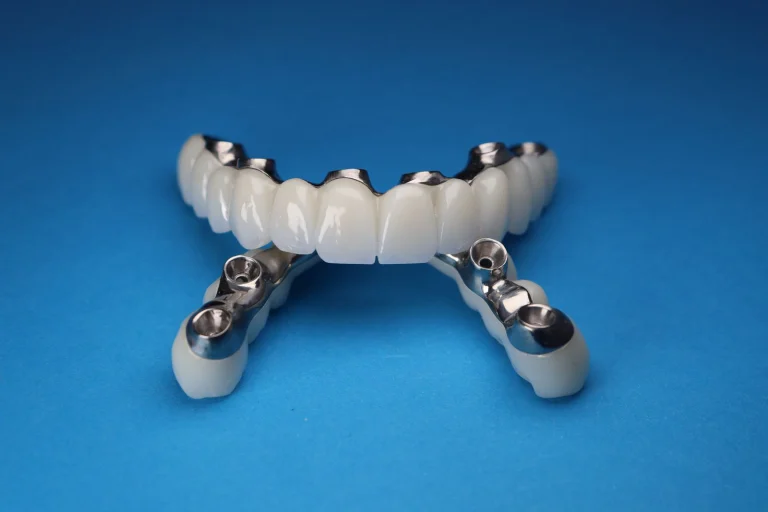
- A single dental implant replaces the root and the crown without touching the healthy teeth beside it. In some cases the implant can be placed at the time of the extraction. See single tooth implants.
- A fixed bridge fills the gap with an artificial tooth held by crowns on the neighboring teeth.
- A removable option such as a partial denture can also fill the space.
If you are weighing a root canal against extraction and an implant, read root canal vs dental implant.
What getting a crown involves
- Evaluation. A relaxed, no-pressure look at the tooth. If a more conservative option will do the job, that comes first.
- Preparation. Damaged structure and any decay are removed, an impression is taken, and you leave with a temporary crown.
- Fit and bond. At the second appointment the permanent crown is checked for fit, bonded to the tooth and polished.
While you wear the temporary, avoid sticky foods such as caramel and chewing gum, and pull floss out the side instead of popping it up through the contact. If the temporary comes off, put a little Fixodent inside, place it back on and call the office during business hours. Don’t leave it off, even if the tooth feels fine.
Why teeth break, and how to prevent the next one
- Grinding and clenching wear enamel away and put small cracks into teeth. A custom clear bite guard helps control the damage.
- Large old fillings can leave the walls of a tooth thin. Worn or cracked metal fillings can also let decay develop underneath.
- Chewing ice, hard candy, pens or popcorn kernels puts sudden force on teeth.
- Untreated decay weakens a tooth from the inside until it gives way.
- Sports without a mouthguard. See sports mouthguards for kids.
Dr. Haywood, your Timonium dentist for broken teeth
Dr. Steven W. Haywood, DDS has practiced cosmetic, restorative and implant dentistry for over three decades. Dr. Haywood graduated with distinction from the University of Detroit dental school in 1987, completed the U.S. Air Force advanced residency with internships including oral surgery and endodontics, and has ongoing advanced TMJ and reconstructive training at the Peter Dawson Institute. Restorative care, root canals, extractions and every phase of implant care happen in the same Timonium office. If you are nervous, laughing gas is offered as a complimentary service, and oral sedation is available.
Paying for your repair
The practice is out of network with all dental insurance companies. You pay at the time of your visit, and the office files the claim on your behalf so your plan can reimburse you. Health savings and flex plans are welcome. Financing is available through CareCredit, with no-interest options for up to 12 months, and Cherry, with payment plans from 3 to 24 months. See financing options.
Frequently asked questions
Can a broken tooth be fixed in one visit?
A small chip repaired with bonding can be finished in a single visit. Inlays, onlays and crowns take two visits, with a temporary in between.
Does every broken tooth need a crown?
No. Crowns are for teeth that have been extensively damaged. When a filling, bonding or an onlay will work, that is the first recommendation.
My broken tooth doesn’t hurt. Can it wait?
It shouldn’t wait long. A broken tooth can crack further, and infection doesn’t always hurt right away. Call to have it checked.
Can you see a new patient for a broken tooth?
Yes. New patients with emergency needs are seen on weekdays during normal business hours, based on availability. If you haven’t seen a dentist in a while, the necessary X-rays and a thorough exam come first.
Get a broken tooth repaired in Timonium
Don’t let a broken tooth turn into a bigger problem. Request an appointment or call (410) 453-9399 early in the day. The office of Dr. Steven W. Haywood, DDS is at 108 W Timonium Rd, Ste 200, Timonium, MD 21093. For more guides, visit the blog.
Ready to see your future smile?
Broken or cracked tooth? Call early in the day to be seen in Timonium.