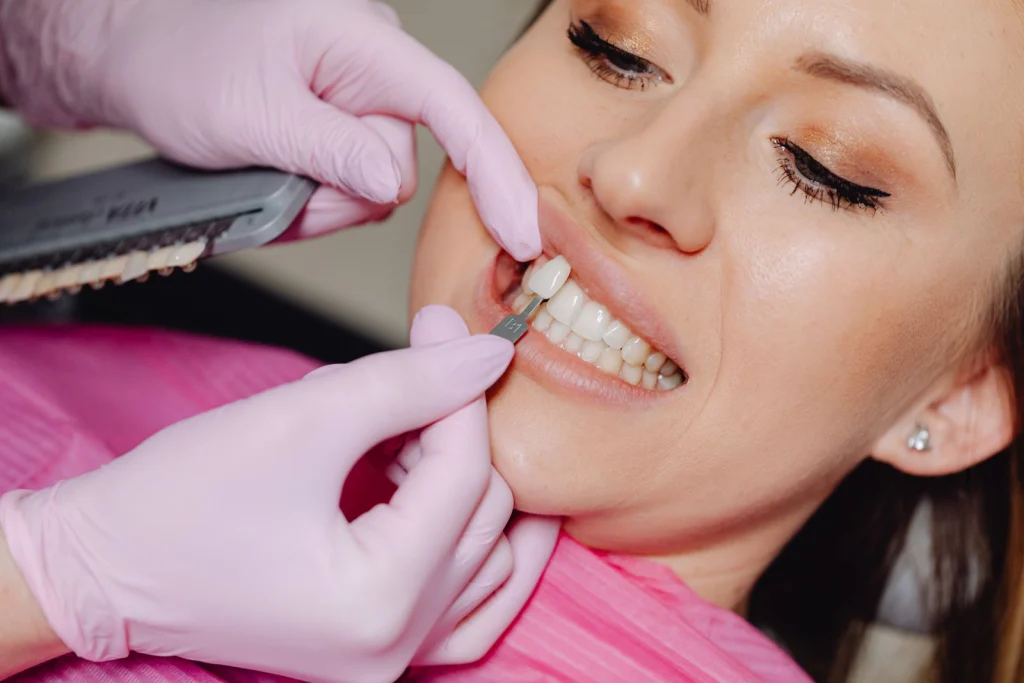
For a front tooth, the choice between a crown and a veneer mostly comes down to how healthy the tooth is. A veneer is usually the better choice when the tooth is structurally sound and the problem is how it looks: color, a small chip, a gap or a slightly uneven shape. A crown is usually the better choice when the tooth has been extensively damaged, has a large filling that has chipped or stained, or has had a root canal. Some teeth fall in between, and those are the ones where an exam matters most.
This article explains the difference between dental crowns and porcelain veneers, when each one makes sense for front teeth, how each is made and placed at the Timonium office of Dr. Steven W. Haywood, DDS, and what they cost.
The core difference between a crown and a veneer
Coverage
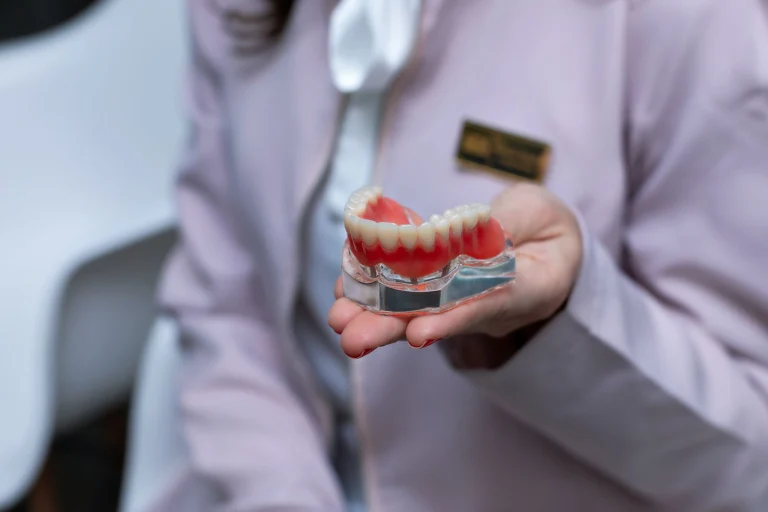
A porcelain veneer is like a new layer of enamel on the face and edge of a tooth. It covers the front of the tooth that people see when you smile. A dental crown is a cap that covers the entire tooth above the gums, giving full coverage on every side.
Tooth preparation
A veneer can be as thin as a contact lens and does not require grinding down the whole tooth. Traditional veneers reshape some enamel on the front, and prepless veneers need little or no drilling at all. A crown requires more tooth preparation: damaged structure and any decay are removed, and the tooth is shaped all the way around so the crown can fit over it.
Purpose
Veneers are mainly cosmetic, though a veneer partially wraps the tooth like a suit of armor and does strengthen it. Crowns are mainly restorative: they restore the shape of a damaged tooth, preserve the tooth structure that remains and protect it from further damage and decay. Both can make front teeth look natural, since each crown is made to replicate the color and translucence of your natural teeth.
When a veneer is usually the better choice
Consider a veneer for a front tooth when the tooth is healthy and you want to change:
- Color. Veneers can correct discolored or stained teeth, including stains whitening can’t reach.
- Small chips or worn edges. A veneer can rebuild an edge and strengthen a chipped tooth without crowning it.
- Gaps. Veneers can close gaps and spaces between teeth.
- Shape or slight crookedness. Veneers can make teeth look more even and straighter without braces.
Because a veneer keeps much more of your natural tooth, it is the more conservative option when it can do the job. See dental veneers, or read about minimal-prep and prepless veneers.
When a crown is usually the better choice
Consider a crown when the tooth itself needs protection:
- Extensive damage. Crowns are for teeth that have been extensively damaged by decay or fracture.
- A large filling that has failed. When a filled front tooth has chipped or stained and veneers aren’t a suitable solution, a crown may work well.
- After a root canal. At the practice, a tooth treated with a root canal is capped with a porcelain crown to protect it from re-infection and further damage.
- Cracks. Covering a filled tooth with a crown can relieve discomfort caused by tiny cracks and restore full function.
- Saving a tooth. A crown can often save a tooth that would otherwise need to be pulled.
- Anchoring a bridge. Crowns fit over the teeth on each side of a gap to hold a replacement tooth in place.
See dental crowns for more.
Situations that could go either way
- A moderate chip on a healthy tooth. Dental bonding may repair it in one visit, a veneer may be longer lasting, and a crown is rarely needed.
- A front tooth with an older filling. If enough healthy tooth remains, a veneer may work. If the filling is large or failing, a crown is often safer.
- One dark tooth. A veneer can be made more opaque to hide a dark tooth, but if the tooth is darkening because of a problem inside it, that needs treatment first, and a crown may follow a root canal.
- Crooked front teeth. Veneers can make them look straighter, but moving the teeth with Invisalign first can mean less tooth preparation, or none.
The practice also recommends the most conservative option that will work. If a filling or a bonded onlay will keep more of your healthy tooth, that comes first.
How each is made and placed at the practice
Porcelain veneers
- Preview your smile. A smile evaluation on the cosmetic imaging computer shows possible changes before treatment.
- Test-drive the look. You receive a trial set of veneers to confirm the shape, color and look before the final set is made.
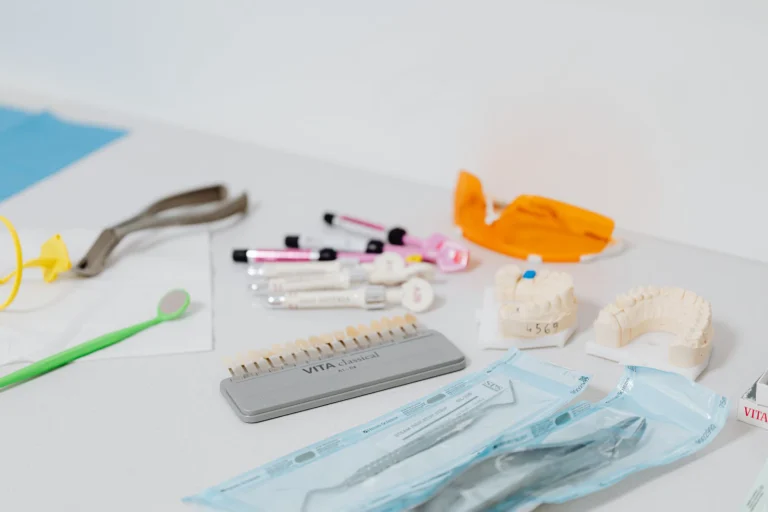
- Bond the final porcelain. Veneers are hand-crafted in the USA by master ceramists and bonded to your teeth.
Dental crowns
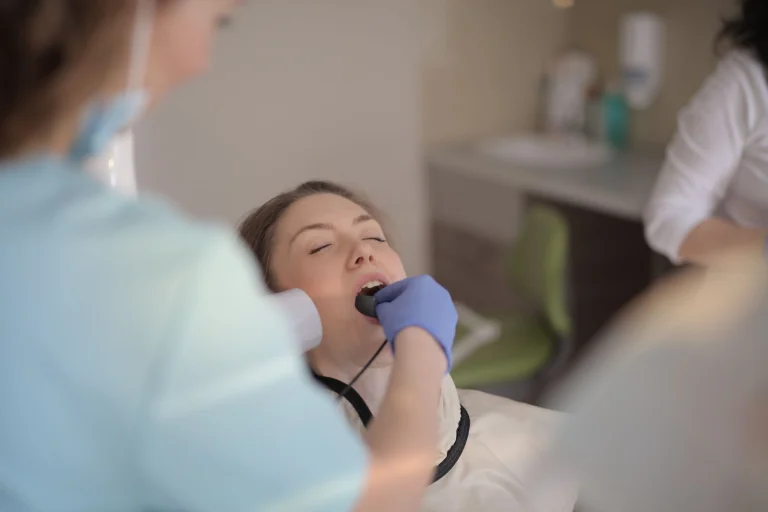
- Evaluate the tooth. Digital X-rays and intraoral cameras show the damage clearly.
- Prepare the tooth and take an impression. Damaged structure and decay are removed, an impression is taken, and you leave with a temporary crown.
- Fit, bond and polish. At the second appointment, the permanent crown is checked for an ideal fit, bonded to the tooth and polished.
Crowns are made with high-quality porcelain, crafted from impressions of your teeth. The practice specializes in all-ceramic, tooth-colored options and is mercury-free.
Matching one front tooth to its neighbors
A single crown or veneer on a front tooth has to match the teeth beside it, and porcelain doesn’t change color after it is made. If you are thinking about whitening, it usually makes sense to whiten first so the new tooth is matched to your brighter shade. Read the Timonium teeth whitening guide for how whitening works at the office.
How long crowns and veneers last, and how to care for them
With good home care and professional care at the office, porcelain veneers can last for decades, and they are warrantied for one full year. Composite veneers made with bonding are quicker and more affordable but have a shorter lifespan, averaging 8 to 10 years. However long a restoration lasts, the same habits protect it:
- Brush, floss and keep regular dental visits, since the tooth underneath can still decay at the edges.
- Wear bite protection if it is recommended.
- Never use your teeth to open packages or cut things.
- With a temporary crown, avoid sticky foods and pull floss out the side instead of popping it up.
More detail is on the post-op instructions page.
What crowns and veneers cost
Every case is unique, so your fee is set after an assessment. Porcelain generally costs more than resin bonding, but it looks more natural, doesn’t break as easily and resists stains. The practice is out of network with all dental insurance providers: you pay at the time of your visit, and the office files the claim so your plan can reimburse you for whatever it covers. Plans often treat restorative and cosmetic work differently, so check your benefits. HSA and flex plans are welcome for eligible care, and financing is available through CareCredit, with no-interest options up to 12 months, and Cherry, with plans from 3 to 24 months. See financing options.
Frequently asked questions
Is a crown or a veneer better for a front tooth?
A veneer is usually better for a healthy front tooth that needs a cosmetic change. A crown is usually better for a front tooth that is extensively damaged, heavily filled or has had a root canal.
Why do dentists sometimes advise against veneers?
Veneers aren’t right for teeth with extensive damage or large failing fillings, and a thin veneer on a tooth that already sticks out can look bulky. In those cases a crown, Invisalign or a different plan may be better.
Can a veneer go on a tooth that had a root canal?
At the practice, a tooth treated with a root canal is capped with a porcelain crown to protect it, so a crown is the usual choice.
How many visits do crowns and veneers take?
Crowns are usually completed in two appointments. Veneers include a test-drive set before the final porcelain, and a prepless veneer smile can be finished in as little as 1–2 weeks.
What if my tooth can’t be saved?
If a tooth is too damaged for a crown, it may need to be replaced. A single dental implant replaces the root and the crown without affecting the teeth beside it.
Find out whether your front tooth needs a crown or a veneer
The fastest way to a clear answer is an exam of the tooth itself. Request an appointment or call (410) 453-9399. The office is at 108 W Timonium Rd, Ste 200, Timonium, MD 21093.
Ready to see your future smile?
Book an exam in Timonium to find out whether your front tooth needs a crown or a veneer.