Teeth tend to look darker and more yellow as the years go by, and a dull smile can make a face look older than it feels. The good news is that you can go back in time a little. Professional teeth whitening often brings aging teeth closer to the brighter color you remember, and when whitening can’t reach the problem, bonding, veneers or replacing old dental work usually can. At the Timonium office of Dr. Steven W. Haywood, DDS, whitening is done in the office as laser power whitening, with a plan customized to your teeth.
This guide explains why teeth darken with age, what whitening can and can’t reverse, how missing teeth fit into an older-looking smile, and how to protect the result for years to come.
Why teeth look darker as you get older
There is rarely a single cause. Usually several small changes add up over decades.
Years of everyday stains
Coffee, tea, red wine, cola, deeply colored sauces and tobacco all leave color behind. One cup does nothing you can see, but years of them build up on and in the enamel.
Enamel wears and thins
Enamel is the outer, more translucent layer of a tooth. Beneath it is dentin, which is naturally more yellow. As enamel wears with time, chewing and sometimes grinding, more of that yellow shows through. Uncontrolled grinding in particular can wear teeth down and affect how a smile looks as we age.
Older dental work
Fillings, crowns and bonding placed years ago were matched to your teeth as they were then. They can stain, wear at the edges or simply stay the same color while your natural teeth change around them. Old metal fillings can make teeth look gray.
Receding gums
When gums recede, more of the tooth’s root shows. Roots aren’t covered by enamel, so they look darker and more yellow than the crown of the tooth, and teeth can also look longer.
What whitening can do for aging teeth
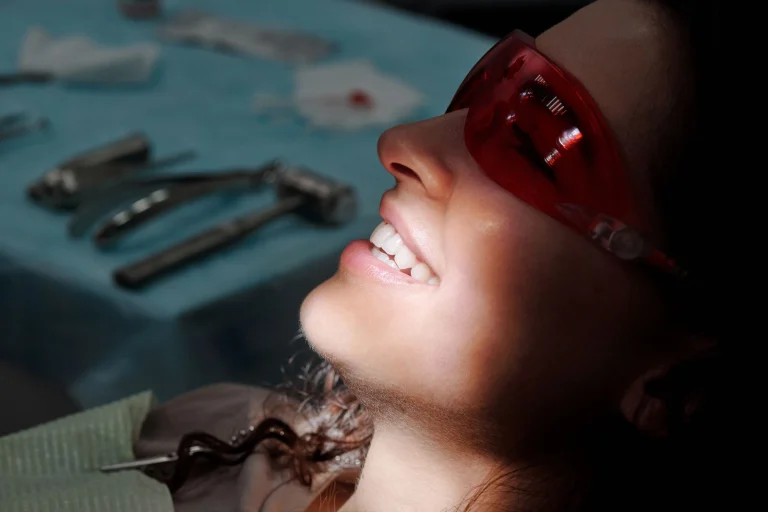
Yellowing from years of stains is often the most responsive to whitening. At the practice, a thirty-minute in-office whitening treatment is followed by a laser applied for 1 to 2 hours. The laser activates the hydrogen peroxide in the whitening agent, significantly increasing how quickly and effectively it works, and helps dissolve stains, including ones that like to hide. An instant lightening is usually seen in most cases.
For many people that alone takes years off a smile. It is also the least invasive way to start, because nothing about the shape of your teeth changes. Learn more on the laser whitening page, or read what to expect from teeth whitening in Timonium.
What whitening can’t turn back
Age-related changes that aren’t stains won’t respond the same way, so it helps to know the limits before you start:
- Exposed roots. Root surfaces may respond differently from enamel and can stay darker after whitening.
- Dental work. Crowns, veneers, bonding and fillings don’t lighten when your natural teeth do.
- Worn or chipped edges. Whitening changes color only, not shape.
- Very dark teeth. If your teeth are very dark, Dr. Haywood will counsel you on your options before you begin.
To understand which kinds of discoloration respond, read whitening vs bleaching for tooth discoloration.
Other ways to take years off a smile
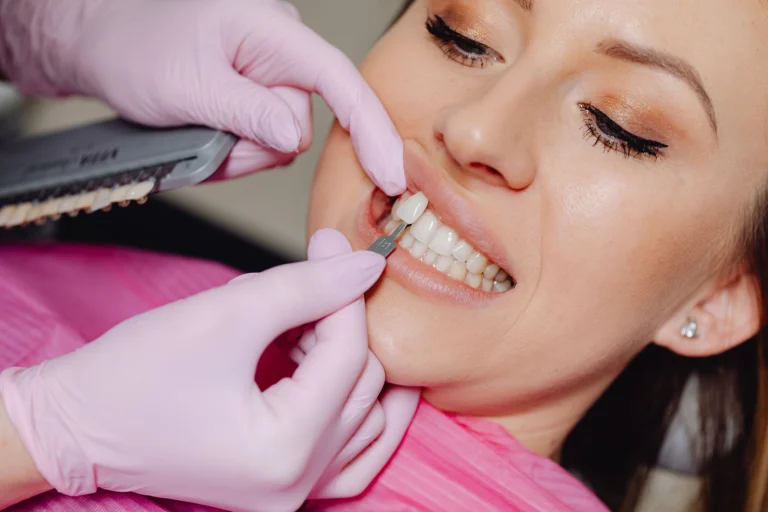
When whitening only gets you part of the way, other cosmetic treatments can finish the job. Many people combine them, often starting with whitening so any new dental work can be matched to the brighter shade.
- Dental bonding repairs worn or chipped edges and discoloration with tooth-colored composite resin, often in a single visit. See dental bonding.
- Porcelain veneers correct stains, chips and uneven teeth, and porcelain resists stains better than natural teeth. See dental veneers.
- Replacing old metal fillings with tooth-colored composite removes the gray look, following safe amalgam removal protocols at this mercury-free practice.
- A gum lift can rebalance a smile where gum tissue makes teeth look short. See gum lifts.
Cosmetic imaging, part of every cosmetic evaluation, lets you see a before-and-after preview of these changes on the imaging computer before you decide.
Missing teeth in Timonium, MD: the other thing that ages a smile
Color is only part of the story. A missing tooth, or several, can age a smile faster than any stain. Gaps show when you talk and smile, neighboring teeth can shift, and missing teeth can change the way the face is supported over time.
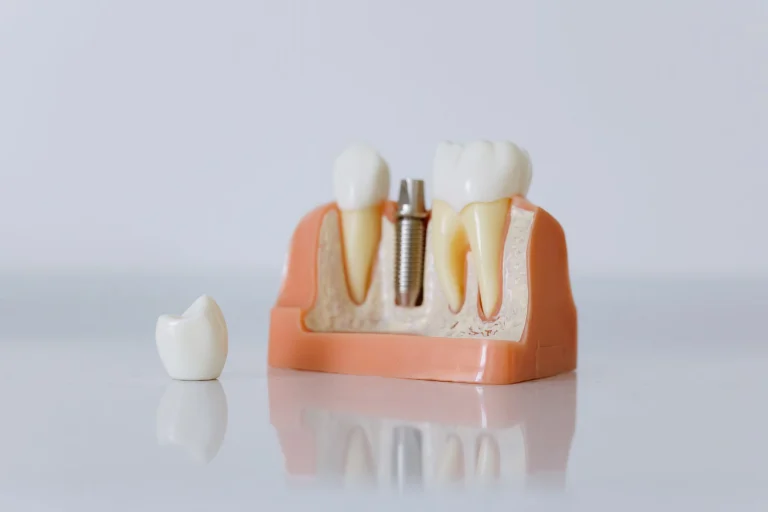
A dental implant replaces both the root and the visible tooth. A titanium post acts as a new root, and because it replaces the root, an implant helps prevent the bone deterioration that follows tooth loss. Implants can hold a single porcelain crown, a bridge or a full denture, and Dr. Haywood provides every phase of implant care in the Timonium office. Bridges and dentures are also options depending on your situation.
If you are planning both whitening and a replacement tooth, whitening first usually makes sense, since the new crown can then be made to match your brighter smile. Compare your choices in missing teeth in Timonium: your replacement options, and read can dental implants help you look younger?
Protecting your smile as the years go on
Going back in time is only worthwhile if you can stay there. A few habits and visits help:
- Keep up regular cleanings. A professional cleaning every six months is recommended, and cleaning appointments at the practice last a full 60 minutes.
- Watch for root decay. Decay rates increase with age, and medications and dry mouth can set the stage for root decay. The practice offers calcium rebuilding treatments to help strengthen enamel.
- Protect against grinding. If you grind, a comfortable, clear, custom-made bite guard helps protect both natural teeth and cosmetic work.
- Manage staining foods and drinks. Minimizing staining foods and whitening routinely are part of caring for any cosmetic result.
Learn more about protecting your smile, and see how to keep a whiter smile after tooth whitening.
Is it ever too late to whiten your teeth?
Age on its own isn’t what decides whether whitening is a good idea. The health of your teeth and gums, the kind of discoloration you have and how much visible dental work is on your front teeth matter far more. Plenty of people choose to brighten their smile for the first time later in life, and a consultation will tell you whether whitening, another treatment or a combination fits.
Why patients choose Dr. Haywood
Dr. Steven W. Haywood, DDS has more than 35 years of experience, cosmetic training from New York University’s Aesthetic Continuum and fellowship in the International Congress of Oral Implantologists. The spa-like office offers paraffin wax hand treatments, aromatherapy and a Nespresso station, and laughing gas is offered as a complimentary service if you feel nervous. Take the office tour.
Paying for whitening and restorative care
Your fee depends on your plan and is discussed at your consultation. The practice is out of network with all dental insurance providers: you pay at the time of your visit, and the office files the claim so your plan can reimburse you for whatever it covers. HSA and flex plans are welcome for eligible care, and financing is available through CareCredit, with no-interest options up to 12 months, and Cherry, with plans from 3 to 24 months. See financing options.
Frequently asked questions
Why are my teeth getting more yellow as I age?
Usually it is a mix of years of stains, enamel wearing thinner so the more yellow dentin shows through, older dental work that no longer matches, and sometimes receding gums that expose darker root surfaces.
Can older adults whiten their teeth?
Yes, if the teeth and gums are healthy enough and the discoloration is the kind that responds. Age isn’t the deciding factor; an exam is.
Will whitening lighten exposed roots?
Root surfaces may respond differently from enamel and can stay darker. If receding gums are part of what bothers you, talk it through at your consultation so you know what to expect.
Should I whiten before replacing a missing tooth?
Often, yes. Crowns and other dental work don’t change color after they are made, so whitening first lets a new tooth be matched to your brighter shade.
Turn back the clock on your smile in Timonium
Ready to see how much younger your smile could look? Request an appointment or call (410) 453-9399. The office is at 108 W Timonium Rd, Ste 200, Timonium, MD 21093, and new patients are welcome. You can also read more about teeth whitening.
Ready to see your future smile?
Book a whitening consultation in Timonium and see how much brighter your smile can look.