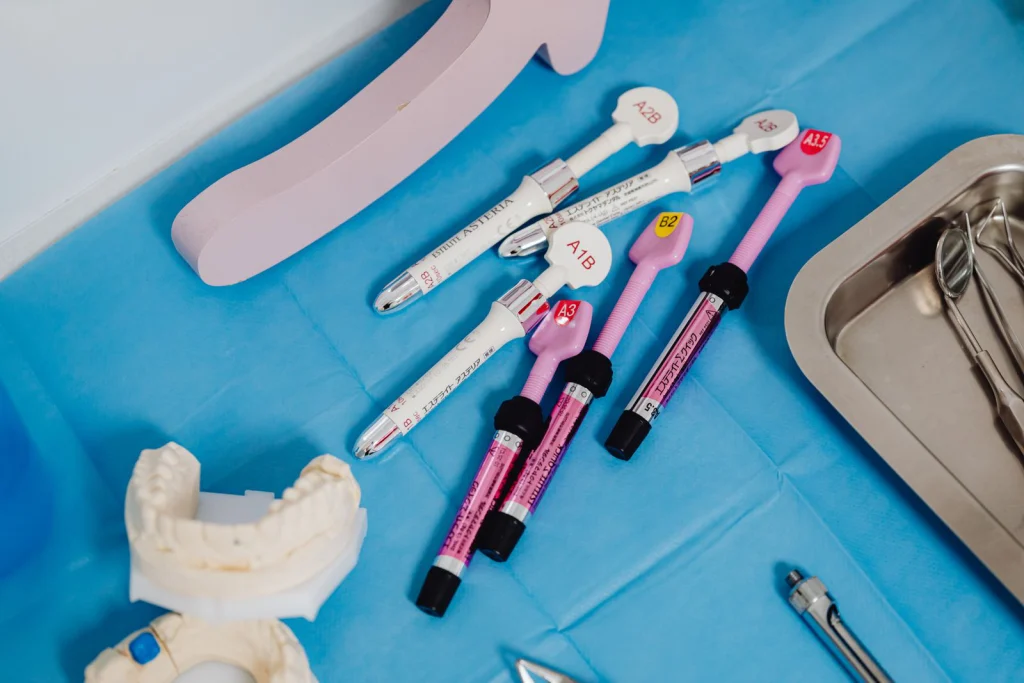
You need a dental filling when decay or damage has broken through a tooth’s enamel and left a hole or a weak area that the tooth can’t repair on its own. That might show up as a dark spot or pit you can see, sensitivity to sweets or cold, food catching in one spot, a small chip, or an old filling that has worn or cracked at the edges. Very often it shows up as nothing at all, and is found on an X-ray or with laser detection at a routine checkup. Caught early, a cavity usually needs only a small, tooth-colored filling completed in one visit.
This article covers the signs that point to a filling, when a tooth needs something more, what happens at a filling appointment at the Timonium office of Dr. Steven W. Haywood, DDS, and how to care for a filling afterward, including whether you can floss a filling.
A filling is needed when a tooth presents with these signs
Some signs you can notice yourself, and some only a dental exam can find.
Signs you might notice
- A visible hole, pit or dark spot on the chewing surface or near the gumline.
- Sensitivity to sweets, cold or hot in one particular tooth.
- A twinge or pain when you bite down on that tooth.
- Food or floss catching in the same spot again and again.
- A rough or sharp edge your tongue keeps finding.
- A small chip in a tooth.
- An old filling that looks worn, cracked or dark around the edges.
Signs found at a checkup
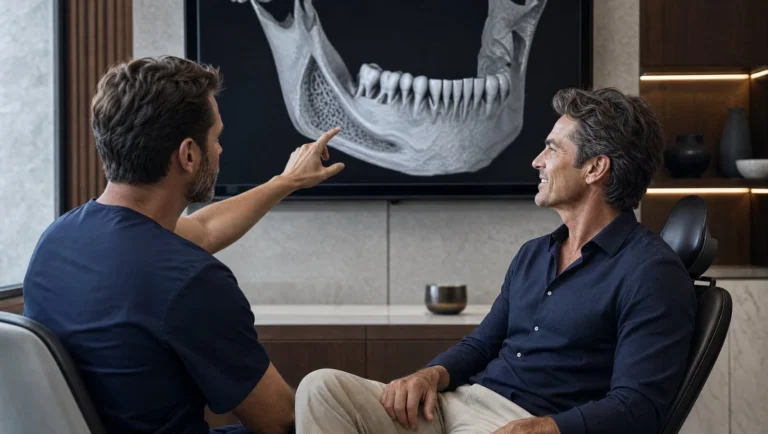
Early decay rarely hurts, so many cavities are found before you feel anything. At the practice, digital X-rays show decay between teeth and under old fillings, intraoral cameras let you see a problem area enlarged on a screen, and DIAGNOdent laser detection can find small amounts of decay at the earliest stages, sometimes before it shows on an X-ray. See dental technology.
If you are surprised by a cavity diagnosis, ask to see the images. Read does your dentist keep finding cavities? for more on how decay is found and why it keeps coming back.
When a tooth needs something other than a filling
A filling is the right answer for a certain size of problem. Smaller and larger problems call for different care.
Weakened enamel without a hole
Before decay breaks through, enamel goes through a weakened stage. At that point, better habits and enamel-strengthening care may help. For anyone who prefers to avoid fluoride, the practice offers non-fluoride calcium rebuilding treatments, along with super sealants and xylitol, to help prevent cavities. See cleanings and preventive care.
Damage too large for a filling
Traditional fillings have been shown to weaken a tooth by as much as 50 percent. When a large part of a tooth is damaged, a bonded inlay or onlay can restore strength while conserving healthy structure, and a porcelain crown protects a tooth that is extensively damaged or cracked. Read inlays and onlays: less invasive than a crown.
Decay that has reached the nerve
When infection reaches the pulp inside a tooth, it can cause serious pain. Root canal therapy removes the cause and can save the tooth, which is then capped with a porcelain crown. See root canals.
Why not wait?
Once decay has formed a hole, it won’t heal on its own. It keeps spreading deeper into the tooth, toward the nerve. A cavity that needs a small filling today can need a larger filling, an onlay, a crown or a root canal later. Treating a cavity early keeps more of your natural tooth and keeps treatment smaller.
What happens at a filling appointment
Dr. Haywood never uses amalgam. Fillings at the practice are tooth-colored and mercury-free, and they are completed in a single visit.
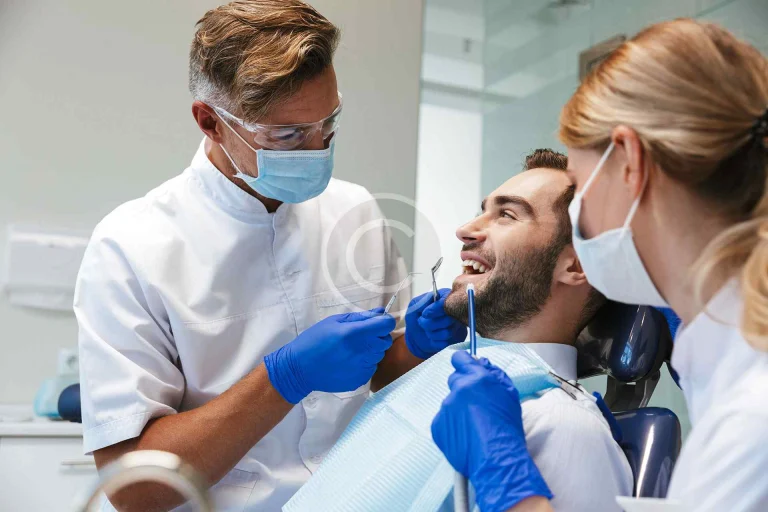
- A look at the tooth. The tooth is examined and the images are reviewed with you, so you understand what is being treated and why.
- Keeping you comfortable. A numbing anesthetic is used when needed. For patients who feel anxious or have very sensitive teeth, air abrasion can gently remove small areas of decay with a thin, steady stream of air and silica, with no heat, pressure or vibration. Laughing gas is also offered as a complimentary service.
- Removing the decay. Only the decayed part of the tooth is removed, preserving as much healthy tooth as possible.
- Placing the filling. A special composite is mixed at the time of treatment to match the color of your natural teeth, then bonded to the tooth, shaped and polished so it blends in with your smile.
Learn more about mercury-free dentistry, or compare materials in white fillings vs. silver fillings.
After your filling
- While you’re numb. Your lips, tongue and cheek may be numb for several hours. Avoid chewing and hot drinks until the numbness has completely worn off, since it is easy to bite or burn your tongue or lip.
- Eating. Tooth-colored composite fillings are fully set when you leave the office, so you can chew on them as soon as the anesthetic wears off.
- Sensitivity. Some hot, cold and pressure sensitivity is normal after a filling.
- Sore injection site. Over-the-counter pain relievers, as described on the post-op page, usually help.
- Your bite. Once the numbness is gone, if the filled tooth touches before your other teeth, call the office for an adjustment.
The post-op instructions page has the full details.
Can you floss a filling?
Yes. You can and should floss around a filling, starting the same day. A composite filling is bonded to the tooth and fully set when you leave, so normal flossing won’t pull it out. In fact, cleaning between your teeth is one of the best ways to protect a filling, because the edges where filling meets tooth are where new decay tends to start.
If floss catches or shreds
Floss that snags, frays or tears in the same spot can mean a rough edge, a small ledge, or a filling that is starting to break down or pull away. That is worth having checked, since a worn filling edge can let decay develop underneath.
If flossing is hard for you
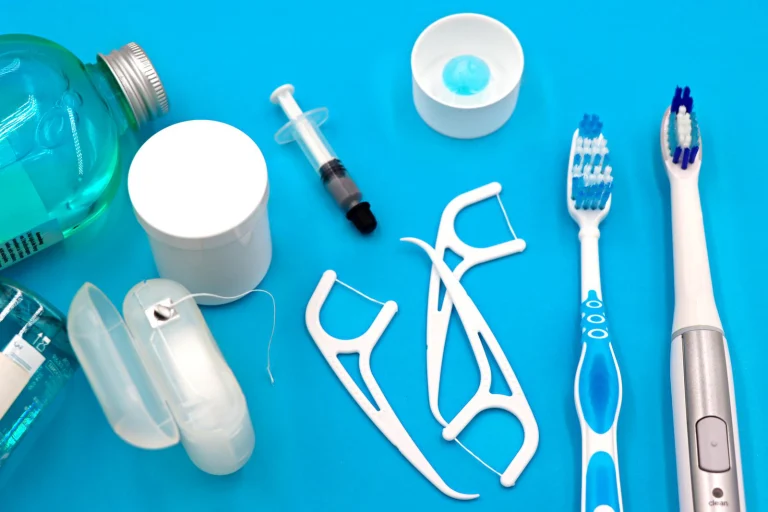
Floss picks and water flossers can make daily cleaning easier. Read are floss picks as good as regular dental floss? and why a water flosser might be a good idea.
Helping your fillings last
- Brush twice a day, including along the gumline.
- Clean between your teeth daily.
- Limit sipping sugary or acidic drinks through the day.
- Avoid chewing ice or using your teeth as tools.
- If you grind your teeth, ask about a custom bite guard.
- Keep regular checkups so worn filling edges are caught early.
Fillings can wear away, fracture or fall out over time. If one does, see what to do when a filling or crown falls out.
Cost, insurance and financing
The practice is out of network with all dental insurance companies. You pay at the time of your visit, and the office files the claim on your behalf so your plan can reimburse you for what it covers. Health savings and flex plans are welcome, and financing is available through CareCredit, with no-interest options up to 12 months, and Cherry, with plans from 3 to 24 months. See financing options.
Frequently asked questions
How do I know if I need a filling?
A hole or dark spot, sensitivity to sweets or cold in one tooth, or pain when biting are common signs. But early decay often has no symptoms, so an exam with X-rays is the surest way to know.
Does getting a filling hurt?
A numbing anesthetic is used when needed, air abrasion can remove small areas of decay with no heat, pressure or vibration, and laughing gas is available if you are anxious.
How long does a filling appointment take?
Tooth-colored fillings at the practice are completed in a single visit.
Can I eat right after a filling?
Composite fillings are fully set when you leave, so you can eat once the numbness has completely worn off.
Can a cavity go away without a filling?
Once decay has formed a hole, no. Weakened enamel that hasn’t broken down yet may be helped by better habits and enamel-strengthening care.
Get a tooth checked in Timonium
If a tooth is sensitive, you can see a dark spot, or floss keeps catching in one place, have it looked at before a small problem grows. Request an appointment or call (410) 453-9399. The office of Dr. Steven W. Haywood, DDS is at 108 W Timonium Rd, Ste 200, Timonium, MD 21093. See all of the options in restorative dentistry.
Ready to see your future smile?
Book a checkup in Timonium and find out whether a tooth needs a filling.