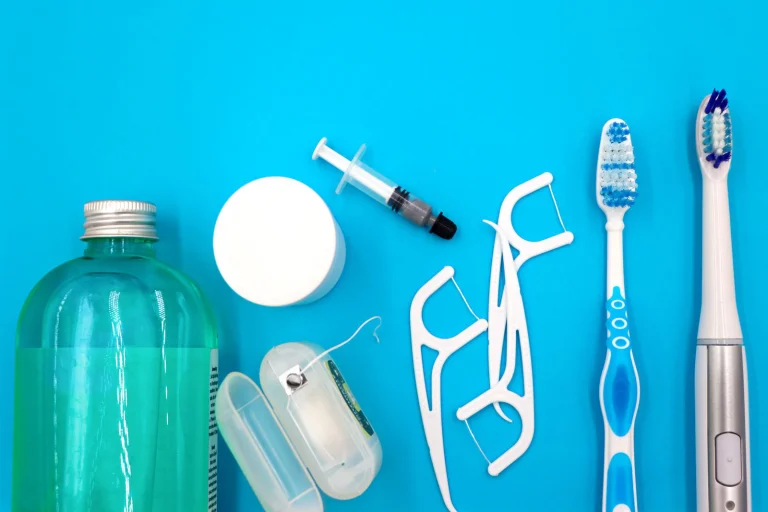
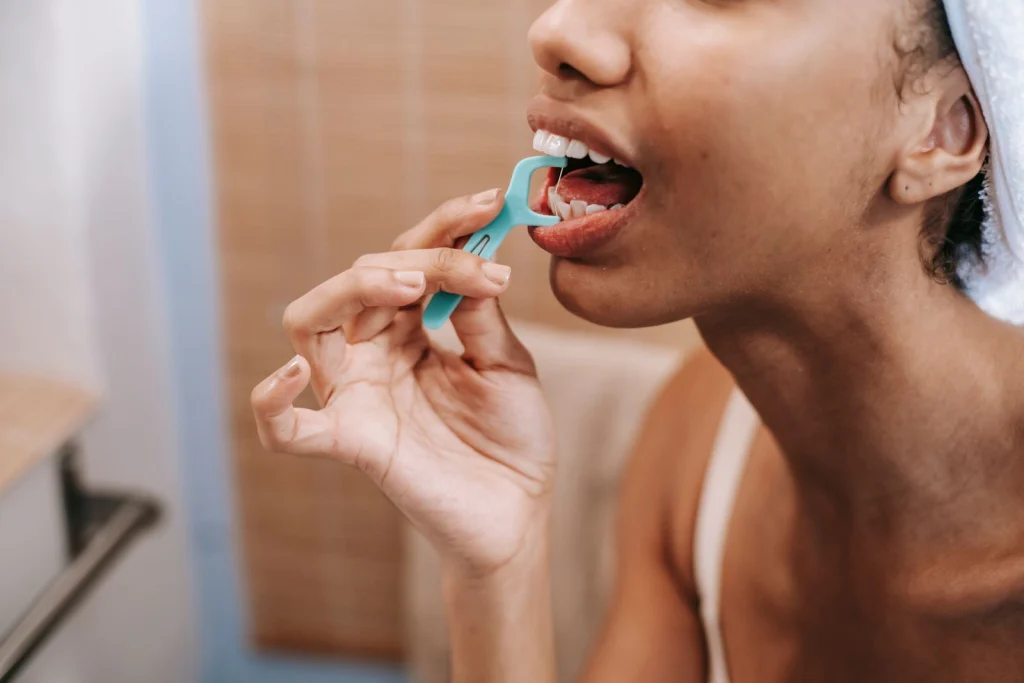
Are floss picks as good as regular floss? A floss pick is far better than not flossing at all, but regular string floss, used well, usually cleans more of each tooth. String floss can wrap into a C shape around the curve of a tooth and slip gently just under the gumline, while a pick holds a short, straight strand that cannot follow those curves as closely. And is natural dental floss as effective as traditional floss? Floss cleans by physically wiping plaque off the tooth, so what decides how well it works is whether it reaches every surface, every day, not whether the strand is silk, plant fiber or nylon.
This guide from the Timonium office of Dr. Steven W. Haywood, DDS walks through how floss cleans, the honest trade-offs between floss picks and string floss, what to look for in a natural floss, and when a water flosser, interdental brush or floss threader makes more sense.
How floss actually cleans your teeth
Plaque is a soft, sticky film of bacteria that builds up on teeth every day. A toothbrush reaches the front, back and chewing surfaces well, but the sides of teeth where two teeth touch are mostly out of reach. Brushing alone leaves plaque in those tight contacts and along the gumline between teeth, which are common places for cavities and gum inflammation to start.
Floss works by contact. When the strand is pressed against the side of a tooth and moved up and down, it wipes plaque off that tooth surface and out of the small space where the gum meets the tooth. That is why technique and consistency matter so much more than the brand or material: floss that never touches the side of the tooth, or never gets used, does not clean anything.
Floss picks vs. regular floss
Where floss picks fall short
- A straight strand. Teeth are rounded, and the gap between them is curved. A pick’s strand is held straight across a plastic frame, so it tends to clean the middle of the contact and miss part of the curve on each side.
- Less reach under the gumline. String floss can be hugged against each tooth and slid gently just below the gum. That is harder to do with a rigid frame.
- One strand for the whole mouth. With string floss you move to a clean section as you go. Many people use a single pick for every tooth, which moves plaque and bacteria from one space to the next unless the pick is rinsed often.
- Back teeth. Some picks are awkward to angle between the molars, which is exactly where plaque likes to hide.
Where floss picks help
- Convenience. Picks work with one hand, fit in a bag or car, and are easy to use away from a mirror.
- Getting started. For children learning to floss, or adults building the habit, a pick is often less frustrating than string floss.
- Dexterity. If stiff fingers or joint pain make wrapping floss difficult, a pick with a handle can be the difference between flossing and not flossing.
The practical answer: if a floss pick is what gets you cleaning between your teeth every day, keep using it, and take your time with each space. If you can manage string floss comfortably, it generally gives you more control and cleans more of each tooth.
Is natural dental floss as effective as traditional floss?
For most people, yes, provided it reaches between the teeth and is used correctly every day. The strand’s job is mechanical. A natural floss pressed against the tooth and moved properly wipes away plaque in the same way a traditional floss does.
What “natural” usually means
“Natural” floss is not a regulated term. It usually refers to one or more of these:
- A strand made of silk or a plant-based fiber instead of nylon or other synthetic fibers
- A wax coating from beeswax or plant waxes instead of synthetic coatings
- No added flavoring or sweeteners
- Refillable, compostable or plastic-free packaging
Practical differences to watch for
Material can change how floss feels to use. Some people find natural or uncoated strands thicker, or more likely to fray or shred in very tight contacts, while smoother synthetic strands slide through tight teeth more easily. If a floss keeps catching and shredding in one spot, mention it at your next visit: a rough edge on a filling or a tight contact can be the cause, and it is worth a look.
What is the healthiest floss to use?
The healthiest floss is the one that slips between your teeth comfortably, does not shred, and that you will actually use every day. If you prefer to avoid certain materials, a natural floss is a reasonable choice, and it does not require giving up clean teeth.
If you care about what goes in your mouth
People who read floss labels often think the same way about their dental work. Dr. Haywood practices holistic dentistry: the practice is mercury-free, avoids nickel and bisphenol plastics, and restores teeth with non-toxic, biocompatible materials. If materials matter to you, that conversation is a natural one to have at your visit.
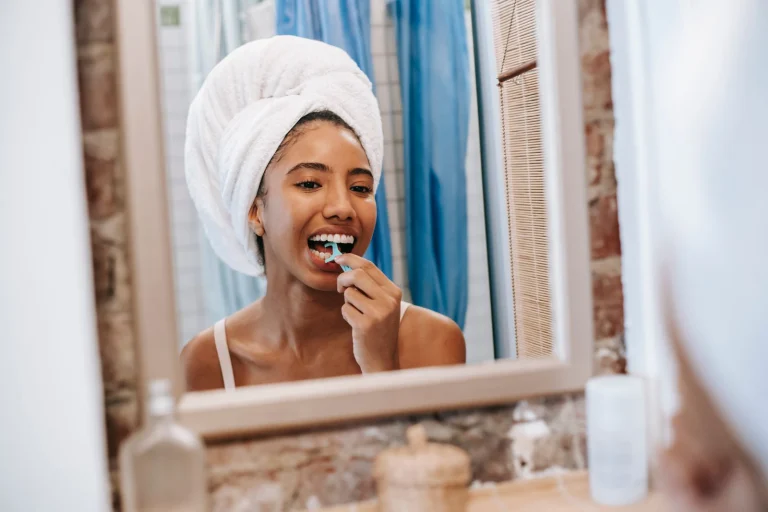
How to floss with regular floss
- Take a long enough piece to wind each end around a middle finger, leaving a few inches between your hands.
- Hold it with your thumbs and forefingers so you have a short, firm section to work with.
- Ease it between two teeth with a gentle back-and-forth motion. Do not snap it down onto the gum.
- Curve it into a C shape against one tooth, slide it gently just under the gumline, then move it up and away from the gum.
- Repeat on the neighboring tooth in the same space, then move on.
- Use a clean section for each new space by unwinding from one hand and winding onto the other.
- Finish the back teeth, including the far side of the last molar on each side, top and bottom.
Other ways to clean between teeth
Water flossers
A water flosser flushes food and soft plaque from along the gumline and around dental work with a pulsing stream of water. It cleans differently from floss: floss wipes the tight contact between teeth by direct contact, while water rinses and flushes. That is the short answer to why a water flosser is usually described as a complement to floss rather than a replacement. Read why a water flosser might be a good idea.
Floss threaders for bridges
Regular floss cannot pass through the joined teeth of a bridge. The practice’s bridge aftercare instructions note that you will need special floss threaders or other aids to reach and clean all areas properly.
Implants
For implant home care, the practice’s advice lists interdental brushes, a Hydrofloss irrigator, end-tuft brushes and careful use of an electric or manual toothbrush, plus professional implant cleanings every 3 to 4 months.
What if your gums bleed when you floss?
Gums that are not used to flossing can bleed a little at first, because plaque along the gumline causes inflammation. Gentle, daily flossing often helps. But bleeding that keeps happening, sore or swollen gums, bad breath or gums pulling back from the teeth can be signs of gum infection, and on their own they don’t necessarily mean gum disease, so an exam is the way to know. Care at the practice is non-surgical. See gum disease treatment.
Why professional cleanings still matter
Even excellent flossing does not remove tartar, the hardened plaque that sticks to teeth. A professional cleaning every six months is recommended, and cleaning appointments at the practice last a full 60 minutes. Your check-up also includes digital X-rays and an oral cancer screening. Learn more about general dentistry in Timonium and dental cleanings.
Paying for your visit
The practice is out of network with all dental insurance providers. You pay at the time of your visit, and the office files the claim on your behalf so your plan can reimburse you. Health savings and flex plans are welcome, and financing is available through CareCredit, with no-interest options for up to 12 months, and Cherry, with plans from 3 to 24 months. See financing options.
Frequently asked questions
Is a floss pick better than not flossing?
Yes. Any tool that cleans between your teeth every day is better than none. If picks are what you will use, use them carefully and rinse the pick as you go.
Is natural floss as effective as traditional floss?
For most people, yes. Floss cleans by contact, so a natural strand used correctly every day wipes away plaque just as a traditional strand does. Choose one that slides between your teeth without shredding.
Can a water flosser replace floss?
They do different jobs. Floss wipes the tight contact between teeth, and a water flosser flushes along the gumline and around dental work. Many people find a combination works best.
How do I floss around a bridge?
Use a floss threader or another cleaning aid to pass floss under the joined teeth. Your hygienist can show you how at your next cleaning.
Get flossing help in Timonium
If you would like a hand choosing the right tools, or your gums bleed when you floss, request an appointment or call (410) 453-9399. The office of Dr. Steven W. Haywood, DDS is at 108 W Timonium Rd, Ste 200, Timonium, MD 21093, and patients come from Timonium, Towson, Hunt Valley, Baltimore and Shrewsbury, PA.
Ready to see your future smile?
Book a cleaning in Timonium and ask which flossing tools suit your teeth.