Is your floss toxic? For most people, the far bigger risk to their teeth and gums is not flossing at all. That said, floss sits against your gums every day, and it is reasonable to want to know what it is made of. If you would rather avoid certain ingredients, the answer is to read the label: look at what the strand is made of, how it is coated, whether it is flavored or sweetened, and what it comes packaged in. Then choose a floss that slides between your teeth comfortably, does not shred, and that you will actually use every day.
This guide from the Timonium office of Dr. Steven W. Haywood, DDS explains why people ask about floss ingredients, what goes into different kinds of floss, how to read a label, and how the same questions apply to the materials in your dental work. For a head-to-head look at floss picks and string floss, read are floss picks as good as regular floss?
Why people ask whether their floss is safe
People who care about what they eat and what they put on their skin often start asking the same questions about oral care products. Floss is used daily, it is pressed against the gums, and a small amount of coating can rub off in the mouth. It is natural to wonder what that coating is.
There has also been public discussion about a family of synthetic chemicals known as PFAS, sometimes called “forever chemicals,” which are used in many consumer products. Some dental flosses use a slippery synthetic coating or strand related to this chemical family to help floss glide through tight teeth. Not every floss uses these materials, and labels do not always say. If you prefer to avoid them, you have plenty of alternatives.
What floss is made of
The strand
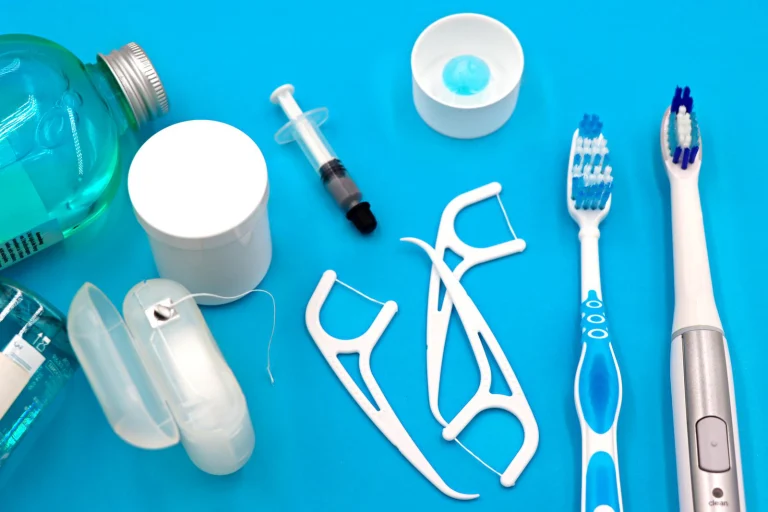
Most floss strands are made from one of a few materials:
- Nylon, a common synthetic fiber, usually made of many thin filaments twisted together
- PTFE-type strands, a single smooth synthetic ribbon designed to slide easily and resist shredding
- Silk, a natural protein fiber that has been used for floss for a long time
- Plant-based fibers, such as fibers derived from corn or bamboo, often sold as compostable
The coating
Many flosses are coated to help them glide. Coatings range from synthetic waxes and slippery synthetic finishes to natural options such as beeswax or plant waxes like candelilla. Unwaxed floss has little or no coating, which some people prefer, though it can catch more easily in tight spaces.
Flavors and sweeteners
Mint and other flavors are common. Some flosses add sweeteners, and some add xylitol. If you prefer to avoid artificial flavors or sweeteners, unflavored floss or floss flavored with plant oils is widely available.
Colors
Some flosses are dyed. If you want fewer additives, look for undyed floss.
Packaging
Traditional floss comes in a plastic dispenser. Refillable glass or metal containers and paper packaging are options if you want to reduce plastic.
How to read a floss label
- Find the strand material. Nylon, PTFE, silk or plant fiber should be named somewhere on the package or the manufacturer’s website.
- Check the coating. Look for words such as “waxed,” “unwaxed,” “beeswax,” “candelilla wax” or “PTFE.”
- Look for flavors, sweeteners and dyes. “Unflavored” and “undyed” are good signs if you want fewer additives.
- Be cautious with marketing words. “Natural” and “eco-friendly” are not regulated terms, so they do not guarantee anything specific.
- Ask the manufacturer. If a label does not list materials, a reputable company should be willing to tell you what is in the product.
Choosing a safer floss that still cleans well
A floss only protects your gums if it reaches between your teeth and gets used every day. When you switch to a floss with fewer additives, pay attention to how it performs:
- Tight contacts. Uncoated or natural strands can feel thicker or catch in very tight spaces. A thinner strand or a plant-wax coating may help.
- Shredding. If a floss keeps shredding in the same spot, mention it at your next visit. A rough edge on an old filling or crown can be the cause, and it is worth a look.
- Comfort. Floss that hurts to use gets skipped. Try a few kinds until one feels right.
If you have a dental bridge, you need a floss threader or similar aid, because food can collect under bridges. Implants need careful cleaning, too. For step-by-step technique, see use five fingers for quick, healthy flossing.
Do not let the search for a perfect floss stop you flossing
It is easy to spend so long researching products that the habit slips. Plaque builds up between teeth every day, and floss removes it by wiping it off the tooth surface. Any floss you use consistently does more for your gums than the ideal floss sitting in a drawer.
If your gums bleed when you floss, do not stop. Bleeding can be a sign of inflammation, and it deserves a check, especially if it continues. Read bleeding gums after a cleaning and gum disease treatment for more.
Other ways to clean between your teeth
- Water flossers use a stream of water to rinse between teeth and around dental work. Many people find them easier with braces, bridges or implants. See why a water flosser might be a good idea.
- Interdental brushes are small brushes that fit between teeth where the gaps are wide enough.
- Floss threaders guide floss under bridges and around fixed appliances.
The same questions apply to your dental work
If you read floss labels, you probably want to know what goes into your fillings and crowns, too. That is where holistic dentistry comes in. Dr. Haywood practices holistic dentistry, choosing dental materials and treatments with your whole body in mind:
- Mercury-free fillings. The practice never uses amalgam fillings and uses tooth-colored composite instead.
- Materials chosen for your body. Restorations are non-toxic, metal-free and biocompatible, with no mercury, nickel or bisphenol plastics.
- Fewer materials of concern. Dr. Haywood avoids nickel and bisphenol plastics as well as mercury, choosing non-toxic, metal-free and biocompatible restorations.
- Safe amalgam removal. Old mercury fillings are removed under rigorous safety protocols designed to minimize your exposure to mercury vapor.
- Fluoride only if you want it. For anyone who prefers to avoid fluoride, the practice offers non-fluoride enamel rebuilding instead.
- Gum care without chemicals. Bacterial DNA testing identifies the bacteria behind gum disease, and laser and ozone therapy clear bacteria and infection from the gums without chemicals.
Learn more about holistic dentistry in Timonium or read the benefits of holistic dentistry.
Paying for your visit
The practice is out of network with all dental insurance companies. You pay at the time of your visit, and the office files the claim on your behalf so your plan can reimburse you for what it covers. Health savings and flex plans are welcome. Financing is available through CareCredit, with no-interest options for up to 12 months, and Cherry, with payment plans from 3 to 24 months. See financing options.
Frequently asked questions
Is PTFE floss bad for you?
PTFE-type floss is designed to glide and resist shredding. Because of public discussion about the chemical family it belongs to, some people prefer to avoid it. If you do, silk or plant-fiber floss with a natural wax coating is an easy switch. Bring any questions to your visit.
Does natural floss clean as well as regular floss?
Floss cleans by physically wiping plaque off the tooth, so a natural floss used correctly every day can do the job. What matters most is that it reaches every contact without shredding.
Is silk floss vegan?
No. Silk comes from silkworms. If you want a plant-based option, look for floss made from corn or bamboo fibers with a plant wax coating.
Can a water flosser replace floss?
A water flosser is a helpful tool, especially around braces, bridges and implants. Ask the team whether it suits your mouth as a replacement or as an addition to floss.
Talk about safer oral care in Timonium
If you care about what goes into your mouth, from your floss to your fillings, bring your questions to a visit. Request an appointment or call (410) 453-9399. The office of Dr. Steven W. Haywood, DDS is at 108 W Timonium Rd, Ste 200, Timonium, MD 21093, and patients come for holistic care from Timonium, Towson, Hunt Valley and Baltimore.
Ready to see your future smile?
Bring your questions about floss, fillings and dental materials to a holistic visit in Timonium.