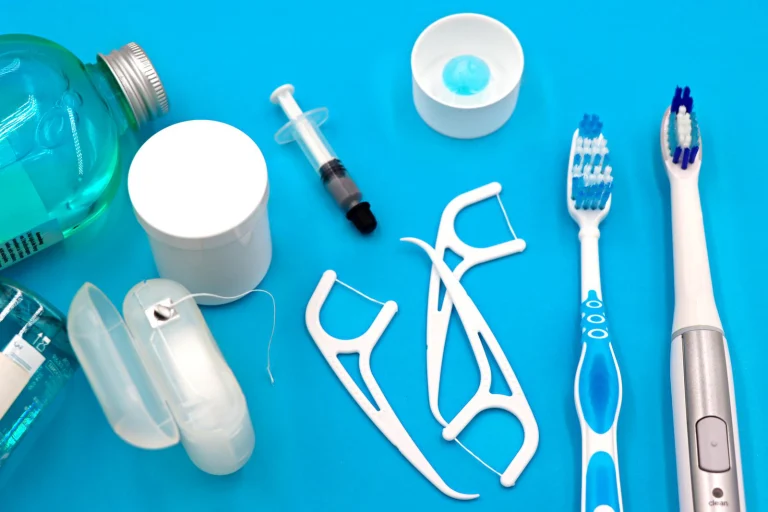
The main solutions used for daily oral care are mouth rinses, toothpastes made for specific needs, and gels or sprays for dry mouth. Each can help with a particular problem, such as sensitivity, dry mouth or healing after treatment, but none of them replaces brushing twice a day and cleaning between your teeth. The best product for you depends on what your mouth needs, so it is worth knowing what each type does, what to look for on the label, and when a product is better left on the shelf.
This guide from the Timonium office of Dr. Steven W. Haywood, DDS focuses on the liquids, gels and pastes in your routine. For the tools, such as toothbrushes, floss and water flossers, read products to help your oral health at home.
What counts as an oral care solution?
An oral care solution is any liquid, gel or paste you use to clean, soothe or protect your mouth. The most common are:
- Mouth rinses, both over the counter and prescription
- Warm salt water rinses
- Toothpastes for sensitivity, whitening or enamel support
- Gels, sprays and lozenges for dry mouth
- Xylitol products such as mints and lollipops
Think of them as helpers. Plaque is a sticky film that has to be physically brushed and cleaned away. A solution can support that work, but it can’t do it for you.
Mouth rinses
Cosmetic rinses
Cosmetic rinses mainly freshen breath for a short time and leave a pleasant taste. They can be nice to use, but they don’t treat the causes of bad breath, such as plaque, gum disease or dry mouth. If you find yourself relying on a rinse to cover bad breath, read bad breath causes and halitosis treatment.
Therapeutic rinses
Therapeutic rinses contain active ingredients aimed at a specific problem, such as plaque, gum inflammation or sensitivity. After periodontal treatment, good home care includes regular brushing, flossing and a mouth rinse, prescription or over the counter, as your treatment plan directs. Read the label so you know what a rinse is designed to do.
Alcohol-free rinses
Some rinses contain alcohol, which can sting and may leave a dry mouth feeling drier. If your mouth is often dry, your gums are tender, or you are avoiding alcohol for any reason, an alcohol-free rinse is usually the more comfortable choice. Read why dry mouth is dangerous for your teeth.
Prescription antibiotic rinses
An antibiotic rinse containing chlorhexidine may be prescribed after some treatments. Use it exactly as directed. The practice’s instructions are to use it in the morning and at bedtime after your routine mouth care, and not to eat, drink or rinse your mouth afterward. Using it more than twice a day can stain your teeth, so more is not better.
Warm salt water rinses
Warm salt water is one of the simplest oral care solutions, and it is part of the practice’s instructions after extractions and oral surgery, where warm salt water rinses help with healing. Timing matters after surgery: the practice’s post-op instructions say not to rinse on the day of surgery and to rinse gently rather than vigorously, so follow the directions for your procedure. See post-op instructions.
Hydrogen peroxide rinses
Some people rinse with hydrogen peroxide from the medicine cabinet. It is strong, and using it undiluted or often can irritate the tissues in your mouth. Don’t use it as an everyday rinse unless a dental professional has told you how. Professional whitening uses hydrogen peroxide under controlled conditions, which is different from rinsing with it at home.
Toothpastes for specific needs
Toothpaste for sensitive teeth
Desensitizing toothpastes are designed to calm sensitivity to cold, heat or sweets, and they often take regular use before you notice a difference. Sensitivity can also be a sign of gum recession, a crack, a worn filling or decay, so have it checked if it lingers. Read sensitive teeth: causes and treatment.
Whitening toothpaste
Whitening toothpastes mainly remove surface stains, and some use more abrasive ingredients to do it. They don’t change the natural color of a tooth the way professional whitening can, and they don’t whiten crowns, veneers or fillings. If your teeth are sensitive or your enamel is worn, ask before using one every day. Read how to keep a whiter smile after tooth whitening.
Toothpaste with or without fluoride
Many toothpastes contain fluoride, and fluoride-free versions are also widely available. For anyone who prefers to avoid fluoride, the practice offers calcium rebuilding treatments instead to help strengthen enamel for patients of all ages. If you have questions about which toothpaste suits your teeth, ask at your visit. See holistic dentistry at the practice.
Natural and foam-free toothpastes
Some people prefer toothpastes without certain foaming agents, flavors or dyes. Foam doesn’t clean your teeth, your brush does, so a low-foam paste can work well when you brush thoroughly. Read toothpaste foam: are you brushing right?
Gels, sprays and lozenges for dry mouth
Saliva protects your teeth by washing away food and neutralizing acid. When your mouth is dry, often because of medications, products made for dry mouth can make you more comfortable. These include moisturizing gels, sprays and rinses, and lozenges made to encourage saliva.
- Choose sugar-free. Anything that dissolves slowly in your mouth should be sugar-free, or it can feed decay.
- Keep water close. Frequent sips of plain water help, especially at night.
- Tell the dental team. Medications and dry mouth can set the stage for root decay, so dry mouth is worth mentioning at every visit.
Xylitol products
Xylitol is a sweetener that plaque bacteria can’t use the way they use sugar. Xylitol mints and lollipops, which the practice offers, help reduce decay risk and can be a better choice than sugary mints between meals. They are a helpful extra, not a substitute for brushing.
Oil pulling and other trends
Swishing oil in the mouth, charcoal powders and homemade rinses come and go in popularity. Some people enjoy them, but they aren’t a replacement for brushing and cleaning between your teeth, and abrasive powders can wear enamel. If you are curious about a trend, ask the team before making it part of your routine.
How to read an oral care label
- Look for the purpose. Is the product meant to freshen breath, reduce sensitivity, remove stains or soothe dryness?
- Check for alcohol if your mouth is dry or sensitive.
- Check for sugar in lozenges, syrups and flavored products.
- Be wary of harsh abrasives in whitening pastes and powders.
- Follow the directions, especially for how often and how long to use a product.
- Read the ingredient list if you are sensitive to flavors, dyes or preservatives. Read how to choose a safer floss for more on reading oral care labels.
Getting advice that fits your mouth
The right oral care solutions depend on your teeth, gums, dental work and health. At your visit, the team can look at your gums, check for sensitivity, wear and dry mouth, and help you decide what belongs in your routine. Cleaning appointments at the practice last a full 60 minutes, and a professional cleaning every six months is recommended. See dental cleanings and preventive care and general dentistry in Timonium.
Paying for your visit
The practice is out of network with all dental insurance providers. You pay at the time of your visit, and the office files the claim on your behalf so your plan can reimburse you for whatever it covers. Health savings and flex plans are welcome, and financing is available through CareCredit, with no-interest options for up to 12 months, and Cherry, with plans from 3 to 24 months. See financing options.
Frequently asked questions
What solution is used for oral care?
The most common are mouth rinses, warm salt water rinses, specialty toothpastes and dry mouth gels or sprays. Prescription rinses are used after some treatments. All of them work alongside brushing and cleaning between your teeth.
Do I need to use mouthwash every day?
Not necessarily. Many people keep their mouths healthy with brushing, cleaning between the teeth and regular cleanings. A rinse may be recommended for a specific reason, such as after gum treatment.
Can I use hydrogen peroxide as a mouthwash?
It isn’t a good everyday rinse. It can irritate the mouth, especially when undiluted or used often. Ask a dental professional before using it.
When should I use a salt water rinse?
Warm salt water rinses are often part of healing after extractions and oral surgery. Follow the instructions for your procedure, which may say to wait until the day after surgery and to rinse gently.
Build a better oral care routine in Timonium
If you aren’t sure which products belong in your routine, bring them up at your next visit. Request an appointment or call (410) 453-9399. The office of Dr. Steven W. Haywood, DDS is at 108 W Timonium Rd, Ste 200, Timonium, MD 21093, serving Timonium, Lutherville, Cockeysville, Towson and Hunt Valley. New patients are always welcome.
Ready to see your future smile?
Not sure which rinse or toothpaste suits you? Ask at a cleaning in Timonium.