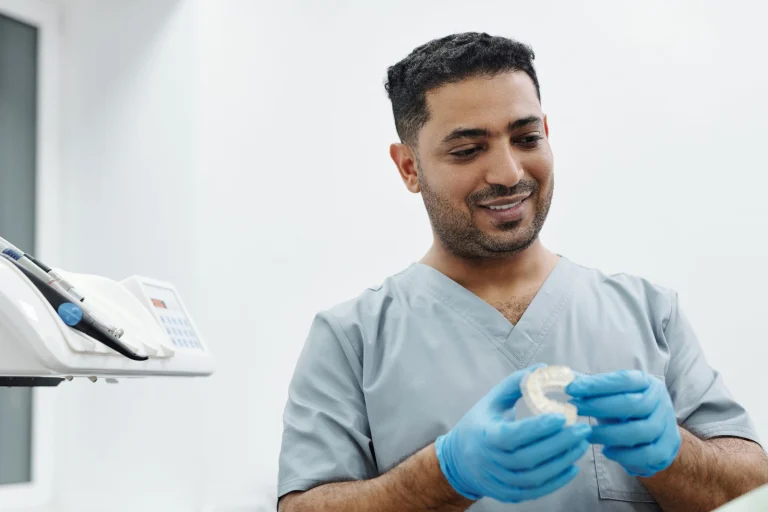
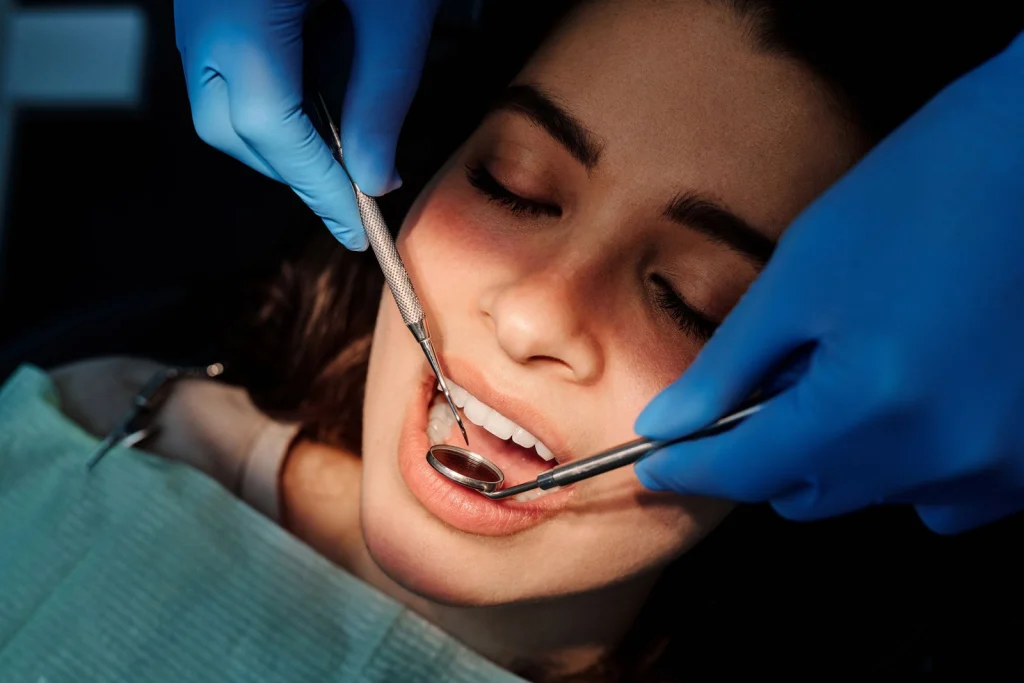
Sensitive teeth usually mean the inner layer of a tooth, the dentin, has lost some of its protection, so cold, heat, sweets or even air reach the nerve and cause a sharp jolt of pain. The most common reasons are receding gums, worn enamel, a cavity, a cracked tooth or filling, grinding, and recent dental work such as whitening. Mild sensitivity that fades quickly is common; sensitivity that lingers, gets worse or comes with swelling or pain when you bite is worth an exam.
This guide explains what causes sensitive teeth, how to tell ordinary sensitivity from a problem that needs treatment, and how Dr. Steven W. Haywood, DDS diagnoses and treats tooth sensitivity at the Timonium, MD office.
What makes a tooth sensitive
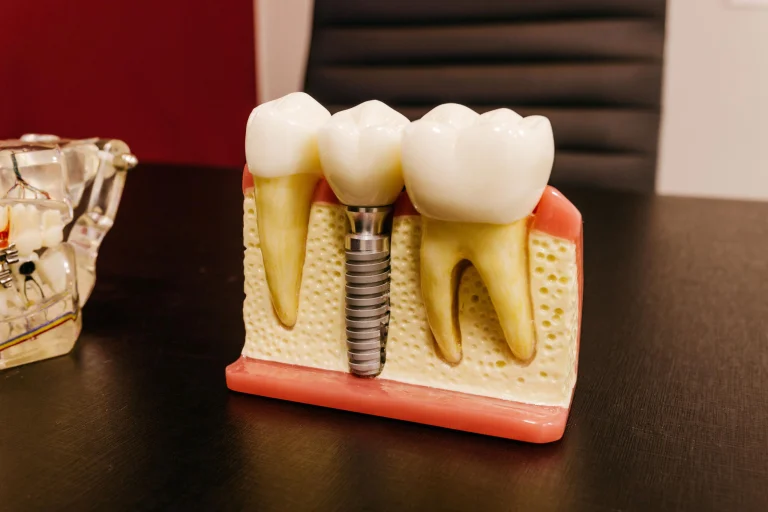
Each tooth has a hard outer layer of enamel above the gumline, and its root is covered by gum and bone. Underneath is dentin, which carries sensations inward to the pulp, where the tooth’s nerves are. When enamel wears thin, or when gums pull back and expose the root, the dentin is left open to temperature and pressure. When decay, a crack or an infection reaches deeper into the tooth, the pain tends to be stronger and to last longer.
That is why sensitivity is a symptom rather than a diagnosis. The same twinge from ice water can come from a harmless patch of exposed root or from a crack that needs attention.
Common causes of sensitive teeth
Receding gums and gum disease
Receding gums expose the root surface, and teeth that look slightly longer are one of the signs of gum disease. Other signs include sore, swollen or bleeding gums, bad breath, pus around the gumline and painful chewing. On their own these symptoms don’t necessarily mean you have gum disease, but they are a good reason to have your gums checked. If your gums bleed as well, read bleeding gums after your 6-month cleaning.
Worn enamel
Enamel can be worn away by brushing too hard, by frequent acidic foods and drinks, and by grinding. Uncontrolled grinding and clenching place excessive force on the teeth, wearing enamel away and introducing small cracks, often without you noticing.
A cavity
Decay opens a path into the tooth, and sensitivity to sweets or cold can be an early sign. A cavity caught early usually needs only a filling.
A cracked tooth or filling
If a tooth that already has a filling hurts when you chew, the cause is often tiny cracks on the chewing surface. Traditional fillings can weaken a tooth, and a cracked tooth or filling is one of the most common dental emergencies.
After teeth whitening
Pain and sensitivity after professional teeth whitening is common. You may be sensitive to cold air and fluids, but it fades within 24–36 hours.
After a filling, crown or deep cleaning
Some sensitivity to hot, cold and pressure is normal after a filling, after a temporary crown is placed and after scaling and root planing. If a new filling or crown seems to touch before your other teeth when you bite, call the office for an adjustment, because a high spot can make a tooth sore.
Sensitivity, or something more serious?
Call the office rather than waiting it out if:
- the pain lingers long after the cold or hot drink is gone, or it throbs on its own;
- it hurts to bite or chew on one tooth;
- your gum or face is swelling;
- a tooth or filling has visibly chipped or cracked;
- the sensitivity started after a blow to the mouth.
An abscess usually starts when a tooth’s nerve becomes infected. The pain may come and go when you chew, or throb constantly, and the bacteria can spread through the jaw and cause swelling that can become life threatening. Antibiotics can slow the spread, but you still need dental treatment. Call as early in the day as you can. See emergency dental care.
How sensitive teeth are diagnosed in Timonium
Treatment starts with finding the cause. If you haven’t seen a dentist recently, the standard of care calls for the necessary X-rays and a thorough exam before treatment. At the practice, that includes:
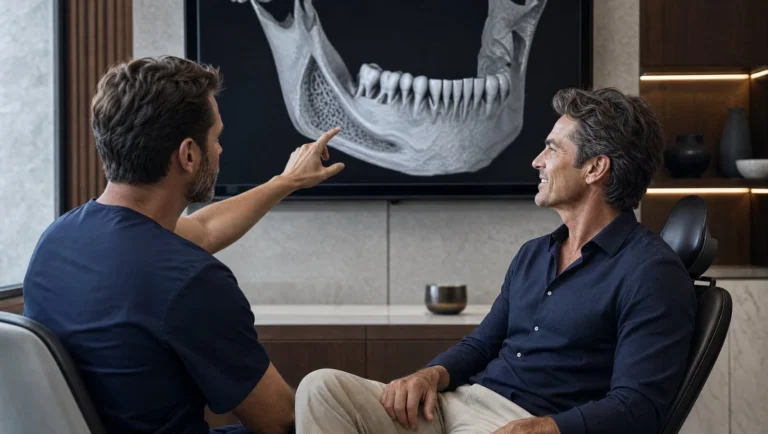
- Digital X-rays, which appear on screen right away with as much as 90% less radiation exposure than film.
- Intraoral cameras, which zoom in on each tooth so you can see a crack or worn area for yourself.
- DIAGNOdent, a laser pen that can detect small amounts of decay at the earliest stages, sometimes before it shows on an X-ray.
- A gum check, to look for recession and signs of infection.
- A look at your bite, including grinding wear and TMJ issues.
Dr. Haywood then explains what is causing your sensitivity and all of your options. See dental technology at the practice.
Treatment depends on the cause
- Gum disease: non-surgical periodontal care, such as scaling and root planing, removes the bacteria beneath the gums. Treatment can control and even reverse the early stages. See gum disease treatment.
- A cavity: a tooth-colored, mercury-free composite filling matched to your teeth, usually in a single visit.
- A cracked filled tooth: covering the tooth with a crown relieves the pain from tiny cracks and restores full function. Where less of the tooth is damaged, a bonded onlay can restore strength while conserving healthy structure. See ultimate dental fillings.
- A deeper crack: a crack along the gumline is usually a horizontal fracture that can normally be saved. A vertical crack that splits the entire root means the tooth can’t be saved, though a partial vertical fracture may still be saved.
- An infected nerve: root canal therapy removes the infection, relieves the pain and saves the tooth, which is then capped with a porcelain crown. See root canals.
- Grinding: a comfortable, clear bite guard custom-made for you helps protect your teeth from further wear. If jaw pain or headaches come with it, a TMJ evaluation may help.
- Weakened enamel: for anyone who prefers to avoid fluoride, the practice offers calcium rebuilding treatments to help strengthen enamel for patients of all ages. See protect your smile.
- After whitening: sensitivity fades within 24–36 hours. Avoid anything that stains, such as coffee, tea, red wine and dark colas, for the first 24 hours. See teeth whitening.
What you can do at home in the meantime
While you wait for your appointment, a few everyday habits can take the edge off sensitivity without hiding a problem:
- Brush gently with a soft brush; scrubbing hard wears enamel and gums.
- Many people find a toothpaste made for sensitive teeth helps with mild sensitivity. If it doesn’t, or the pain is getting worse, don’t keep masking it.
- Rinse with water after acidic drinks, and avoid very cold or very hot foods on the sore side.
- Keep cleaning between your teeth. A water flosser can be gentler on sore gums.
Getting seen for tooth pain
Dr. Haywood is available anytime for true dental emergencies for existing patients and their friends and families. New patients with emergency needs are seen on weekdays during normal business hours, based on availability. Office hours are Monday 8:30 AM–6:30 PM, Tuesday 8:30 AM–5 PM, Wednesday 8:30 AM–3:30 PM, Thursday 8:30 AM–4:30 PM and Friday 8:30 AM–4 PM. For routine care, see general dentistry in Timonium.
Insurance and payment
The practice is out of network with all dental insurance companies. You pay at the time of your visit, and the office files the claim on your behalf so your plan can reimburse you for what it covers. Health savings and flex plans are welcome, and financing is available through CareCredit (no-interest options up to 12 months) and Cherry (plans from 3 to 24 months). See financing options.
Frequently asked questions
Why are my teeth suddenly sensitive?
Sudden sensitivity often follows something new: a crack, a cavity reaching deeper, a recent filling or whitening, or a gum that has pulled back. If it doesn’t settle within a few days, or it is focused on one tooth, have it checked.
Does tooth sensitivity mean I need a root canal?
Not usually. Most sensitivity comes from exposed dentin, worn enamel or a small cavity. Pain that lingers, throbs on its own or comes with swelling can mean the nerve is infected, and an exam with X-rays shows whether root canal therapy is needed.
What can a dentist do for extremely sensitive teeth?
Find and treat the cause: fill a cavity, crown or bond a cracked tooth, treat gum disease, make a bite guard for grinding, strengthen enamel with calcium rebuilding treatments, or treat an infected nerve.
Is sensitivity after teeth whitening normal?
Yes. Sensitivity to cold air and fluids is common after professional whitening and fades within 24–36 hours.
Get sensitive teeth checked in Timonium
Dr. Steven W. Haywood, DDS has over 35 years of experience finding and fixing the causes of tooth pain. If your teeth are sensitive, request an appointment or call (410) 453-9399, as early in the day as you can if it hurts. The office is at 108 W Timonium Rd, Ste 200, Timonium, MD 21093.
Ready to see your future smile?
Sensitive or painful teeth? Call early in the day to be seen in Timonium.