Dry mouth is more than an annoying, sticky feeling. Saliva is one of your teeth’s main defenses, so when there isn’t enough of it, plaque acids linger, food stays on the teeth longer and tooth decay can move faster than usual, especially along the roots near the gumline. The practice of Dr. Steven W. Haywood, DDS in Timonium notes that medications and dry mouth can set the stage for root decay, which is why a dry mouth is worth mentioning at your next visit rather than just putting up with it.
This guide explains what saliva does, how to recognize dry mouth, its most common causes, why it puts your teeth at risk and what you and the team can do about it.
What saliva does for your teeth
Most people never think about saliva until it goes missing. It does several jobs at once:
- It rinses. Saliva washes food particles and sugars off the teeth and out of the grooves between them.
- It buffers acid. After you eat or drink, the bacteria in plaque produce acid. Saliva helps bring the mouth back toward a neutral balance so enamel isn’t under attack for as long.
- It carries minerals. Calcium and phosphate in saliva help enamel recover from the small amounts of mineral it loses every day.
- It protects soft tissue. A moist mouth keeps the cheeks, tongue and gums comfortable and makes chewing, swallowing and speaking easier.
- It helps dentures stay comfortable. A thin film of saliva helps a denture sit and seal against the gums.
When saliva flow drops, every one of those protections weakens at the same time.
Signs you may have dry mouth
Dry mouth, which dentists and doctors also call xerostomia, can be mild or constant. Common signs include:
- A sticky or dry feeling in the mouth, or frequent thirst
- Thick or stringy saliva
- Waking up at night or in the morning with a very dry mouth
- Trouble chewing or swallowing dry foods such as crackers or bread
- A dry, rough or burning tongue, or cracked lips and corners of the mouth
- Bad breath that brushing doesn’t seem to fix
- A changed sense of taste
- Dentures that rub, feel loose or cause sore spots
- New cavities, especially near the gumline, after years without many
Common causes of dry mouth
Medications
Medications are one of the most frequent causes. Dry mouth is a listed side effect of many common prescriptions and over-the-counter products, including some antihistamines and decongestants taken for allergies, blood pressure medications, antidepressants and pain relievers. Taking several medications together can make it more noticeable. Never stop or change a medication on your own; if you suspect it is drying your mouth, talk it over with the doctor who prescribed it and let your dental team know too.
Breathing through your mouth
Congestion, snoring and sleeping with your mouth open dry the mouth out overnight. Many people notice it most first thing in the morning.
Not enough fluids, and drinks that dry you out
Not drinking enough water, especially in hot weather or after exercise, can leave the mouth dry. Caffeine and alcohol can add to the problem.
Smoking and vaping
Tobacco and vaping products can reduce saliva and irritate the tissues of the mouth. Read more in how smoking and vaping affect your teeth and gums.
Health conditions and medical treatment
Some medical conditions, such as diabetes and certain autoimmune conditions, can affect saliva, and so can some cancer treatments to the head and neck. If dry mouth comes on suddenly or is severe, see your physician as well as your dentist, since the cause may need medical attention.
Why dry mouth is dangerous for your teeth
Tooth decay can progress faster
Every time you eat or sip something with sugar or starch, plaque bacteria make acid. With normal saliva, that acid is washed away and neutralized fairly quickly. With a dry mouth, it stays in contact with the teeth for longer, and small areas of weakened enamel can turn into cavities. Frequent sipping of sweetened coffee, juice or soda makes the effect worse; see why soda spells double trouble for teeth and gums.
Root decay near the gumline
As gums recede, the root surfaces of teeth become exposed. Roots are not covered by enamel, so they are softer and more vulnerable to decay. The practice points out that decay rates increase with age, and that medications and dry mouth can set the stage for root decay. That combination is why some adults start getting cavities again after a long stretch without them. If that sounds familiar, read does your dentist keep finding cavities?
Decay around existing dental work
The edges of fillings and crowns are places where plaque can collect. In a dry mouth, decay can start along those margins, which is one reason dental work that has lasted for years can suddenly need attention.
Gum irritation and bad breath
Without saliva to rinse the mouth, plaque builds up more easily along the gums, and odor-causing bacteria have an easier time. Dry mouth is a common reason breath stays stale even with good brushing; see bad breath causes and halitosis treatment.
Sore spots and uncomfortable dentures
Dry tissue is more easily irritated. Dentures, the edge of a chipped tooth or even crunchy foods can rub and leave sore spots. For ways to eat comfortably while a sore heals, see tips for treating mouth sores.
Dry mouth and tooth decay: how the Timonium office helps
A dry mouth usually can’t be solved in a single visit, but the risk to your teeth can be managed. Here is how the practice approaches it.
Knowing your health history
Your first visit starts with a conversation about your dental concerns, health history and medications. The new patient forms include a dental medical history, and it helps to list every prescription and over-the-counter product you take. That list often explains why a mouth is dry.
Finding decay early
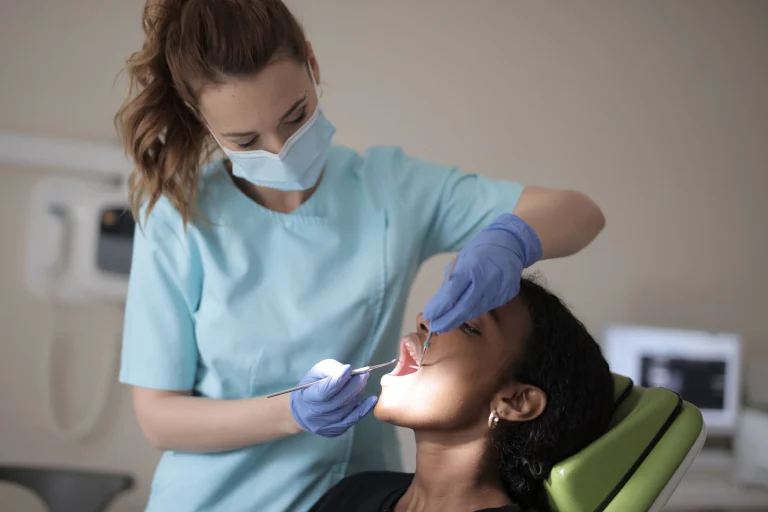
Digital X-rays appear on screen right away, intraoral cameras let you see what Dr. Haywood sees, and DIAGNOdent, a laser that detects decay, can find small amounts of decay at the earliest stages, sometimes before it shows on an X-ray. When decay is caught early, the repair is usually smaller. Learn more about the dental technology used in the office.
Thorough cleanings
A professional cleaning every six months is recommended, and cleaning appointments at the practice last a full 60 minutes. That time lets the team remove plaque and tartar thoroughly and keep a close eye on the gums and any exposed roots.
Strengthening enamel without fluoride
Fluoride is optional here: patients who prefer to avoid it can have calcium rebuilding treatments instead. Instead, calcium rebuilding treatments are offered to help strengthen enamel for patients of all ages, and xylitol mints and lollipops help reduce decay risk. See dental cleanings and preventive care and holistic dentistry for more on this approach.
Sealing vulnerable surfaces
Super sealants seal the chewing surfaces and the pits and fissures of adult and children’s teeth so bacteria and sugars can’t collect there. The practice offers them with a lifetime warranty.
Tooth-colored repairs when decay is found
If a cavity does form, fillings are tooth-colored, mercury-free composite, matched to your teeth and bonded in place. Dr. Haywood never uses amalgam.
What you can do at home
- Sip water through the day, especially with meals, and keep a glass by the bed.
- Use xylitol mints or gum between meals to encourage saliva, instead of sugary candy.
- Limit slow sipping of sweetened or acidic drinks. If you have them, have them with a meal rather than over hours.
- Go easy on caffeine and alcohol, and check whether your mouthwash contains alcohol, which can feel drying.
- Run a humidifier in the bedroom if you wake up dry.
- Brush gently twice a day and clean between your teeth daily. Plaque does more harm in a dry mouth, so home care matters more. See quick, healthy flossing.
- Take dentures out at night and keep them clean, unless your dentist has told you otherwise.
- Ask your doctor whether a medication could be the cause and whether there is an alternative.
When to see the dentist about dry mouth
Call the office if your mouth has felt dry for more than a few weeks, if you have new cavities or sensitivity near the gumline, if dentures have started to rub, or if your tongue or mouth burns. If dry mouth comes with trouble swallowing, dry eyes or other new symptoms, see your physician too. Existing patients and new patients are welcome to call (410) 453-9399.
Paying for preventive care
The practice is out of network with all dental insurance companies. You pay at the time of your visit, and the office files the claim on your behalf so your plan can reimburse you. Health savings and flex plans are welcome. Financing is available through CareCredit, with no-interest options for up to 12 months, and Cherry, with payment plans from 3 to 24 months. See financing options.
Frequently asked questions
Can dry mouth cause cavities?
Yes, it can raise the risk. Saliva rinses away food and helps neutralize plaque acids, so with less of it, decay can progress faster, particularly on exposed roots and around the edges of fillings and crowns.
Can having no teeth cause dry mouth?
Missing teeth are not usually a cause of dry mouth on their own; medications, mouth breathing and health conditions are far more common reasons. A dry mouth can make dentures less comfortable, though, and can leave sore spots where they rub. If your dentures feel loose or sore, the team can check the fit.
Does the practice use fluoride for dry mouth?
No. Fluoride is optional here: patients who prefer to avoid it can have calcium rebuilding treatments instead. Calcium rebuilding treatments help strengthen enamel instead, and xylitol mints and lollipops help reduce decay risk.
Is dry mouth a normal part of getting older?
It becomes more common with age, often because people take more medications, but it isn’t something you simply have to accept. Decay rates increase with age, so it is worth managing.
Should I stop a medication that dries my mouth?
Not on your own. Talk to the doctor who prescribed it. In the meantime, the steps above and regular dental visits help protect your teeth.
Protect a dry mouth with a visit in Timonium
If a dry mouth has you worried about your teeth, have them checked before small problems grow. Request an appointment or call (410) 453-9399. The office of Dr. Steven W. Haywood, DDS is at 108 W Timonium Rd, Ste 200, Timonium, MD 21093, and welcomes patients from Timonium, Lutherville, Cockeysville and Towson. For more guides, visit the blog.
Ready to see your future smile?
Dry mouth and new cavities? Have your teeth checked in Timonium.