No, childhood cavities are not inevitable. It can feel that way when every child in the neighborhood seems to have a few fillings, or when a parent grew up with a mouthful of them. But tooth decay is caused by a process that families can influence at almost every step, and many children grow up with few or no cavities. What makes the difference is rarely luck. It is usually a mix of daily routines, what children drink between meals, early checkups, and the example the adults around them set.
This article looks at the common beliefs that make cavities seem unavoidable, why some children really are more prone to decay, and the family habits that change the odds, from the Timonium office of Dr. Steven W. Haywood, DDS.
Are cavities inevitable? What parents often hear
Several ideas get passed around that make tooth decay sound like a normal part of growing up. Here is how they hold up.
“Baby teeth fall out anyway”
Baby teeth do fall out, but they matter while they are there. They help children chew and speak, and they hold space for the permanent teeth coming in behind them. A decayed baby tooth can become painful or infected, which makes eating and sleeping miserable. Decay in baby teeth is worth preventing and, when it happens, treating.
“Bad teeth run in our family”
Some traits do vary from child to child, such as the depth of the grooves on back teeth. But much of what looks like family inheritance is really family habit. Children share their parents’ kitchen, snack cupboard, drink choices, bedtime routine and attitude toward the dentist. Change those, and the family pattern often changes too.
“Every kid gets a few cavities”
Cavities are common, but common is not the same as unavoidable. Tooth decay is one of the most preventable problems in children’s teeth.
“If my child already has cavities, it’s too late”
It is never too late. A child who has had several fillings can still keep the rest of their teeth healthy, and permanent teeth arriving later get a fresh start with better habits.
How tooth decay develops in a child’s mouth
Every time a child eats or drinks something with sugar or starch, bacteria in plaque turn it into acid that pulls minerals out of the enamel. Saliva helps enamel recover between snacks. When sugary foods and drinks come often, enamel never gets enough of a break, a weak spot forms, and that weak spot can become a cavity. The takeaway for parents is simple: how often teeth meet sugar matters as much as how much sugar a child has.
Why some children get more cavities than others
Two children in the same family can have very different dental checkups. Common reasons include:
- Grazing and sipping. Juice, sweetened milk, soda and sports drinks sipped through the day, or crackers and fruit snacks nibbled all afternoon, keep enamel under constant attack.
- Sticky snacks. Gummy candy, fruit snacks and dried fruit cling to the grooves of back teeth. See why gummy bears hurt your teeth.
- Bedtime habits. Saliva slows during sleep, so milk, juice or snacks after the last brushing have hours to do damage.
- Deep grooves on back teeth. Some molars have pits that a toothbrush simply can’t clean.
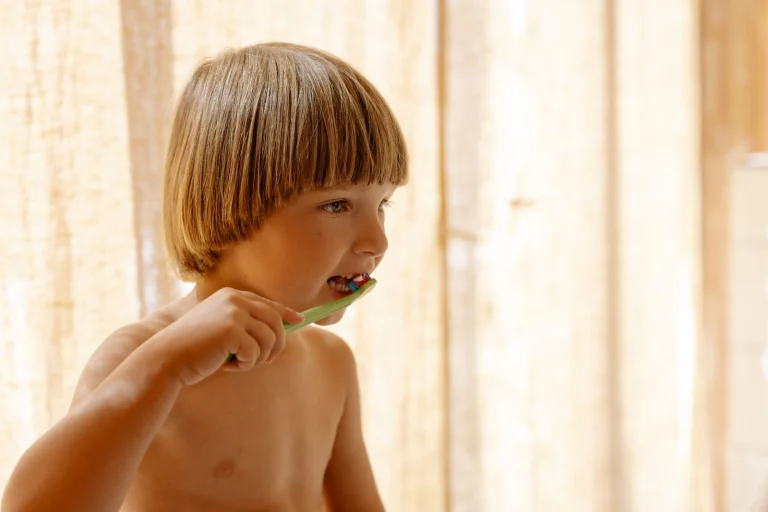
- Brushing without help. Young children don’t yet have the coordination to reach every surface.
- Missed checkups. Early decay usually doesn’t hurt, so it can grow unnoticed.
- Braces and crooked teeth. Crowded teeth and orthodontic hardware create more places for plaque to hide.
Children copy what they see
Children learn more from what adults do than from what adults say. Healthy teeth are no exception. A few questions worth asking honestly as a parent:
- Do your children see you brush carefully, morning and night, and clean between your teeth?
- Is water the everyday drink in your house and in the car cup holders?
- Do sweets come with meals, or all day long?
- Do you keep your own dental checkups, and talk about them calmly?
- Do you treat the dentist as a normal, even pleasant, part of life rather than something to dread?
Brushing together, choosing water together and booking family checkups together turns healthy habits into ordinary family routines rather than rules.
Protecting teeth from the very beginning
Good habits can start before the first tooth appears. General guidance for babies and toddlers includes:
- Wipe your baby’s gums with a soft, damp cloth after feedings.
- Don’t put a baby or toddler to bed with a bottle of milk, formula or juice.
- Offer water, not juice, between meals.
- Begin brushing as soon as teeth appear, and keep helping until your child can brush thoroughly alone.
- Avoid sharing spoons or cleaning a pacifier in your own mouth, since cavity-causing bacteria can be passed through saliva.
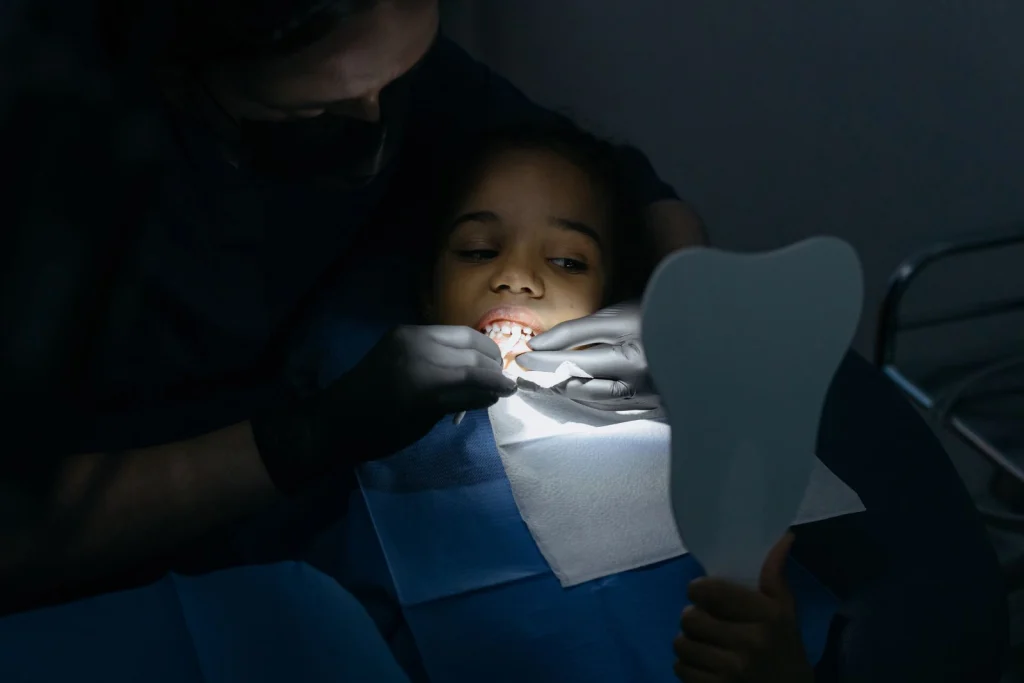
Children’s dental groups advise that a first dental visit happen by around the first birthday. Call the office to talk about when your child should come in.
What the dentist adds to your efforts at home
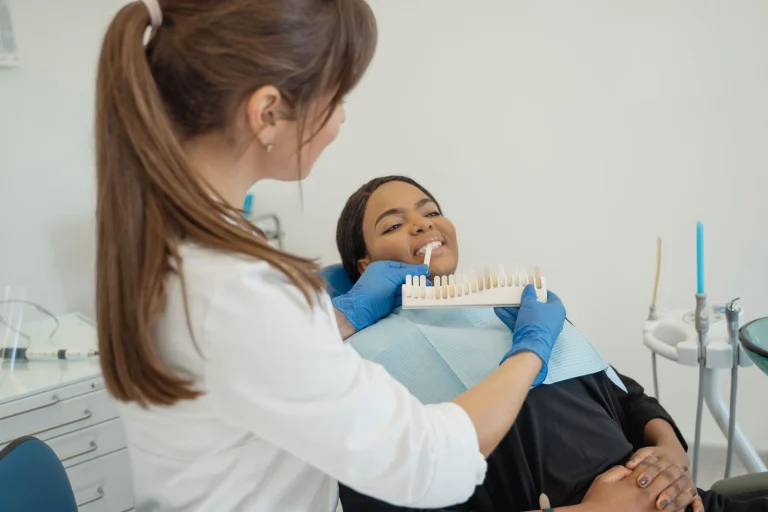
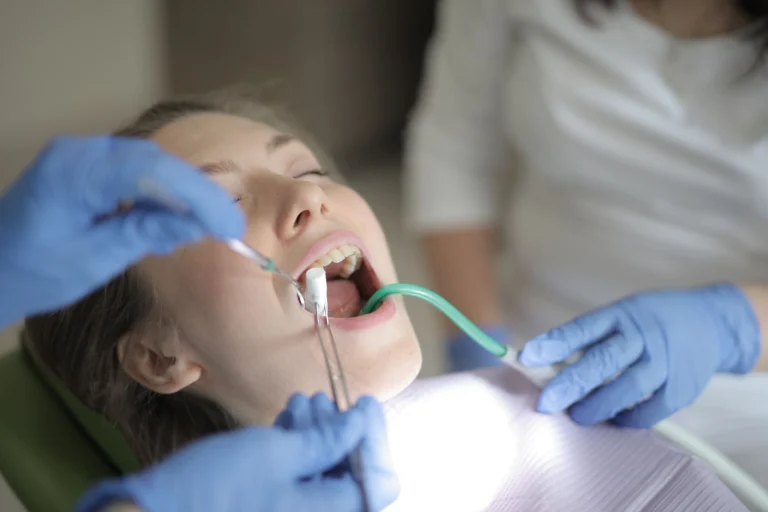
Home habits do most of the work, but a few things only a dental office can provide:
Early detection
Digital X-rays, with as much as 90 percent less radiation exposure than traditional film, and DIAGNOdent laser detection help find decay at its earliest stages, sometimes before it shows on an X-ray. See dental technology.
Sealing the grooves
Super sealants completely seal the chewing surfaces and all the pits and fissures of children’s and adult teeth, so bacterial byproducts and simple sugars can’t collect there. The process is simple and painless, and the practice offers a lifetime warranty.
Strengthening enamel without fluoride
Fluoride is widely used to strengthen enamel, and many dentists and pediatricians recommend it. This practice takes a different approach: for anyone who prefers to avoid fluoride, the practice offers non-fluoride calcium rebuilding treatments for patients of all ages, along with xylitol mints and lollipops that help reduce decay risk. Talk through the options with Dr. Haywood and your child’s pediatrician. See cleanings and preventive care.
For a step-by-step guide to daily habits, snacks and sealants, read how to prevent cavities in children.
If your child already has cavities
A cavity that has formed a hole won’t heal on its own, but one caught early usually needs only a filling. The practice never uses amalgam: fillings are tooth-colored composite, matched to the tooth and bonded in place. Read white fillings vs. silver fillings to learn more.
The office offers a comfortable filling process for people of all ages using micro-air technology, which removes small areas of decay with no heat, pressure or vibration. Laughing gas is a safe and effective form of sedation for patients of all ages, and it is offered as a complimentary service. Learn more about restorative dentistry and sedation dentistry.
Then use the experience as a turning point. Ask what likely caused the decay, and adjust one or two habits at a time.
Teenagers and tooth decay
Cavity risk doesn’t end when the baby teeth are gone. Teenagers often have more independence with snacks, sports drinks and late nights, and less supervision of brushing. For teens with crooked teeth, Invisalign Teen uses clear, removable aligners, and straight, uniform teeth are easier to clean.
Bringing your family to the Timonium office
Family dentistry is part of the practice, so parents and children can be seen in the same office. A parent or legal guardian must be present during the consultation of a patient under the age of 18. Dr. Haywood’s U.S. Air Force advanced residency included an internship in pediatric dentistry, among other areas. See general and family dentistry.
The practice is out of network with all dental insurance companies: you pay at the time of your visit, and the office files the claim so your plan can reimburse you for what it covers. Health savings and flex plans are welcome, and financing is available through CareCredit, with no-interest options up to 12 months, and Cherry, with plans from 3 to 24 months. See financing options.
Frequently asked questions
Are cavities inevitable for kids with soft teeth?
Some children are more prone to decay, but that means their teeth need more protection, not that cavities can’t be prevented. Sealants, enamel-strengthening care, fewer sugary drinks and regular checkups all help.
Is juice bad for children’s teeth?
Juice bathes teeth in sugar and often acid, especially when it is sipped through the day. Water is the better everyday drink, and juice is easier on teeth with a meal.
Can a parent’s cavities affect a baby?
Cavity-causing bacteria can be passed through saliva, so it helps to avoid sharing spoons and to keep your own teeth healthy.
My child is scared of the dentist. What helps?
Talk about visits calmly, tell the team ahead of time, and ask about the gentle micro-air filling process and complimentary laughing gas if treatment is needed.
Book a family checkup in Timonium
If you are worried about tooth decay in your children, or want the whole family on a better track, request an appointment or call (410) 453-9399. The office of Dr. Steven W. Haywood, DDS is at 108 W Timonium Rd, Ste 200, Timonium, MD 21093, and families come from Timonium, Lutherville, Cockeysville, Towson and Baltimore.
Ready to see your future smile?
Book a family checkup in Timonium and give your children a cavity-free start.