To make brushing count, follow the same route around your mouth every time, aim the bristles at the places plaque hides, and check your results instead of assuming they’re clean. Most people brush on autopilot, starting in the same spot and running out of attention before they reach the back teeth, the gumline or the inside of the lower front teeth. Those three habits fix most of what a toothbrush misses.
This guide from the Timonium office of Dr. Steven W. Haywood, DDS walks through the three tips, the spots people most often miss, easy ways to check your own brushing, and what to do if your teeth feel sensitive while you brush.
Why brushing often misses spots
Brushing is one of the most repeated habits of the day, which is exactly why it gets rushed. People tend to start on the same side, spend the most time on the front teeth they can see in the mirror, and give less attention to the side opposite their brushing hand. The result is a mouth that feels fresh but still has plaque along the gums and on the back teeth.
How hard you brush isn’t the fix. Scrubbing harder can wear enamel and push gums back. If that sounds familiar, read smart brushing beats aggressive brushing.
Tip 1: Follow the same map every time
Divide your mouth into sections
Think of your mouth as four sections: upper right, upper left, lower left and lower right. Give each section the same attention, and within each section brush the outside surfaces, the inside surfaces and the chewing surfaces.
Start where you usually finish
If you always begin on the upper front teeth, the lower back teeth get whatever patience is left. Try starting with the section you tend to rush. Switching the starting point every so often keeps any one area from being shortchanged.
Mind your weaker side
Right-handed people often do a less thorough job on the right side of the mouth, and left-handed people on the left. Slow down on that side, or switch hands briefly to reach it better.
Tip 2: Aim for the places plaque hides
The gumline
Plaque collects where the teeth meet the gums. Tilt the bristles toward the gumline and use small, gentle strokes so the tips sweep along that edge. This is where gum inflammation starts.
The back of your last molars
The surface of your last tooth that faces your throat is easy to skip. Open partly, not wide, and reach the brush behind that tooth on the top and bottom.
The inside of the lower front teeth
The tongue side of the lower front teeth is a common place for tartar to build up. Turn the brush vertically and use the tip to clean each tooth there.
The cheek side of the upper back teeth
Your cheek presses against these teeth and can block the brush. Relax your jaw and slide the brush in along the gum.
Around dental work
Crowns, bridges, implants and the edges of fillings deserve extra care, since plaque can collect at their edges.
Your tongue
Brush or gently scrape your tongue from back to front. Bacteria on the tongue contribute to bad breath. Read bad breath causes and halitosis treatment.
Tip 3: Check your results
The tongue test
After brushing, run your tongue over your teeth. Clean teeth feel smooth. A fuzzy or rough feeling, especially near the gums, means plaque is still there.
Plaque disclosing tablets
Disclosing tablets or solutions temporarily color plaque so you can see what you missed. Use one after brushing once in a while, look in the mirror and brush the colored areas. They are a simple way to find your blind spots, and children often enjoy them.
Look in good light
Lift your lip and look along the gumline of your front teeth. A soft, whitish film is plaque. Hardened yellow or brown deposits that won’t brush off are tartar, which needs a professional cleaning.
Let your gums report back
Healthy gums shouldn’t bleed during gentle brushing. Bleeding in the same spots can mean plaque is being left there. Keep brushing gently, and if the bleeding continues, have your gums checked. Read danger zone: 5 warning signs of gum disease.
When you brush matters too
Brushing before bed clears the day’s plaque before your mouth gets drier overnight. If you have just eaten or drunk something acidic, such as citrus, soda or wine, rinse with water and wait before brushing so you don’t scrub softened enamel. Read acidic foods and your tooth enamel.
Sensitive teeth when you brush
If brushing makes your teeth twinge, especially with cold water, don’t skip those teeth. Use a soft brush, gentle pressure and lukewarm water while you find out why. Sensitivity can come from worn enamel, receding gums, a cavity, a cracked tooth or a cracked filling, and the right treatment depends on the cause. Read sensitive teeth in Timonium: causes and treatment.
What brushing can’t reach
Even perfect brushing leaves the sides of teeth where they touch each other, so clean between your teeth once a day. Read 5 ways to floss daily. Tartar can’t be brushed away once it has hardened, and plaque below the gumline needs professional care. Read do I need a dental cleaning if I brush and floss?
How the practice checks your brushing
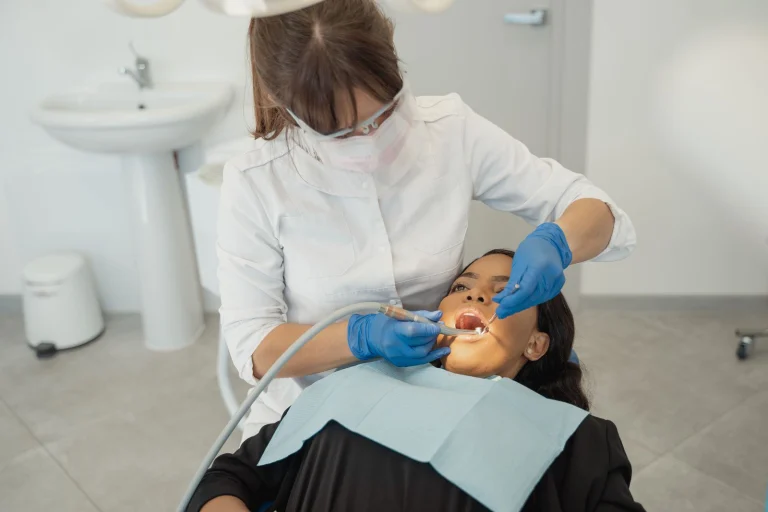
A professional cleaning every six months is recommended, and cleaning appointments at the practice last a full 60 minutes. Intraoral cameras zoom in on each section of your mouth, so you can see the areas your brush is missing, and DIAGNOdent laser detection can find decay at its earliest stages, sometimes before it shows on an X-ray. See general dentistry in Timonium and dental cleanings and preventive care.
Paying for your visit
The practice is out of network with all dental insurance providers. You pay at the time of your visit, and the office files the claim on your behalf so your plan can reimburse you for whatever it covers. Health savings and flex plans are welcome, and financing is available through CareCredit, with no-interest options for up to 12 months, and Cherry, with plans from 3 to 24 months. See financing options.
Frequently asked questions
How do I know if I’m missing spots when I brush?
Run your tongue over your teeth to feel for fuzzy areas, use a plaque disclosing tablet now and then, and notice any spots where your gums bleed. Your hygienist can also show you on an intraoral camera.
Why does tartar build up behind my lower front teeth?
That area is hard to reach and sits close to where saliva pools, so plaque left there can harden. Tip the brush vertically to clean it, and keep up with professional cleanings.
Should I brush before or after breakfast?
Either can work. If breakfast includes something acidic such as juice or citrus, brushing beforehand, or rinsing with water and waiting after, avoids scrubbing softened enamel.
Why are my teeth sensitive when I brush?
Common causes include worn enamel, receding gums, a cavity or a cracked tooth or filling. Switch to a soft brush and gentle pressure, and have the sensitive teeth checked.
Make your brushing count with a visit in Timonium
A cleaning and exam can show exactly where your brush is and isn’t reaching. Request an appointment or call (410) 453-9399. The office of Dr. Steven W. Haywood, DDS is at 108 W Timonium Rd, Ste 200, Timonium, MD 21093, serving Timonium, Lutherville, Cockeysville, Towson and Hunt Valley. New patients are always welcome.
Ready to see your future smile?
Find out where your toothbrush is missing: book a 60-minute cleaning in Timonium.