Most root canal fear comes from not knowing what will happen. Here is the short version: Dr. Haywood examines the tooth and takes digital X-rays, the tooth is numbed, infection is cleared from inside it over two or more appointments with a temporary filling in between, and the tooth is finished with a porcelain crown. Some discomfort for several days afterward is normal, and sedation, including complimentary laughing gas, is available if you are nervous. Knowing each step in advance takes much of the fear out of it.
This guide from the Timonium office of Dr. Steven W. Haywood, DDS walks through a root canal from the first exam to the final crown, including what is normal between appointments and how to recover comfortably. If you want to understand why a root canal is needed in the first place, read the cure, not the cause: root canals explained.
The fears people bring, and the facts
“It is going to hurt.”
The tooth is numbed before treatment begins. Patients who need a root canal often arrive with a chronic, severe toothache, and treatment removes the cause of that pain. Some tenderness for several days afterward is normal, especially when chewing, and it is managed with pain medication as recommended and warm salt water rinses.
“It will take forever.”
Root canal therapy often takes two or more appointments, depending on how severe the infection is. That is planned from the start, and a temporary filling or crown protects the tooth between visits.
“I will lose the tooth anyway.”
The purpose of a root canal is to save the tooth. It lets you keep your natural tooth even after a serious infection and preserves your remaining tooth structure.
“I will not know what it costs until it is over.”
The team walks you through what needs doing and what it costs before treatment begins, so there are no surprises in the chair.
Before treatment: finding the source of the pain
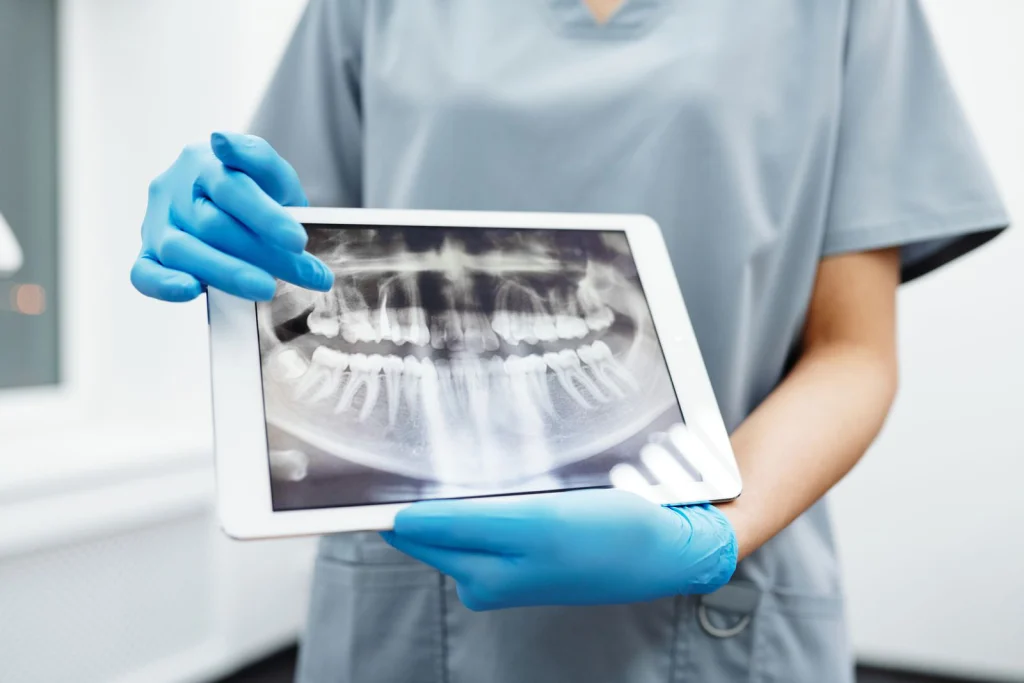
Your first step is an exam. Dr. Haywood examines the tooth, and digital X-rays help reveal infection, which does not always hurt right away. Digital X-rays appear immediately and can be shown on a screen in the room, so you can see what Dr. Haywood sees and understand why treatment is recommended.
This is also the time to ask questions. Ask whether the tooth can be saved, what your other options are, how many appointments to expect and which comfort options would suit you. If a tooth cannot be saved, extraction is still an option, and your choices are discussed before anything is recommended.
At the appointment, step by step
- Getting comfortable. If you have chosen sedation, it is started first. Laughing gas flows through a nasal mask and eases anxious feelings within seconds.
- Numbing the tooth. The area is numbed so treatment can begin.
- Isolating the tooth. The tooth may be isolated with a rubber dam, a thin sheet that keeps saliva out of the canals and protects you from the rinsing solutions used during the procedure.
- Clearing the infection. Infection is removed from inside the tooth to stop it spreading.
- Protecting the tooth. A temporary filling or crown is placed to protect the tooth until your next appointment.
Between appointments: what is normal
- Numbness. Your lips, teeth and tongue may be numb for several hours. Avoid chewing until the numbness has completely worn off.
- Flare-ups. If the tooth was not causing symptoms before treatment, there are usually no flare-ups between appointments. If you came in with a severe toothache or swelling, it takes time to heal, and some flare-ups between appointments are expected.
- The temporary. It is common for a small portion of a temporary filling to wear away or break off, and you may notice a bad taste. If the whole filling falls out or a temporary crown comes off, call the office so it can be replaced.
- Antibiotics. If antibiotics are prescribed, keep taking them as prescribed, even after the signs of infection are gone.
After treatment: recovering comfortably
It is normal to have some discomfort for several days after a root canal appointment, especially when chewing. To help:
- Take pain medication as recommended.
- Rinse three times a day with warm salt water to reduce pain and swelling.
- Avoid sticky and hard foods, because the tooth is fragile after treatment.
- Do not chew on that side until the permanent crown is placed.
Full aftercare instructions are on the post-op instructions page.
The final step: a porcelain crown
Every root canal at the practice is finished with a porcelain crown. The crown protects the tooth from breaking in the future and helps keep it from being re-infected or damaged. Crowns are usually completed in two appointments: the tooth is prepared and an impression taken at the first, and the permanent crown is checked for fit, bonded and polished at the second. Learn more about dental crowns.
Ways to feel calmer about your root canal
Sedation options
- Laughing gas is offered as a complimentary service. It is breathed through a comfortable nasal mask, adjusted throughout treatment, and wears off quickly so you can drive yourself home.
- Oral conscious sedation is a pill taken about an hour before your appointment. You stay conscious but calm, and because it lasts several hours, you need a ride to and from your visit.
See sedation dentistry in Timonium for details.
A calm setting
The office is spa-like, with paraffin wax hand treatments and calming aromatherapy, and every treatment room is cleaned and sterilized after each patient. Tell the team you are nervous when you book; it helps them plan your visit. For more on handling nerves about a specific treatment, read relieving dental anxiety before a procedure.
When a tooth infection cannot wait
If you have serious tooth pain or swelling, call the office as early in the day as you can. Dr. Haywood is available anytime for true dental emergencies for existing patients and their friends and families, and new patients with emergency needs can be seen on weekdays during normal business hours, based on availability. Bacteria from a dental abscess can spread through the jaw and cause swelling that can become life threatening, so do not wait for the pain to get worse. See emergency dental care and the dangers of oral infections.
Paying for your root canal
The practice is out of network with all dental insurance companies. You pay at the time of your visit, and the office files the claim on your behalf so your plan can reimburse you for what it covers. Health savings and flex plans are welcome. Financing is available through CareCredit, with no-interest options for up to 12 months, and Cherry, with payment plans from 3 to 24 months. See financing options.
Frequently asked questions
Can I have laughing gas for a root canal?
Yes. Sedation options help anxious patients feel calm, and laughing gas is offered as a complimentary service. It wears off quickly, so you can drive yourself home.
Is pain between root canal appointments normal?
If you came in with a severe toothache or swelling, some flare-ups between appointments are expected while the tooth heals. If the tooth had no symptoms before, flare-ups are unusual. Call the office if you are concerned.
What if my temporary filling falls out?
A small piece wearing away is common. If the entire temporary filling falls out or a temporary crown comes off, call the office so it can be replaced.
Why not just pull the tooth?
A root canal lets you keep your natural tooth and its remaining structure. Extraction is still an option when a tooth cannot be saved.
Talk through your root canal in Timonium
If you have been told you need a root canal and the thought of it is keeping you up at night, start with a conversation. Request an appointment or call (410) 453-9399. The office of Dr. Steven W. Haywood, DDS is at 108 W Timonium Rd, Ste 200, Timonium, MD 21093, serving Timonium, Towson, Pikesville and Baltimore. Learn more about root canal therapy.
Ready to see your future smile?
Nervous about a root canal? Talk through each step and your comfort options in Timonium.