In dentistry, less is more when it means keeping as much of your natural tooth as possible. Enamel does not grow back, and every time healthy tooth structure is drilled away, that part of the tooth is gone for good. Conservative dentistry works the other way around: find problems while they are small, choose the least invasive treatment that will do the job, and save the tooth whenever it can be saved. At the Timonium office of Dr. Steven W. Haywood, DDS, the most conservative restoration that will do the job is always the first recommendation.
This guide explains what conservative care looks like in practice, from early decay detection and small tooth-colored fillings to onlays, root canal treatment and cosmetic work that keeps your enamel, and when doing more really is the right call.
Why keeping healthy tooth structure matters
A tooth is strongest when most of it is still natural. Large fillings and heavy preparation for crowns remove healthy structure along with the damaged part, and a tooth that has been cut down repeatedly has less left to work with the next time. Research has shown that the less a tooth is reduced, the longer it survives. That is the whole idea behind less-is-more dentistry: treat the problem, not the healthy tooth around it.
Less decay: catching problems early
The smallest treatment is the one you need before a problem grows. Early decay often causes no pain, so finding it depends on regular visits and good diagnostics:
- DIAGNOdent. A laser pen that can detect small amounts of decay at the earliest stages, sometimes before it shows on an X-ray, so there are fewer surprise cavities.
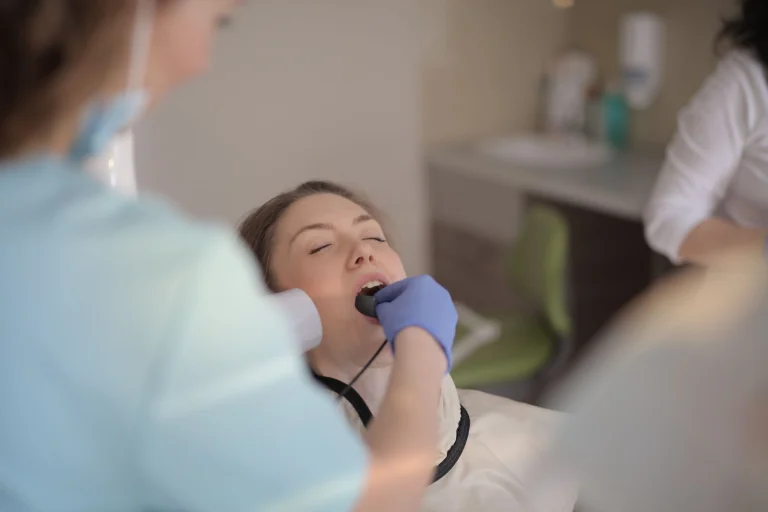
- Digital X-rays and intraoral cameras. Images appear on screen right away with less radiation than standard dental X-rays, and the camera zooms in on each section of your mouth so you can see what the team sees.
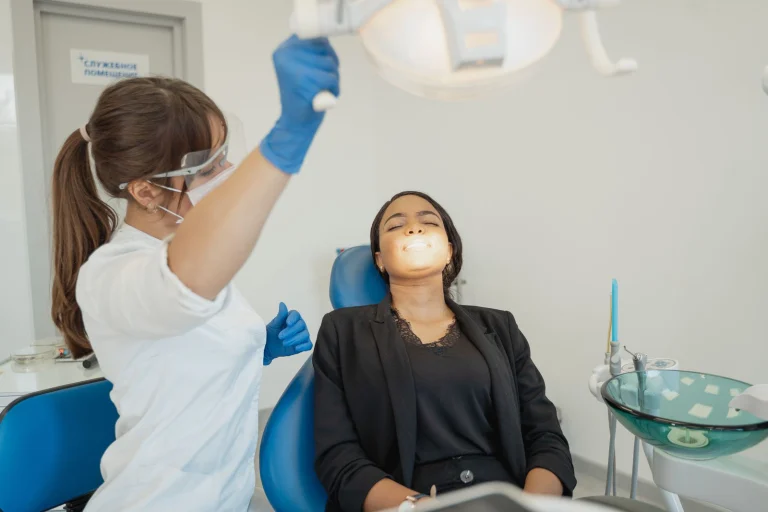
- Unhurried cleanings. Cleaning appointments last a full 60 minutes, and a professional cleaning every six months is recommended.
Learn more about the dental technology used in the office.
Less drilling: small, tooth-colored fillings
A cavity caught early usually needs only a filling. At this practice, fillings are tooth-colored composite, never amalgam. The composite is mixed at the time of treatment to match your teeth and bonded to the tooth, and the filling is completed in a single visit. For small areas of decay, air abrasion uses a thin stream of air and silica to remove decay while preserving more of your natural tooth, with no heat, pressure or vibration. See mercury-free dentistry.
Less tooth removed: onlays before crowns
When a tooth is too damaged for a filling, the next step is not automatically a crown. An inlay is bonded inside the remaining structure when only part of a tooth is damaged. An onlay restores part of the biting cusp and is sometimes called an “inside crown,” because it is strong while conserving the healthy parts of the tooth that a full crown would sacrifice. At the practice, crowns are only needed when a tooth has been completely damaged. Read about inlays and onlays.
Root canal treatment in Timonium: keeping the tooth
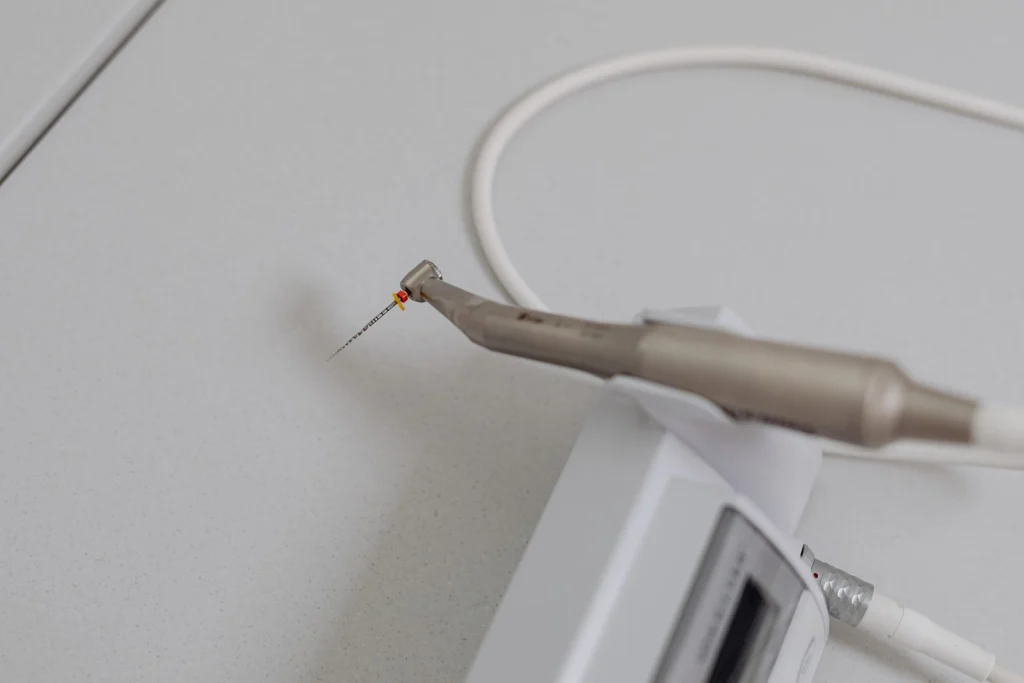
Few treatments have a worse reputation, yet root canal therapy is one of the clearest examples of less is more. When infection reaches the pulp inside a tooth, the alternative is losing the tooth. A root canal removes the infection from inside the tooth and lets you keep it, along with its remaining structure.
- Patients who need a root canal often have a chronic, severe toothache, and treatment removes the cause of the pain.
- Infection does not always hurt right away, which is why digital X-rays matter.
- Depending on how severe the infection is, treatment can take two or more appointments, with a temporary filling in between.
- Every root canal at the practice is finished with a porcelain crown, which protects the fragile tooth from breaking and helps keep it from being re-infected.
Extraction is still an option when a tooth cannot be saved, but saving it comes first. Waiting is not conservative here: an untreated infection can spread to other teeth or the bloodstream. See root canals in Timonium.
Less surgery for gum disease
Gum disease is the leading cause of tooth loss in adults, but treating it rarely means surgery at this practice. Care is non-surgical: scaling and root planing remove harmful bacteria from beneath the gums, and treatment can add anti-microbial irrigation, site-specific antibiotics and laser therapy. The Picasso laser brings precision and comfort to soft tissue procedures, and laser and ozone therapy clear bacteria from the gums without chemicals. Read gum disease treatment and the benefits of laser dentistry.
Less enamel removed for a better-looking smile
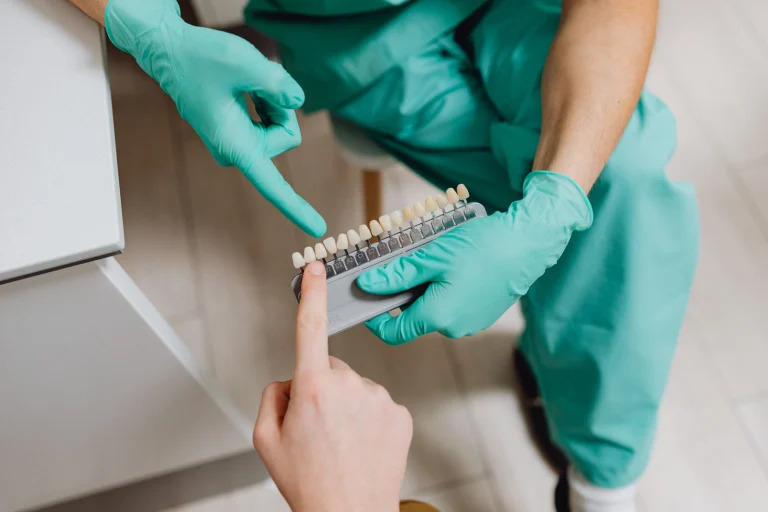
Conservative thinking applies to cosmetic dentistry too. Dr. Haywood always chooses the thinnest veneer and the most conservative approach.
- Dental bonding sculpts tooth-colored resin directly onto the tooth, often in a single visit and typically with no anesthesia.
- Prepless veneers preserve most if not all of your natural enamel for patients who qualify.
- Thin porcelain veneers can be as thin as a contact lens and do not require grinding down the whole tooth.
- Invisalign first. When teeth are out of position, moving them with clear aligners can mean less reshaping later.
Compare levels of preparation in minimal prep vs prepless veneers, or explore cosmetic dentistry in Timonium.
When more is the right answer
Less is more is a principle, not a rule that overrides your tooth’s condition. Teeth with extensive damage or older dental work may need traditional veneers or crowns to strengthen them. A tooth with tiny cracks on the chewing surface of a filling may need a crown to relieve the pain and restore function. And when a tooth truly cannot be saved, removing it can be the healthiest step. The goal is the least treatment that actually solves the problem, which Dr. Haywood explains before anything begins. You will hear what needs doing, what can safely wait and what it costs.
Less worry in the chair
Conservative care is often more comfortable care. Air abrasion is quick and quiet, and more areas can be treated in a single visit. Laughing gas is complimentary on request, and oral conscious sedation is available if dental visits make you anxious.
Paying for your care
Every case is different, so your fee is explained before treatment. The practice is out of network with insurance companies: you pay at the time of service, and the office files the claim on your behalf so your plan can reimburse you for anything it covers. Health savings and flex plans are welcome. Financing is available through CareCredit, with no-interest options for up to 12 months, and Cherry, with plans from 3 to 24 months.
Frequently asked questions
Is an onlay as strong as a crown?
Onlays are conservative compared with traditional crowns and equally strong, so they are preferred where possible. Crowns are used when a tooth has been completely damaged.
Is a root canal better than pulling the tooth?
When the tooth can be saved, a root canal lets you keep it and its remaining structure. Extraction remains an option when a tooth cannot be saved.
Do conservative treatments take longer?
Often not. Tooth-colored fillings and dental bonding are usually completed in a single visit, and inlays, onlays and crowns take two.
Can a cavity be found before it hurts?
Yes. DIAGNOdent can reveal decay before any discomfort develops, sometimes before it can be seen on an X-ray.
Keep more of your natural teeth in Timonium
If you have a tooth that worries you, the earlier it is checked, the less treatment it is likely to need. Request an appointment or call (410) 453-9399. The office of Dr. Steven W. Haywood, DDS is at 108 W Timonium Rd, Ste 200, Timonium, MD 21093, serving Timonium, Towson, Hunt Valley and Baltimore.
Ready to see your future smile?
Have a worrying tooth checked early in Timonium, while it needs the least treatment.