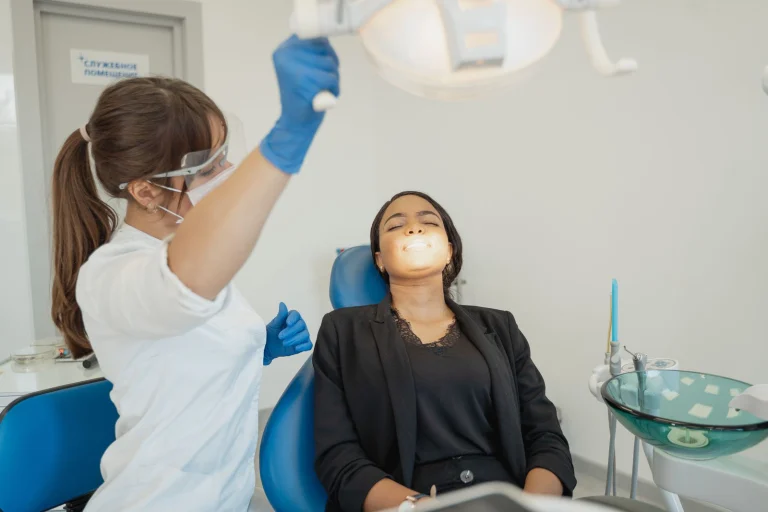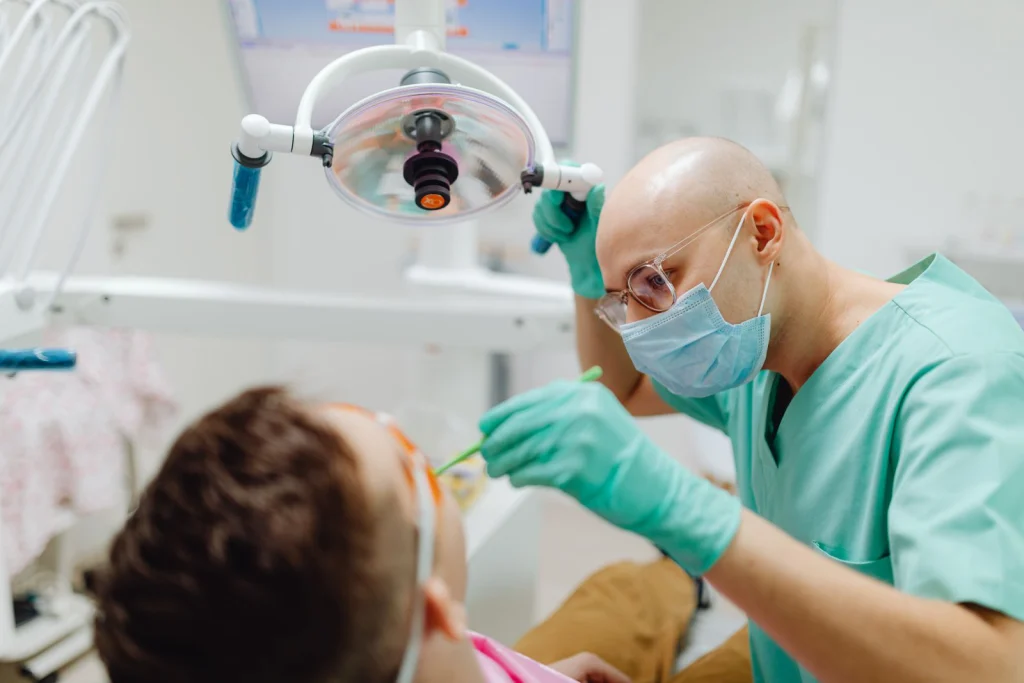
If you need several dental treatments, you can often choose between doing them together in fewer, longer appointments or spreading them out in stages. Neither is automatically better. The right answer depends on your oral health, whether any step needs healing time, how comfortable you are with longer visits, your schedule and your budget. Many cosmetic and restorative procedures can be combined, while others have to wait for the one before them.
This guide walks through what a multi-procedure dental visit involves, the real reasons to combine treatments or to stage them, how comfort is handled during a longer appointment, and how to plan the payments either way at the Timonium office of Dr. Steven W. Haywood, DDS.
What a multi-procedure dental visit is
A multi-procedure visit is simply one appointment in which more than one treatment is done. It can be as ordinary as filling several small cavities at once or as involved as a smile makeover that brings several cosmetic treatments together. A few examples:
- Treating small areas of decay in several teeth in one sitting. Air abrasion, which removes small amounts of decay with a stream of air and silica, allows more areas to be treated in a single visit.
- Gum reshaping and veneers together. The Haywood surgical smile makeover combines a gum lift or gum recontouring with same-day customized veneers, which help guide tissue healing.
- A same-day smile makeover, in which a brighter smile, a repaired broken tooth or gum treatment is completed in a single day.
- An ultimate smile makeover, a customized plan that can be completed in as little as two visits.
Reasons to do it all at once
Fewer trips and less time away
Every appointment means travel, time away from work or family, and sometimes arranging a ride. Combining treatments reduces how many times you go through that. For people with demanding schedules, fewer visits can be the difference between getting treatment done and putting it off. If time is your main concern, see cosmetic dentistry for a busy schedule.
One round of numbing or sedation
If a treatment needs local anesthesia or you prefer sedation, combining work means getting numb or sedated once instead of several times. That matters most for people who find the start of an appointment the hardest part.
Teeth designed together look like a set
When several visible teeth are being treated, planning and making the restorations together makes it easier to keep shade, shape and proportion consistent from tooth to tooth. With veneers, you also evaluate a “test drive” set before the final set is made, so the whole smile is judged as one design rather than one tooth at a time.
A finished result sooner
When nothing in the plan needs healing time between steps, combining treatments simply gets you to the finished smile faster. That is the idea behind a same-day smile makeover for someone with a wedding or a new job around the corner.
Reasons to stage your treatment
Health comes before cosmetics
Gum disease, decay and infection are treated before cosmetic work. Bleeding or receding gums, bad breath and deep pockets in the gums are signs of infection, and cosmetic results last and look best on healthy tissue. That often puts a natural break between the health phase and the cosmetic phase of a plan.
Some steps need healing time
Certain procedures cannot be rushed. A dental implant takes several months, because bone needs time to fuse around the implant, and bone grafting can add time before that. Root canal therapy often takes two or more appointments depending on how severe the infection is, and the tooth is then capped with a porcelain crown. Staging is built into treatments like these.
Teeth may need to move first
If teeth are out of position, Invisalign clear aligners can move them before veneers are placed, so the veneers can be thinner and more conservative. Straightening happens over months, so the cosmetic phase waits until the teeth are where they should be. Learn more about Invisalign in Timonium.
Whitening before tooth-colored work
Whitening does not change the color of porcelain or composite. If you want a brighter smile and also need bonding, veneers or crowns on visible teeth, whitening usually comes first, and the new work is matched to the brighter shade.
Budget and benefits
Spreading treatment out can make costs easier to manage. Staging treatment can also help if you use a flex spending account, since you may be able to divide the work across plan years. Dental insurance plans often have yearly limits too, so some people stage treatment to use benefits from more than one year. For more ideas, see making the cost of dental treatment manageable.
Combining treatments at the Dr. Haywood dental office
Several parts of care at the practice are designed to bring treatments together:
- The Haywood surgical smile makeover joins gum surgery and same-day custom veneers in one procedure, so you can walk out with a new gum line and smile. Read about gum lifts.
- Ultimate smile makeovers combine multiple cosmetic procedures in a plan that can be completed in as little as two visits. Some cases treat a few teeth and others every tooth, for the best bite and overall look. See ultimate smile makeovers.
- Same-day smile makeovers are planned around a personal deadline and completed in a single day.
- Implant care in one office. Every phase of implant treatment, from the scan to the finished teeth, happens in the same office, even when the phases are spread over months.
When a smile needs extensive rebuilding, a phased plan is usually the safer route. Our guide to full mouth reconstruction in Timonium explains why the bite comes first.
Staying comfortable through a longer appointment
Longer visits are easier when you are relaxed. The office is spa-like, with paraffin wax hand treatments and aromatherapy, and sedation is offered in several forms:
- Laughing gas is a complimentary service. It works within seconds through a comfortable nasal mask, and you should feel fully alert afterward and able to drive yourself home.
- Oral conscious sedation is a pill taken about an hour before your appointment. It stays in your system for several hours, so someone needs to drive you to and from your visit.
Being relaxed makes for a quicker procedure and a speedier recovery. Learn more about sedation dentistry.
Questions to ask when you plan several treatments
- Does any part of my plan need to heal before the next step?
- Which treatments have to come first for my health?
- Which teeth will be treated together so they match?
- How long will each appointment be, and what sedation options suit that length?
- Will I need a ride or time off afterward?
- What does each phase cost, and can the phases be timed around my flex spending account or benefits?
- Can I preview the finished smile before we start?
Before-and-after imaging is part of every cosmetic evaluation, so the last question usually has an easy answer. For other questions worth raising, see smile makeover consultation questions, answered.
Paying for combined or staged treatment
Every plan is different, so your fee depends on the treatments involved, and you get a clear estimate up front. The practice is out of network with insurance companies: you pay at the time of your visit, and the office files the claim on your behalf so your plan can reimburse you for whatever it covers. HSA and flex plans are welcome. Financing is available through CareCredit, with no-interest options for up to 12 months, and Cherry, with plans from 3 to 24 months. Pre-payment discounts are available for veneers.
Frequently asked questions
Is it better to do all my dental work at once?
Only when nothing in your plan needs healing time and a longer visit suits you. Treatment for infection or gum disease, implants and tooth movement often have to come first, which naturally divides a plan into stages.
Can I have sedation for a long combined appointment?
Yes. Laughing gas is complimentary, and oral conscious sedation is available.
Will veneers match if some are done later?
Matching is easiest when visible teeth are designed and made together, which is one reason makeover plans often treat those teeth in the same phase. Dr. Haywood can explain how your plan keeps everything consistent.
Can I split treatment to use my flex spending account?
Often, yes. Staging treatment can help if you use a flex spending account, and your plan can be divided into phases to suit it.
Plan your treatment with Dr. Haywood
Whether you want everything done in as few visits as possible or prefer to take it step by step, the plan should fit your health, your schedule and your budget. Request an appointment or call (410) 453-9399. The office of Dr. Steven W. Haywood, DDS is at 108 W Timonium Rd, Ste 200, Timonium, MD 21093, serving Timonium, Towson, Pikesville and Baltimore. Explore cosmetic dentistry in Timonium.
Ready to see your future smile?
Find out which parts of your treatment can be combined.