Plenty of people who don’t smile freely are waiting on something: a chipped front tooth, a dark old filling, a gap, bleeding gums or a tooth that aches now and then. Waiting feels easier and cheaper than dealing with it. But most dental problems don’t stand still, and the longer they wait, the bigger the repair tends to be. A small cavity is a simple filling today; left alone, the same tooth can need a root canal and a crown, or be lost altogether.
This article looks at how common dental problems grow while you wait, what usually holds people back, and the simplest ways to get your smile back at the Timonium office of Dr. Steven W. Haywood, DDS.
Why people stop smiling
Your smile is vital to a great first impression. Hiding it behind a hand or closed lips can make you seem shy or even unfriendly, at work and socially, even when you are neither. Most people who hold back their smile do it for one of a few reasons: they don’t like how their teeth look, something hurts, or they feel embarrassed about how long it has been since they saw a dentist.
The first two usually have a fix. The third is more common than you might think, and it is no reason to wait longer. If it applies to you, read been a while since you’ve visited a dentist?
How dental problems grow while you wait
A small cavity
Decay caught early may need only a tooth-colored filling, completed in a single visit. As it spreads, more tooth is lost and the repair grows to an inlay, onlay or crown. When infection reaches the pulp inside the tooth, root canal therapy is needed to save it, followed by a porcelain crown. If a tooth is too decayed and infected to keep, it has to come out, and then the question becomes how to replace it. For the full picture, read tooth decay: how to stop it early.
A cracked or chipped tooth
A small chip is often a simple cosmetic repair. Cracks are less predictable. A crack along the gumline can normally be saved with restorative and surgical procedures, and a partial vertical fracture may still be saved, but a vertical crack that splits the entire root means the tooth can’t be kept. Discomfort in a filled tooth when you chew is often the result of tiny cracks, and a crown can relieve the pain before the crack spreads.
Bleeding gums
Bleeding, swollen or receding gums and bad breath are signs of gum infection. Treatment can control and even reverse the early stages, but periodontal disease worsens as it progresses and is the leading cause of tooth loss in adults. The earlier it is treated, the simpler the care. See five warning signs of gum disease.
A missing tooth
A gap is not only a cosmetic problem. Replacing a lost tooth helps you chew properly and keeps neighboring teeth from shifting. Because a dental implant replaces the root as well as the crown, it also helps prevent the bone deterioration that follows tooth loss. Read what a missing tooth says about you.
Grinding and worn teeth
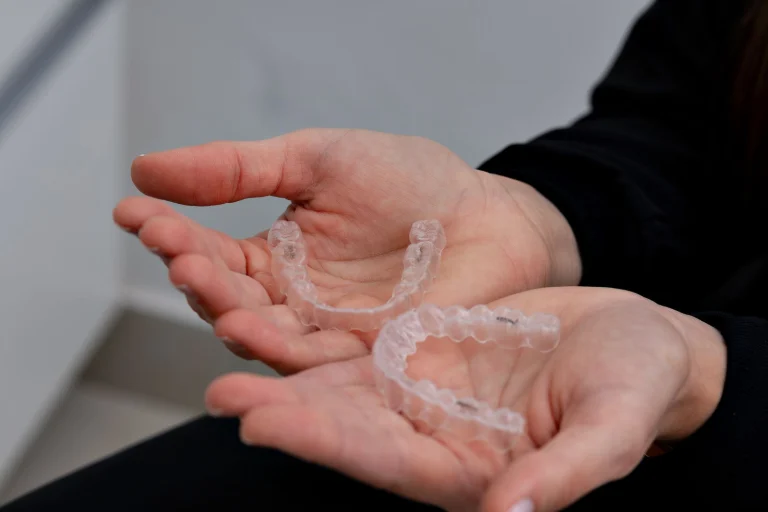
Grinding slowly wears down and cracks enamel, often without you noticing. Uncontrolled grinding takes a toll on comfort, health and appearance with age, and untreated grinding wear can be very costly to repair. A comfortable, clear, custom-made bite guard is a small step that protects your teeth from further wear.
An old filling
Fillings can wear away, fracture or fall out over time. A filling that is worn at the edges or pulling away can let decay develop underneath it, out of sight. Old metal fillings can also discolor teeth, which is one reason people stop showing them. The practice never uses amalgam, and old amalgam fillings can be replaced with tooth-colored composite under rigorous safety protocols. See mercury-free dentistry.
Stains, chips and gaps
Purely cosmetic concerns don’t usually get worse in the same way, but they are often the very reason a smile gets hidden. They also tend to be the quickest to fix, with teeth whitening, dental bonding, veneers or Invisalign.
What usually holds people back, and what helps
Fear of the dentist
Tell the team: understanding your fears helps plan how to overcome them. Laughing gas is offered as a complimentary service and leaves you alert enough to drive yourself home. Oral conscious sedation is a pill taken about an hour before your appointment, and IV sedation is available for lengthier or more complex treatment. See comfortable dental care for anxious patients.
Worry about cost
Not everything has to happen at once. The team walks you through what needs doing, what can safely wait and exactly what it costs, before anything begins. Financing through CareCredit and Cherry can spread the cost into monthly payments. Read making the cost of dental treatment manageable.
Not knowing what is possible
Many people assume a problem can’t be fixed, or that fixing it will look fake. A consultation is the quickest way to find out what your options are.
Finding the time
The office is open Monday 8:30 AM to 6:30 PM, Tuesday 8:30 AM to 5 PM, Wednesday 8:30 AM to 3:30 PM, Thursday 8:30 AM to 4:30 PM and Friday 8:30 AM to 4 PM. In some instances, treatment can even be completed at the first appointment.
See your new smile before you commit
It is easier to move forward when you can see where you are headed. Cosmetic imaging uses a computer to change digital photographs of your smile, showing the potential results of treatment before you commit, and these before-and-after previews are part of every cosmetic evaluation at the practice. The iTero Element scanner can also create a simulation of what your results may look like, and veneer treatment includes a “test drive” set before the final veneers are made. See cosmetic imaging and real results in the smile gallery.
Dr. Haywood was selected to perform an extreme smile makeover on ABC and has been featured in the Baltimore Sun, Baltimore Magazine and New Beauty Magazine for cosmetic dentistry.
Small first steps back to smiling
- Book an exam. Find out what is urgent, what can wait and what each option involves.
- Deal with pain and infection first. A healthy foundation makes everything else last.
- Pick one thing that bothers you most, such as a dark tooth, a chip or a gap, and start there.
- Add changes over time if you want to. For ideas, read want to perk up your smile? start small.
Paying for your care
The practice is out of network with all dental insurance companies. You pay at the time of your visit, and the office files the claim on your behalf so your plan can reimburse you for what it covers. Health savings and flex plans are welcome, and financing is available through CareCredit, with no-interest options for up to 12 months, and Cherry, with payment plans from 3 to 24 months. See financing options.
Frequently asked questions
Does fixing a small problem now really cost less?
Usually, yes. A small filling is far less involved than a root canal and crown, and keeping a tooth is generally simpler than replacing one. Your own costs are explained once your exam shows what is needed.
Is it too late to fix my smile?
Rarely. Worn, chipped, discolored, crooked, gapped and missing teeth can all be addressed. An exam shows which options fit your mouth and your health.
Can I fix my smile in stages?
Yes. Your plan separates what needs attention now from what can safely wait, and you decide what to do and when.
What if I’m embarrassed about the state of my teeth?
Every visit starts with a conversation, not a drill. Tell the team what worries you, and your options will be explained clearly before anything happens.
Start smiling again in Timonium
The sooner you start, the simpler it usually is. Request an appointment or call (410) 453-9399. The office of Dr. Steven W. Haywood, DDS is at 108 W Timonium Rd, Ste 200, Timonium, MD 21093, serving Timonium, Towson, Hunt Valley and Baltimore. Find more articles on the blog.
Ready to see your future smile?
Stop waiting on your smile: book an exam with Dr. Haywood in Timonium.