Invisalign before-and-after photos can show how clear aligners close gaps, untangle crowding and improve a bite, but they only help if you know how to judge them. Compare cases that started like yours, look at the bite and side views as well as the smile, check whether whitening or veneers were added, and remember that the best preview is one made from your own teeth. At Dr. Steven W. Haywood, DDS in Timonium, you can look through a smile gallery of before-and-after photos from the practice’s patients, and an iTero Element scan of your teeth can create a simulation of what your results may look like.
Plenty of ads promise a “perfect smile.” This guide helps you decide for yourself what Invisalign can realistically do for your teeth, how to read results fairly, and how to judge your own progress once treatment starts.
What Invisalign before-and-after photos can show
Invisalign uses a series of custom clear aligners, each worn for about two weeks and at least 22 hours a day. Every new set makes small, progressive movements. Over the course of treatment, which can take 18 to 24 months depending on the complexity of the case, those small movements add up to changes you can see in photos:
- Crowded or crooked teeth lined up into a more even arch.
- Gaps between teeth closed into a continuous smile.
- Bite issues improved so the upper and lower teeth meet better.
- Minor shifts corrected with Invisalign Express when a full course isn’t needed.
Straighter teeth aren’t only about appearance. Straight, uniform teeth are easier to clean, and a correct bite distributes pressure evenly when you bite down, which reduces the potential for excessive wear and breakage over time.
How to judge before-and-after photos fairly
Before-and-after photos are a useful starting point. Use this checklist to get the most out of them:
- Find a case like yours. A small gap closing tells you little about severe crowding. Look for a starting point similar to your own teeth.
- Compare the same angle and lighting. Brighter light or a different camera angle can make teeth look whiter or straighter than they are.
- Look beyond the front teeth. Side views and photos of the teeth together show whether the bite improved, not just the front of the smile.
- Ask what else was done. Many results combine straightening with whitening, bonding or veneers. That is great if you want the same, but it helps to know which change came from aligners.
- Check the gum line. Healthy, even gums frame straight teeth. Gum reshaping may be part of some results.
- Judge naturalness, not perfection. The best results look like the person’s own smile, improved.
For a structured way to look at your own smile before treatment, see how to evaluate your smile objectively. To browse results from the practice, visit the smile gallery.
Preview your own result before you start
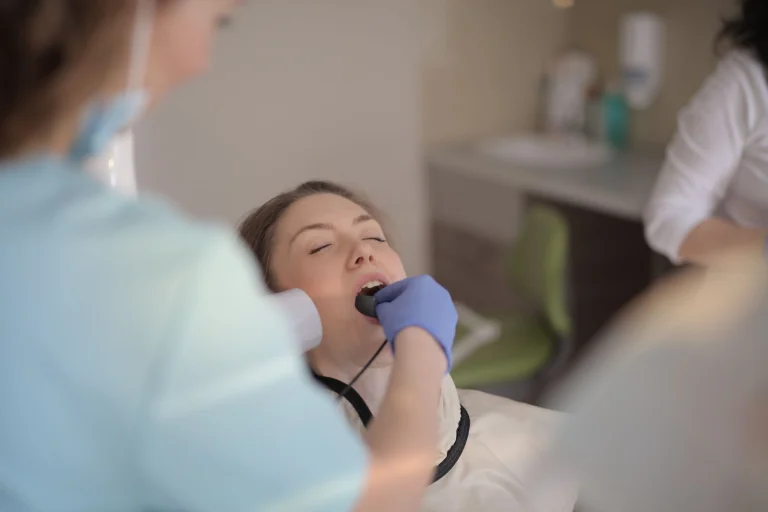
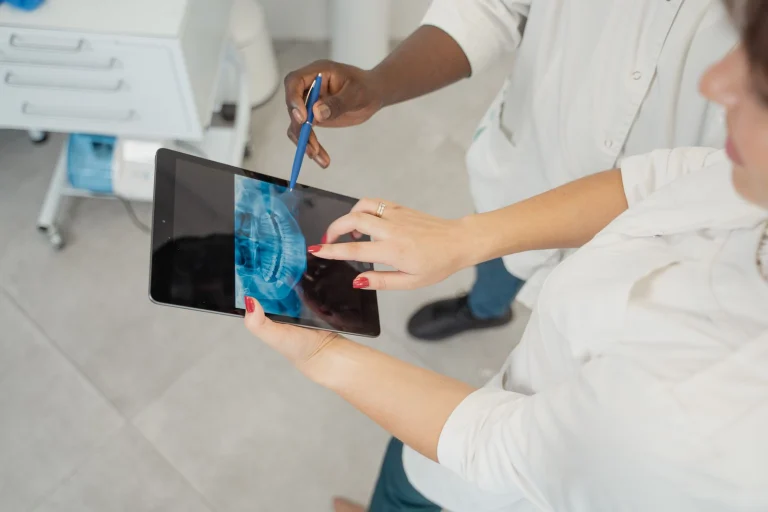
The fairest comparison isn’t someone else’s smile. It is a preview built from your teeth. The practice uses the iTero Element, an intraoral scanner that creates a 3D visual of your teeth quickly and comfortably, with less tendency toward gagging than traditional impressions. It can also create a simulation of what your results may look like. A simulation is a planning tool rather than a guarantee, but it gives you something concrete to judge against your goals. Learn more on the dental technology page.
Whether aligners suit your teeth depends on the movement your case needs, which takes an actual look at your teeth rather than a guess from a photo. That is what an Invisalign consultation is for.
Judging your own progress during treatment
Once treatment starts, you become the judge of your own before-and-after. A few tips:
- Take your own “before” photos. Smile, side views and teeth together, in the same spot and light each time.
- Expect gradual change. Each set of aligners moves teeth a small amount, so progress is easiest to see when you compare photos weeks apart rather than day to day.
- Wear time shows up in results. Aligners work when they are worn, at least 22 hours a day. Leaving them out slows progress.
- Keep your appointments. Check-ins confirm that teeth are tracking as planned.
For teenagers, Invisalign Teen is built to make tracking progress easy, so it is simpler for parents and teens to see whether treatment is staying on course. See Invisalign Teen.
When straightening is part of a bigger smile change
Some of the most striking before-and-after photos come from combining treatments. Invisalign can move teeth into the most desirable position before porcelain veneers, which can make a more conservative veneer possible, and it is often combined with veneer makeovers at the practice. Whitening, bonding and gum reshaping can finish a straightened smile.
For those combined plans, every cosmetic evaluation includes a before-and-after demonstration on the cosmetic imaging computer, where digital photographs of your smile are changed so you can plan the result together.
And if your teeth don’t actually need to move, instant orthodontics uses veneers, bonding, crowns and tooth and gum reshaping to transform crooked, gapped or discolored teeth in as little as one or two visits. To compare all routes, read orthodontic options for adults.
What affects how your result turns out
- The complexity of your case. More movement usually means a longer treatment.
- Wearing your aligners as directed. This is the part you control.
- Your bite. Bite issues are evaluated before anything is recommended, and some cases suit metal braces better.
- Healthy teeth and gums. Straightening works best on a healthy foundation.
- Keeping the result. Teeth can drift after any orthodontic treatment, so ask at your consultation how your result will be kept stable.
Judge the provider, too
Photos show outcomes; the person planning your treatment shapes them. Dr. Haywood is an Elite Invisalign Provider, a rank based on education and volume of experience, with 35+ years of experience in dentistry. The practice offers Invisalign, Invisalign Teen, Invisalign Express and metal braces, so the recommendation can follow your case rather than a single product. For more on choosing a provider, read which dentist near me offers Invisalign?
Paying for Invisalign
Your fee depends on your case and is discussed after your consultation. The practice is out of network with all dental insurance providers: you pay at the time of your visit, and the office files the claim so your plan can reimburse you for whatever it covers. HSA and flex plans are welcome. Invisalign can be paid in monthly payments in the office after a down payment, and financing is available through CareCredit, with no-interest options up to 12 months, and Cherry, with plans from 3 to 24 months. See financing options.
Frequently asked questions
Are Invisalign before-and-after photos realistic?
They can be, when you compare cases similar to yours under the same angle and lighting and know whether other treatments were involved. A preview made from your own teeth is the most useful comparison.
Can I see what my teeth could look like before I start?
Yes. The iTero Element scanner can create a simulation of what your results may look like, and cosmetic imaging previews combined smile changes.
How soon will I notice a difference?
Each set of aligners makes a small movement, so change is gradual. Comparing photos taken weeks apart shows progress more clearly than a mirror does day to day.
Can Invisalign improve my bite, not just my smile?
Invisalign isn’t only cosmetic. When there are bite issues to correct, it may improve both how your teeth look and your oral health. Your bite is evaluated before anything is recommended.
See your own before and after
Don’t take anyone’s word for it: judge for yourself with a preview of your own teeth. Request an Invisalign consultation or call (410) 453-9399. Dr. Haywood’s office is at 108 W Timonium Rd, Ste 200, Timonium, MD 21093, and sees adults and teens from Timonium, Towson, Hunt Valley and Baltimore.
Ready to see your future smile?
Book an Invisalign consultation in Timonium and see a preview of your own result.