Yes, something is growing in your mouth, and in everyone else’s too. Every day a sticky film of bacteria called plaque forms on your teeth. Brushing and flossing remove most of it, but whatever is left behind can harden into tartar, a rough, crusty deposit that no toothbrush can shift. Plaque is what drives tooth decay and gum disease, and tartar gives it a place to hold on.
This guide explains the difference between plaque and tartar, where they like to hide, how they lead to decay, gum disease and infection, how to keep them under control at home and what a professional cleaning at the Timonium office of Dr. Steven W. Haywood, DDS removes.
What is growing on your teeth
Your mouth is home to bacteria, and that is normal. The trouble starts when bacteria settle on your teeth and multiply into a thin, sticky layer. That layer is plaque. The bacteria in it feed on the sugars and starches you eat and produce acid as a byproduct. Acid sitting against your teeth, again and again, slowly dissolves enamel and irritates the gums.
You can’t stop plaque from forming, but you can keep removing it before it does damage. That is the whole point of daily brushing and flossing, and of regular professional cleanings.
Plaque vs tartar: the difference
Plaque
- A soft, sticky, colorless or pale film of bacteria.
- Forms continuously, especially after eating.
- Can be removed at home with thorough brushing and flossing.
- Often feels fuzzy on your teeth when you run your tongue over them before brushing.
Tartar
- Plaque that has been left in place and hardened with minerals from saliva. It is also called calculus.
- Rough and crusty, often yellow or brown, and commonly found along the gumline and behind the lower front teeth.
- Can’t be brushed or flossed away. It has to be removed with professional instruments.
- Its rough surface makes it easier for new plaque and stains to cling.
In short, plaque is the problem you can manage every day, and tartar is the problem that needs your hygienist.
Where plaque likes to hide
Plaque builds up fastest in places that are hard to reach or that trap food:
- Deep grooves on back teeth. The pits and fissures on chewing surfaces can be too narrow for toothbrush bristles. Super sealants completely seal these surfaces so bacteria and sugars can’t be harbored there, and the practice offers them with a lifetime warranty.
- Along the gumline. Plaque collects where teeth meet gums, and when it hardens there it irritates the tissue.
- Between teeth. Brushing alone doesn’t reach these tight spaces, which is why flossing or a water flosser matters.
- Crowded or overlapping teeth. Teeth that twist or overlap leave places for bacteria to collect, and straight, uniform teeth are easier to keep clean.
- Around dental work. The edges of fillings and crowns, under bridges and around orthodontic appliances all need extra attention.
- Exposed roots. When gums recede, root surfaces are exposed. Medications and dry mouth can set the stage for root decay, and decay rates increase with age.
When plaque turns into tooth decay
Each time plaque bacteria meet sugar, they release acid. Over time that acid weakens enamel and creates a small area of decay, which can grow into a cavity that spreads deeper into the tooth. Early decay often causes no pain at all, which is why it is easy to miss.
Catching it early keeps treatment small. DIAGNOdent, a laser that can detect small amounts of decay at the earliest stages, sometimes finds it before it shows on an X-ray. When a cavity does need treatment, air abrasion can gently remove small areas of decay, and tooth-colored composite fillings are completed in a single visit. For more on how decay progresses in Timonium patients and how it is stopped, read tooth decay in Timonium, MD: how to stop it early.
When plaque leads to gum disease and infection
Plaque and tartar along the gumline irritate the gums. Early on, gums may bleed when you brush. Left untreated, the infection can deepen. Bleeding or receding gums, bad breath and deep pockets in the gums mean infection, and the health of your gums has been linked to serious health risks such as diabetes and cardiac disease.
Gum care at the practice is non-surgical. Scaling and root planing, a deep cleaning also called root debridement therapy, removes harmful bacteria from beneath the gums. Learn more about gum disease treatment.
Decay that reaches the pulp inside a tooth can cause a serious infection. Root canal therapy removes the cause of the pain and saves the tooth, which is then capped with a porcelain crown. If a tooth hurts and your face is swelling, call the office right away, because an abscess can spread through the jaw. See oral infection signs and when to call.
How to keep plaque from taking hold
- Brush thoroughly and gently. Use a soft brush, angle the bristles toward the gumline and reach every surface. See why smart brushing beats aggressive brushing.
- Clean between your teeth daily. Floss or use a water flosser to reach where a brush can’t.
- Cut down on grazing. Frequent sugary or starchy snacks and sipping sweet drinks give plaque bacteria a steady supply of fuel. Sticky candies are especially hard on teeth; read why gummy bears hurt your teeth.
- Drink water. Saliva and water help rinse food away, and a dry mouth leaves plaque more room to thrive.
- Use xylitol. Xylitol mints and lollipops help reduce decay risk, which is handy when brushing after a meal isn’t possible.
- Ask about fluoride-free protection. For anyone who prefers to avoid fluoride, the practice offers calcium rebuilding treatments to help strengthen enamel, along with super sealants.
What a professional cleaning removes
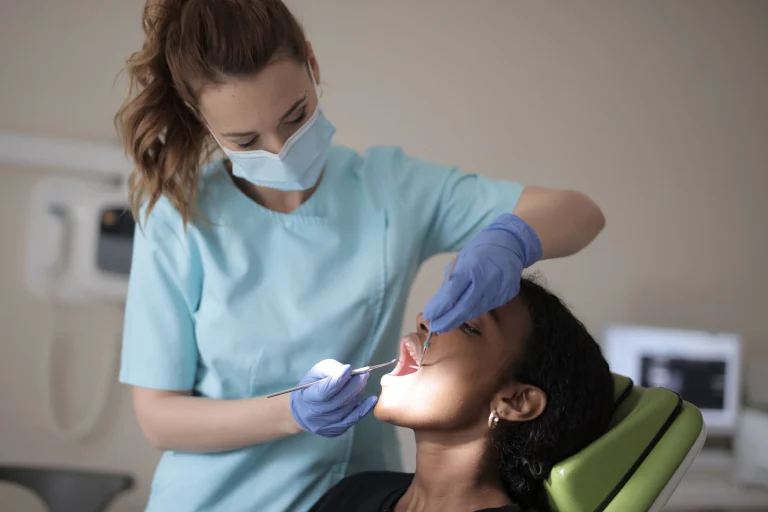
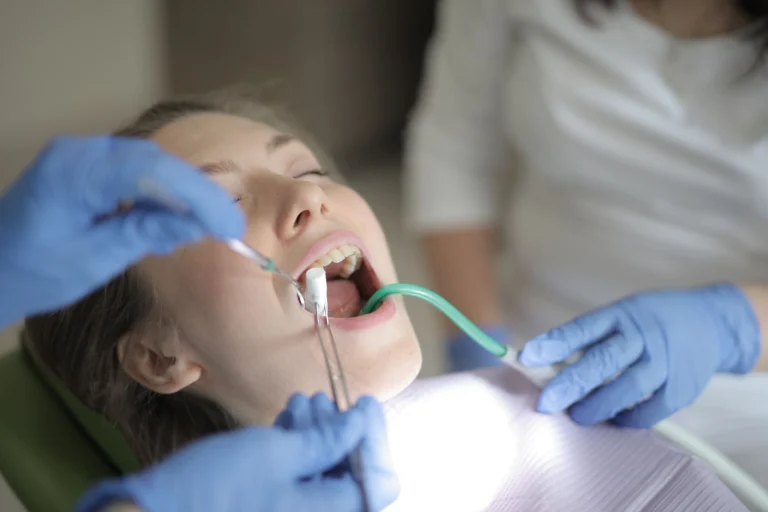
Even an excellent home routine misses some plaque, and once it has hardened into tartar, only a professional cleaning removes it. A professional cleaning every six months is recommended. Cleaning appointments at the practice are a full hour, giving the team time to remove plaque and tartar thoroughly and check the health of your gums. The practice holds very high standards for gum health and strives for zero bleeding and zero infection.
Your visit also includes an exam with digital X-rays that appear on screen and an intraoral camera that zooms in, so you can see what the team sees. Read more about dental cleanings and preventive care, or why cleanings matter even if you brush and floss.
Tartar, stains and the look of your smile
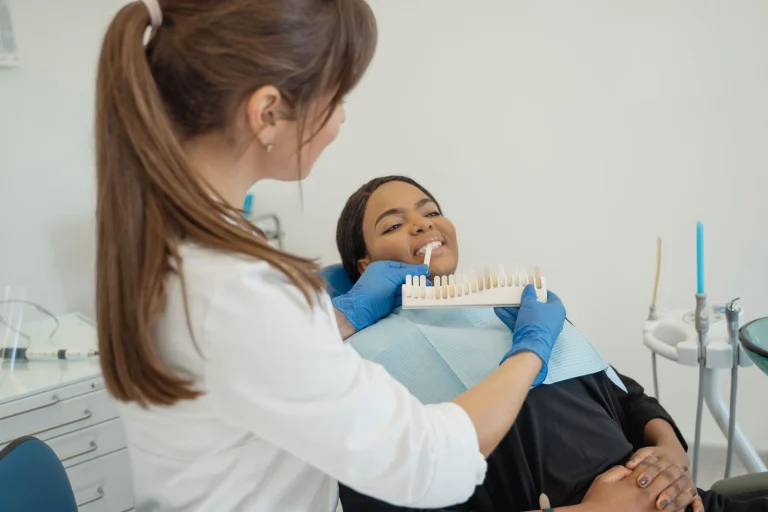
Tartar is not only a health issue. Its rough, yellowish surface picks up stains from coffee, tea and red wine and can make teeth look dull, especially along the gumline. Removing it is often the first step toward a brighter smile.
If your teeth still look darker than you would like after a cleaning, in-office laser whitening is customized to your teeth. Healthy gums also matter for any cosmetic plan, because gum disease is treated before cosmetic work begins. Explore teeth whitening and all cosmetic dentistry in Timonium.
Frequently asked questions
Can I remove tartar at home?
No. Tartar is hardened and bonded to the tooth, so brushing and flossing can’t remove it, and scraping at it yourself can damage your gums or enamel. A professional cleaning removes it safely.
Is plaque the same as a cavity?
No. Plaque is the bacterial film on your teeth. A cavity is damage to the tooth itself, caused by the acid plaque bacteria produce over time.
Why do some people build up tartar faster than others?
Many things play a part, including how thoroughly plaque is removed each day, crowded teeth, dental work that traps plaque, diet and dry mouth. Your hygienist can show you where it tends to build up in your mouth.
Can plaque cause bad breath?
It can contribute, and bad breath can also be a sign of gum infection. If it persists, it is worth having your gums checked.
Book a cleaning in Timonium
If it has been a while since your last cleaning, or you have noticed bleeding gums or rough spots on your teeth, don’t wait for them to turn into something bigger. Request an appointment or call (410) 453-9399. The office of Dr. Steven W. Haywood, DDS is at 108 W Timonium Rd, Ste 200, Timonium, MD 21093, serving Timonium, Towson, Pikesville and Baltimore.
The practice is out of network with insurance companies: you pay at the time of your visit, and the office files the claim on your behalf so your plan can reimburse you. HSA and flex plans are welcome, and financing is available through CareCredit, with no-interest options for up to 12 months, and Cherry, with plans from 3 to 24 months.
Ready to see your future smile?
Book a thorough cleaning to clear plaque and tartar in Timonium.