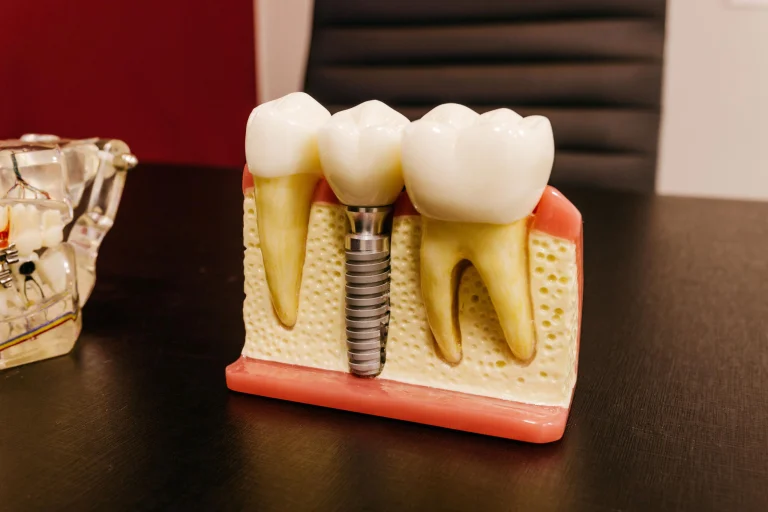
Caring for dental implants comes down to four steps: clean around them every day with the right tools, have them professionally cleaned every 3–4 months, protect them from grinding and clenching, and keep up the maintenance visits that bridges and full-arch teeth need. Implants can’t get cavities, but the gum and bone that hold them still can get into trouble, and these four habits are what give an implant its best chance of lasting a lifetime.
This guide explains each step and why it matters, using the implant care recommendations of Dr. Steven W. Haywood, DDS and the hygiene team at the Timonium, MD office. It applies whether you have one implant or a full set of implant teeth.
Why implants need their own kind of care
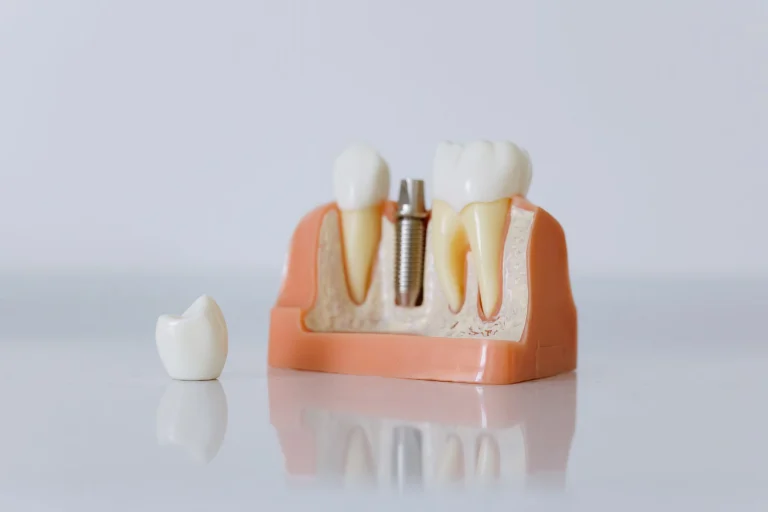
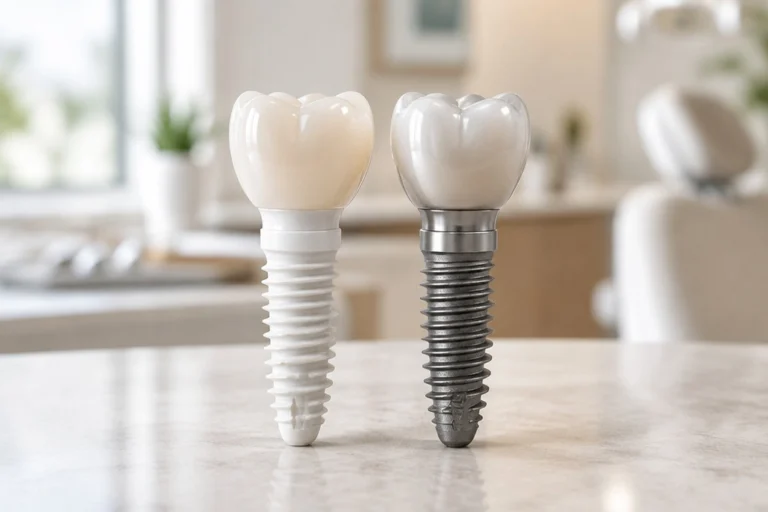
An implant is not a natural tooth, and the difference is at the gum line. Natural teeth have strong connective-tissue fibers that help seal the gum to the tooth. Implants heal with a weaker cell attachment, which is more susceptible to inflammation and infection.
The pockets around implants are also deeper. They are routinely 3–4 mm deep, compared with 1–3 mm around healthy teeth, and plaque is frequently found there. Implants don’t decay, and they resist gum disease and plaque better than natural teeth, but meticulous hygiene around them still matters. Implants that heal properly over the first 6–12 weeks after placement are considered to have lifetime potential when they are looked after. Ignore them, just like teeth, and they can be lost.
Step 1: clean around your implants every day
Brush and floss your implants much like natural teeth, but give them extra attention at the gum line. The right tools make that easier.
- Interdental brushes reach between implants and neighboring teeth.
- A water irrigator, such as a Hydrofloss, flushes the gum line. Irrigating with plain water or 0.12% chlorhexidine (Peridex, for example) is regularly recommended.
- An end-tuft brush has a small head for hard-to-reach spots around implants.
- An electric or manual toothbrush, used carefully along the gum line.
For more on irrigators, read why a water flosser might be a good idea.
Single tooth implants
A single implant crown is brushed and flossed just like a natural tooth, with that extra attention where the crown meets the gum.
Implant bridges
You can’t floss any kind of bridge without a floss threader, and some food can collect under the bridge itself. Use a threader or an interdental brush to clean under the joined teeth every day. See the implant bridge.
Snap-on implant teeth
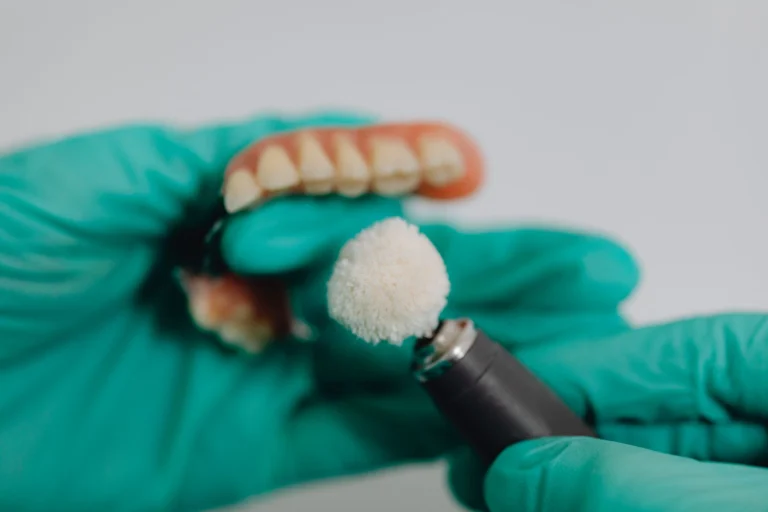
Snap-on teeth come out, which makes cleaning simpler. Take them out to clean the teeth and the snap connectors, and clean carefully around the implants in your jaw.
Fixed full-arch teeth
Fixed teeth can’t be removed at home, and food collects underneath however carefully you clean. That is why the practice gives full-arch patients specialized cleaning tools and instructions, and why Step 4 matters so much for fixed teeth.
Step 2: have your implants professionally cleaned every 3–4 months
Because the gum attaches more weakly around an implant, cleanings at a 3–4 month frequency are recommended for implant patients, the same frequency advised for people with gum disease.
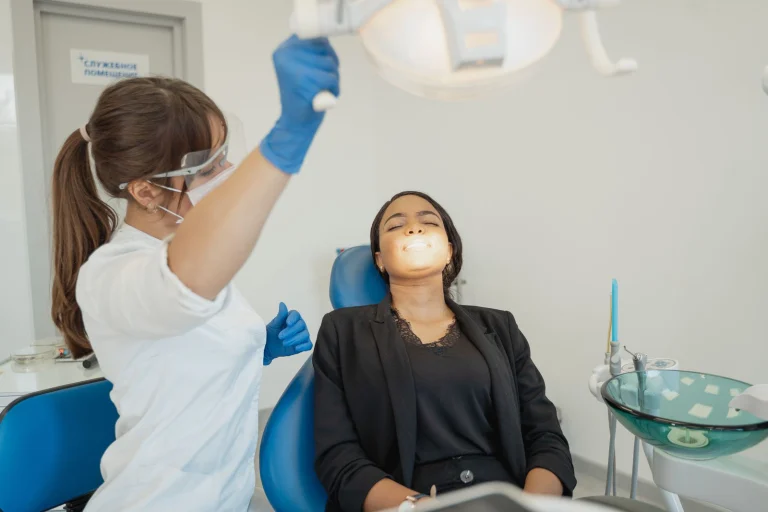
Implant cleanings are also done differently. Titanium can’t be scraped and cleaned with the traditional stainless-steel instruments used on teeth, so implants are scaled, and their pockets measured, with specialized titanium or plastic instruments. These visits are also when early signs of inflammation around an implant can be found and treated. More detail is on the implant care page.
Step 3: protect your implants from grinding and clenching
Implants are strong against normal up-and-down chewing forces. The sideways forces of grinding and clenching are a different matter: they can loosen implants or even work them out of the bone. Many people grind at night without knowing it.
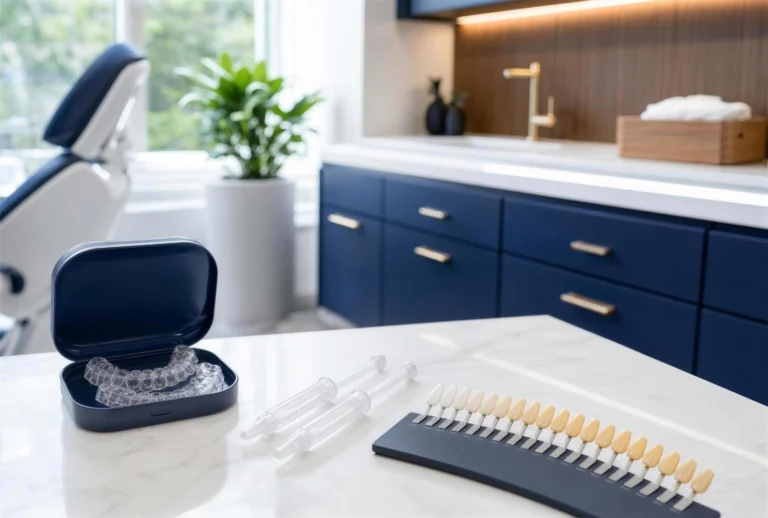
If you grind or clench, control those forces by consistently wearing a custom-made appliance, such as a bite guard, a Vivera retainer or a hard acrylic night guard. It is a small habit that protects a significant investment.
Step 4: keep up maintenance for bridges and full-arch teeth
Larger implant restorations need scheduled service, and planning for it from the start avoids surprises.
- Fixed full-arch teeth: only the practice can remove them. Removing the set every 3–4 months is recommended in most cases, so the appliance and screws can be cleaned and sterilized, the screws re-torqued and the implants cleaned. Chewing forces are high enough that fixed teeth can be expected to need service at some point, which is why a spare set is always made.
- Implant bridges: bridges may be screwed or cemented in place, and either kind can occasionally come off. Patients who are current with their regular care always have the bridge serviced at no cost.
For a comparison of the two full-arch styles, read full mouth dental implants: fixed or snap-on.
Care while a new implant heals
A new implant has its own short-term rules. Leave it undisturbed in the bone while it heals: avoid chewing directly on it, and don’t touch it with your tongue or fingers. From 24 hours after surgery, rinse gently with lukewarm salt water 3–4 times a day. Call the office if you notice an elevated temperature or excessive swelling. For the first days, see what to eat after dental implant surgery.
When to call about an implant
Call the office if the gum around an implant becomes sore, swollen or bleeds, if food keeps getting trapped in one spot, if an implant tooth or bridge feels loose, or if a full-arch set or bridge comes off. Catching a problem early is much simpler than fixing it later.
Paying for implant maintenance
Fixed implant teeth only last with professional care, so plan for that expense along with the treatment itself. The practice is out of network with all dental insurance companies: you pay at the time of your visit, and the office files the claim so your plan can reimburse you for what it covers. Health savings and flex plans are welcome, and financing is available through CareCredit, with no-interest options for up to 12 months, and Cherry, with plans from 3 to 24 months.
Frequently asked questions
Can dental implants get gum disease?
Implants resist gum disease better than natural teeth, but the gum around them attaches more weakly and is more susceptible to inflammation and infection. That is why careful home care and 3–4 month cleanings are recommended.
Can I use a water flosser with implants?
Yes. A water irrigator such as a Hydrofloss is one of the recommended tools, used with plain water or 0.12% chlorhexidine.
Why can’t implants be cleaned with regular instruments?
Titanium can’t be scraped with the stainless-steel instruments used on natural teeth, so implants are cleaned with specialized titanium or plastic instruments.
How long do dental implants last?
Implants that heal properly are considered to have lifetime potential, provided they are looked after with a professional and personal hygiene program coordinated with the practice’s hygiene team.
Keep your implants healthy in Timonium
Whether your implants were placed here or somewhere else, the hygiene team can set up a care schedule that fits them. Learn more about dental implants in Timonium, request an appointment or call (410) 453-9399. The office is at 108 W Timonium Rd, Ste 200, Timonium, MD 21093.
Ready to see your future smile?
Due for an implant cleaning? Book with our Timonium hygiene team.