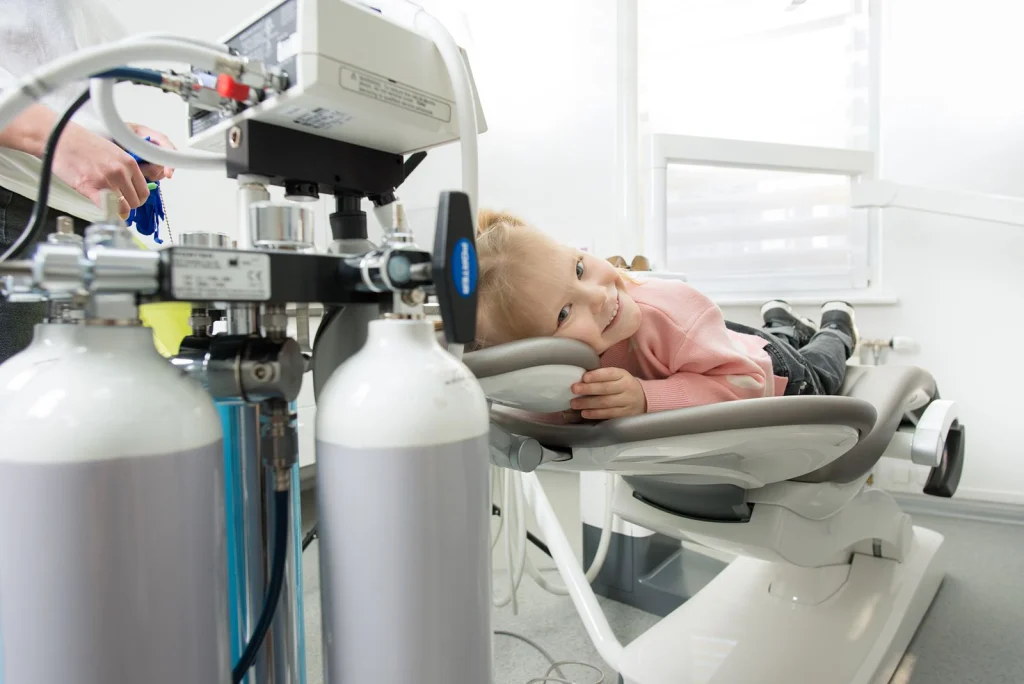
If your child is afraid of the dentist, sedation is one tool that can help, but it is rarely the first one. Most children do well with good preparation, a calm parent and a gentle team. When a child needs more help relaxing, laughing gas is the option the practice describes as safe and effective for patients of all ages, and it is offered as a complimentary service. And if you are the nervous one in the family, sedation options for adults can help you get your own care, too.
This guide from the Timonium office of Dr. Steven W. Haywood, DDS is written for parents: how to prepare a nervous child, what laughing gas feels like for kids, what parents should plan for, and how anxious parents can look after their own teeth. For an overview of every option, see sedation dentistry in Timonium.
Why children get nervous at the dentist
For a child, a dental office is full of unknowns: bright lights, unfamiliar sounds, people in masks and a chair that tips backward. Some children have heard frightening stories from friends or siblings. Others pick up on the tension of the adult who brought them. Children who have had a toothache or a difficult visit before may simply remember that it was unpleasant.
Understanding what is behind your child’s worry helps you choose the right kind of help. A child who is afraid of the unknown often needs explanation and practice. A child who has had a painful experience may need extra reassurance and, sometimes, a little help to relax.
How to prepare a nervous child for a dental visit
Preparation at home often matters as much as anything that happens in the office.
- Talk about the visit simply and honestly. Explain that the dentist will count and look at their teeth and help keep them strong. Answer questions with short, calm answers.
- Keep scary words out of it. Avoid words like “shot,” “drill” or “hurt.” The team can explain things in child-friendly terms.
- Do not share your own bad dental memories. Children absorb stories quickly, and a parent’s past experience can become a child’s new fear.
- Avoid promising it will not hurt. Well-meant promises can plant the idea that something might. Focus instead on how the visit keeps teeth healthy.
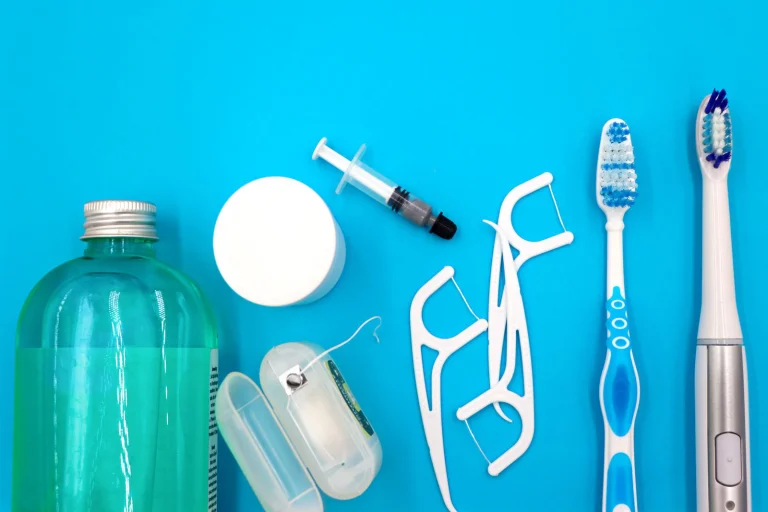
- Play dentist at home. Take turns counting teeth with a toothbrush and a hand mirror. Familiar routines make the real thing less strange.
- Choose a good time of day. A rested, fed child copes far better than a tired or hungry one.
- Stay calm yourself. Children read their parents’ faces. If you feel anxious, the section below on nervous parents may help.
For more on first visits and caring for little teeth, read the infant and toddler teeth Q&A.
What sedation dentistry means for children
Laughing gas for kids
Laughing gas, also called nitrous oxide, flows steadily through a comfortable nasal mask. Within seconds it eases anxious feelings, and the flow is adjusted as needed throughout treatment. It tends to make patients feel somewhat giddy and euphoric, but not “out of it.” Your child stays awake and can still respond to Dr. Haywood and the team, just more relaxed. Immediately after treatment, patients should feel fully alert.
Laughing gas is a safe and effective form of sedation dentistry for patients of all ages, and there is no extra charge for it. Just let the team know you would like it for your child.
Other forms of sedation
The practice also offers oral conscious sedation, a pill taken about an hour before an appointment. Whether any sedation beyond laughing gas is appropriate for a particular child is a conversation to have with Dr. Haywood, based on your child’s health history, age and the treatment involved.
What sedation is not
Parents sometimes picture sedation as being put to sleep. With laughing gas and with oral conscious sedation, patients stay conscious. They simply feel calm instead of tense.
Gentle tools that help children at the dentist
Sedation works best as part of a gentle visit overall. Several things at the practice help children, and adults, feel more comfortable:
- Comfortable fillings. A gentle filling process provided by micro-air technology is available for people of all ages.
- Air abrasion. A thin stream of air and silica removes small areas of decay quickly and quietly, with no heat, pressure or vibration.
- Digital X-rays. More comfortable than biting down on hard film, with as much as 90 percent less radiation exposure.
- Tooth-colored fillings. The practice is mercury-free, so fillings are tooth-colored composite matched to the teeth.
The best way to avoid difficult treatment is prevention. See how to prevent cavities in children for home habits, sealants and enamel care.
What parents need to plan for
Be there for the consultation
A parent or legal guardian must be present during the consultation of a patient under the age of 18. Bring your child’s health history and a list of any medications, and share anything about past dental visits that worries you.
Ask your questions before the day
It is easier to decide calmly at a consultation than in the moment. Ask which option the team suggests for your child, what the visit will involve and what it will cost.
Teens and wisdom teeth
Wisdom teeth tend to erupt in late adolescence, when the mouth often does not have room for them, and removal before they erupt is often recommended as a precaution. Unlike regular extractions, wisdom teeth removal is often performed surgically. If your teen is sedated for it, the effects stay for several hours: they must not drive or operate machinery, a family member or friend should come along, and a post-operative check is usually booked for about a week later. Read more about tooth extractions and wisdom teeth.
If you are the nervous one
Plenty of parents who work hard to make their children comfortable at the dentist are quietly anxious about their own care. Children notice when a parent keeps putting off appointments, so looking after your own fear helps the whole family.
The same options are there for you. Laughing gas lets you drive yourself home afterward, which matters when you have children to collect. Oral conscious sedation brings deeper calm, but because it stays in your system for several hours you need someone to drive you and should not be responsible for driving your children that day. Planning childcare and a ride in advance makes a sedated visit much easier. Read the benefits of sedation dentistry to compare your options.
Paying for your family’s care
The practice is out of network with all dental insurance companies. You pay at the time of your visit, and the office files the claim on your behalf so your plan can reimburse you for what it covers. Health savings and flex plans are welcome. Financing is available through CareCredit, with no-interest options for up to 12 months, and Cherry, with payment plans from 3 to 24 months. See financing options.
Frequently asked questions
Is laughing gas safe for children?
Laughing gas is a safe and effective form of sedation dentistry for patients of all ages, and the flow is adjusted as needed throughout treatment.
Will my child be asleep?
No. With laughing gas your child stays awake and can respond to the team, just calmer. Right after treatment, patients should feel fully alert.
Does a parent need to come to the appointment?
A parent or legal guardian must be present during the consultation of a patient under the age of 18. Ask the team about anything else you would like to know before the visit.
Does laughing gas cost extra for kids?
No. Laughing gas is offered as a complimentary service for patients.
Should I tell my child about laughing gas beforehand?
A short, calm explanation usually helps, such as a special nose mask with air that helps them feel relaxed. Keep it simple and positive.
Book a calm visit for your child in Timonium
If your child, or you, find dental visits hard, the team can help you plan a calmer experience. Request an appointment or call (410) 453-9399. The office of Dr. Steven W. Haywood, DDS is at 108 W Timonium Rd, Ste 200, Timonium, MD 21093, serving families from Timonium, Towson, Lutherville and Cockeysville. You can complete new patient forms before you arrive on the new patient information page.
Ready to see your future smile?
Plan a calmer dental visit for your child, or for yourself, in Timonium.