Smiles change over the years. Enamel wears down, teeth darken, gums shift, and fillings or crowns placed decades ago start to show their age. A smile makeover for an older adult is often less about a dramatic transformation and more about replacing what has worn out, restoring a comfortable bite and bringing back a brighter, more even smile that still looks natural. Age alone does not rule anyone out; the condition of your teeth, gums and bite is what shapes the plan.
This guide covers the changes that most often bring mature patients to the Timonium office of Dr. Steven W. Haywood, DDS, the treatments that address each one, the health considerations built into planning, and how to preview and pay for a makeover.
How smiles change with time
None of these changes mean something went wrong. They are the ordinary effects of decades of chewing, eating and living:
- Wear. Chewing, grinding and clenching gradually flatten and shorten teeth, and can crack enamel.
- Color. Stains build up and teeth tend to look darker or more yellow.
- Aging dental work. Fillings wear and pull away at the edges, and crowns and bridges that once matched no longer do.
- Gum changes. Gums can recede, making teeth look longer and exposing roots.
- Missing teeth. After a tooth is lost, neighboring teeth can shift, the bite can change and the cheeks or lips can look sunken.
- Higher decay risk. Decay rates increase with age, and medications and dry mouth can set the stage for root decay.
A makeover plan looks at all of these together, because fixing the color of teeth that are wearing down or failing would not last.
Replacing old dental work
Old metal fillings
Metal fillings can discolor and age teeth, and over time fillings can wear away, fracture or fall out. A filling that is worn at the edges or pulling away can let decay develop underneath it. The practice never uses amalgam, and old amalgam fillings are removed under rigorous safety protocols designed to minimize your exposure to mercury vapor. Teeth are restored with tooth-colored composite, or with bonded inlays and onlays when more of the tooth needs rebuilding. Learn about mercury-free dentistry and inlays and onlays.
Crowns and bridges that no longer match
Older crowns can look opaque, show a dark line or stand out against teeth around them. New porcelain crowns are made to replicate the color and translucence of natural teeth. For a missing tooth held by an old bridge, Dr. Haywood can explain whether a new bridge or a dental implant suits you better; implants are the better alternative in most cases, because they replace the root as well as the tooth and leave neighboring teeth alone.
Teeth that have been patched again and again
Broken, patched and filled teeth call for a plan rather than another quick repair. One patient described that starting point: “I came in with every tooth broken, patched, and filled… I have been thrilled with my new smile. I get compliments everywhere I travel and I am loving it.”
Worn and shortened teeth
When grinding is the cause
Uncontrolled grinding destroys comfort, health and appearance as we age, and it often happens without you noticing. Worn edges, small cracks and teeth that look shorter than they used to are common signs. Restoring worn teeth without addressing the grinding would put new work at risk, so a plan usually includes a comfortable, clear, custom-made bite guard.
One patient’s teeth had broken down this way: “My teeth never had decay, yet I broke off virtually every one of them with my grinding habit… After setting my bite in the right position, Dr. Haywood created a new set of teeth for me… I have never felt better or smiled more.”
Why the bite comes first
The temporomandibular joint is the foundation of your chewing mechanism, and without proper joint health and function nothing else works properly. Dr. Haywood has advanced TMJ and reconstructive training at the Peter Dawson Institute, and jaw tenderness, frequent headaches or facial pain are evaluated before any treatment. Porcelain veneers and crowns can then rebuild worn teeth to a natural length and shape. Read about TMJ disorder treatment and veneers for worn teeth.
Teeth that have darkened
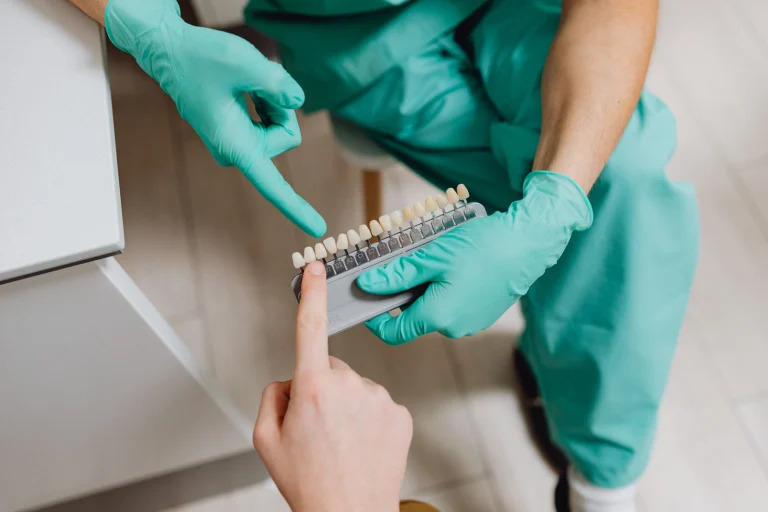
For natural teeth that have yellowed or darkened, in-office laser whitening is customized to your teeth: an in-office whitening treatment is activated by a laser so stains dissolve. If your teeth are very dark, Dr. Haywood explains your options before you begin, because veneers or bonding may give a better result.
Keep in mind that whitening does not change the color of existing crowns, veneers or tooth-colored fillings. When a plan includes both whitening and new tooth-colored work, teeth are usually whitened first and the new work is matched to the brighter shade. See whitening teeth that darken with age and teeth whitening in Timonium.
Replacing missing teeth
Missing teeth affect chewing, speech and the support of your lips and cheeks. Options at the practice include:
- Dental implants, which replace the root and crown and help prevent bone deterioration.
- Implant-supported dentures, which snap or lock onto implants so they don’t slip or click.
- Snap-on implant teeth, removable sets anchored by implants, where more implants can often be added over time.
- High-end custom dentures, and implants can be placed under existing dentures.
Learn more about dental implants in Timonium, or read can dental implants help you look younger?
Gum health in a mature smile
Healthy gums come before any cosmetic work. Bleeding or receding gums, bad breath and deep pockets in the gums mean infection, and the health of your gums has been linked to serious health risks such as diabetes and cardiac disease. Gum care at the practice is non-surgical and removes the bacteria causing the infection, with ongoing maintenance to keep it under control.
A gum lift, which moves the gum line up when too much gum shows, is designed for excess tissue. Gums that have receded are a different problem and start with a gum health evaluation.
Planning around your health
Mature patients often bring more to the conversation: medications, health conditions and previous treatment. Your first appointment starts with a conversation about your dental concerns, health history and medications, and whether fear is a problem for you. For patients who want to know what is going into their mouth, restorations here are non-toxic, metal-free and biocompatible, with no mercury, nickel or bisphenol plastics.
If long or involved visits worry you, laughing gas is complimentary, and oral conscious sedation is available.
Previewing and scheduling your makeover
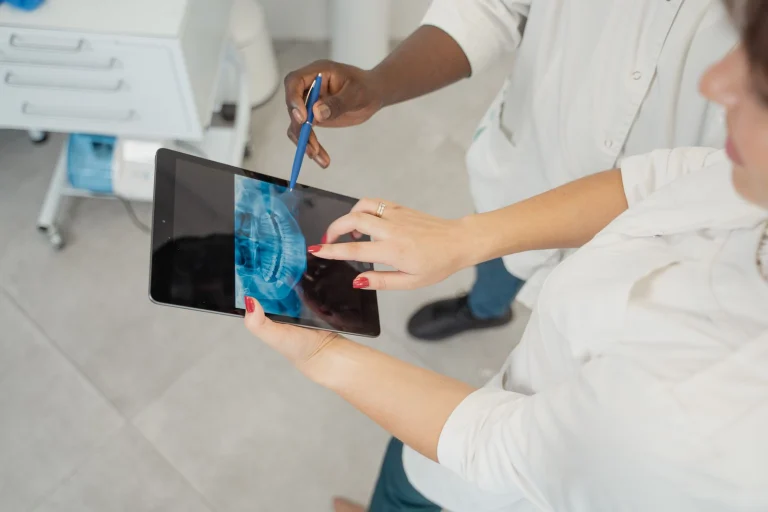
Before-and-after imaging is part of every cosmetic evaluation: digital photos of your smile are changed on the imaging computer, so you and Dr. Haywood can plan how natural or dramatic the change should be. With veneers, you try a “test drive” set before the final set is made.
An ultimate smile makeover can be completed in as little as two visits when nothing needs healing time, while plans that include gum treatment, bite correction or implants are usually done in phases. You can see real results in the smile gallery.
Cost, insurance and financing
Every smile is unique, so the cost depends on your plan, and you get a clear estimate up front. The practice is out of network with insurance companies: you pay at the time of your visit, and the office files the claim on your behalf so your plan can reimburse you for anything it covers. HSA and flex plans are welcome. Financing is available through CareCredit, with no-interest options for up to 12 months, and Cherry, with plans from 3 to 24 months.
Frequently asked questions
Am I too old for a smile makeover?
Age on its own is not the deciding factor. The health of your gums, the condition of your teeth and your bite determine which treatments suit you, and your evaluation shows what is possible.
Should old silver fillings be replaced if they don’t hurt?
Not automatically. Fillings that are worn at the edges or pulling away can let decay develop underneath without pain, so Dr. Haywood checks each one and explains which should be replaced and why.
Can teeth worn down by grinding be rebuilt?
Often, yes. The bite is evaluated first, then worn teeth can be restored with crowns or veneers, and a custom bite guard helps protect the new work.
Will my smile makeover look natural?
It should. Dr. Haywood insists on a natural, never-fake look and designs each smile around your goals, including how bright you want your teeth to be.
Refresh your smile in Timonium
It is never too late to have a smile that feels good to show. Request an appointment or call (410) 453-9399. The office of Dr. Steven W. Haywood, DDS is at 108 W Timonium Rd, Ste 200, Timonium, MD 21093, serving Timonium, Towson, Pikesville and Baltimore. Explore all cosmetic dentistry in Timonium.
Ready to see your future smile?
See what a natural-looking makeover could do for a mature smile.