Most mouth sores are minor. A canker sore, a cheek you bit or a spot burned by hot pizza usually heals on its own within a week or two. The ones worth taking seriously are sores that don’t heal, keep coming back in the same place, or come with other changes such as a lump, a patch of white or red tissue, numbness or swelling. If a sore in your mouth hasn’t healed in about two weeks, have it examined rather than waiting for your next routine visit.
This guide from the Timonium office of Dr. Steven W. Haywood, DDS helps you tell the common, harmless sores from the ones that need a closer look, and explains what happens when you come in. For ways to stay comfortable while a sore heals, see 5 tips for treating mouth sores at home.
The most common types of mouth sores
Canker sores
Canker sores are small, shallow ulcers with a white or yellowish center and a red border. They appear inside the mouth, on the inner cheeks and lips, under the tongue or on the soft gums, and they can be surprisingly painful for their size. They are not contagious. Minor injuries, stress, fatigue, acidic or spicy foods and some toothpaste ingredients are often mentioned as triggers, though the exact cause isn’t always clear. Most heal on their own in one to two weeks.
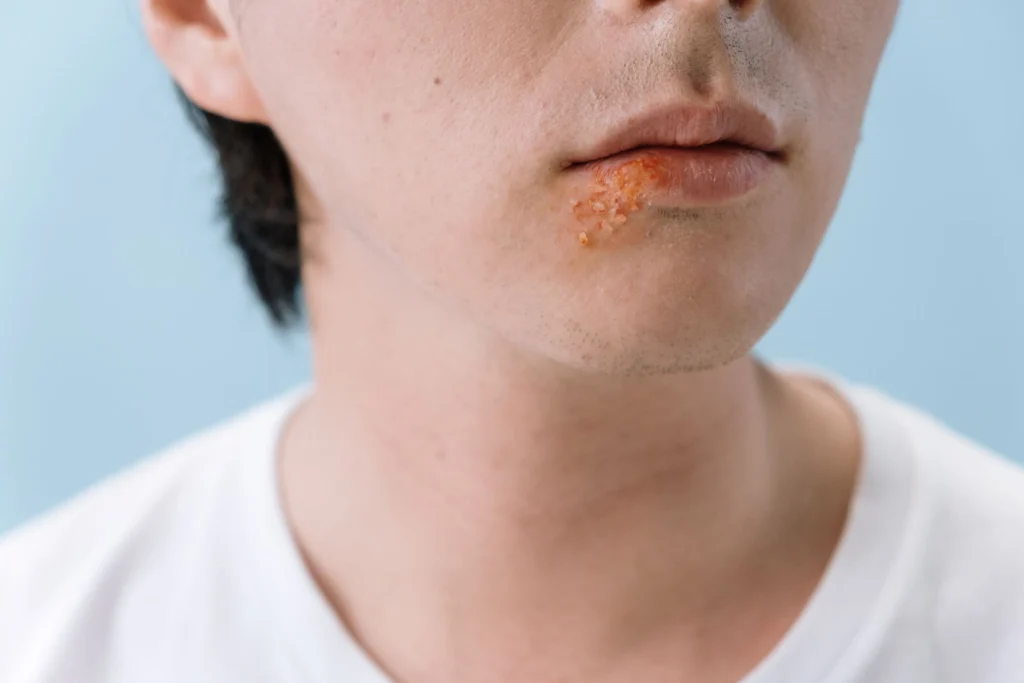
Cold sores
Cold sores, also called fever blisters, are clusters of small fluid-filled blisters, usually on or around the lips. They are caused by a common virus, and they are contagious, especially once the blisters break. Many people feel tingling or burning a day or so before one appears. Sun, illness, stress and cracked lips are common triggers. They generally crust and heal within a couple of weeks. A pharmacist or physician can advise on treatment, and it helps to avoid kissing, sharing utensils and touching the sore while it is active.
Bites, burns and scrapes
Biting your cheek or tongue, burning the roof of your mouth on a hot drink, or scraping the gums on a sharp chip can leave a sore spot that looks alarming but heals quickly once the irritation stops. After a filling or other treatment with numbing, avoid chewing and hot drinks until the numbness wears off, because it is easy to bite or burn your lip or tongue without noticing.
Sores from dental appliances or a broken tooth
A denture that has stopped fitting well, the edge of a broken tooth or filling, a rough temporary crown, a bite guard or a clear aligner can rub the same spot again and again. These sores often come back in exactly the same place, and they won’t fully heal until the cause is fixed. A quick adjustment or repair usually solves the problem.
A bump on the gum near a tooth
A small, pimple-like bump on the gum, sometimes with a bad taste or a little drainage, can be a sign of an infection at the root of a tooth or in the gums. It may not hurt, but it is not something to wait on, because dental infections can spread. Call the office and read oral infection signs and when to call.
White patches that wipe off
A creamy white coating that wipes away and leaves red, sore tissue underneath can be a yeast infection, which is more likely with dry mouth, some medications or a denture worn around the clock. Your physician or dentist can confirm it.
When a mouth sore could be something serious
A sore is worth a prompt exam if any of these apply:
- It hasn’t healed in about two weeks
- It keeps returning in the same spot
- It feels hard, raised or thickened, or there is a lump in the cheek, gums, tongue or neck
- There is a white or red patch that doesn’t wipe off
- It bleeds easily without a clear reason
- The area feels numb, or you have unexplained pain in the mouth, ear or throat
- Chewing, swallowing, speaking or moving the jaw or tongue has become difficult
- There is facial swelling, fever or a bad taste from a bump on the gum
- Sores are very large, very painful or come in frequent crops
Most sores on this list still turn out to have a harmless cause. The point is not to panic but to let a professional look, because some serious conditions, including oral cancer, can start as a sore or patch that doesn’t go away. For the full list of warning signs, read oral cancer signs and symptoms.
Why a lingering sore deserves an exam
Oral cancer is a serious, life-threatening condition, and early diagnosis increases the likelihood of more successful treatment. Alcohol, infection, the HPV virus and smoking have all been implicated in its onset, and regular screening is especially important for anyone over 40, anyone who smokes and anyone with a family history of cancer. Early changes can be painless and easy to overlook, which is exactly why a sore that won’t heal shouldn’t be ignored.
What happens when you come in with a mouth sore
A look at the sore and its cause
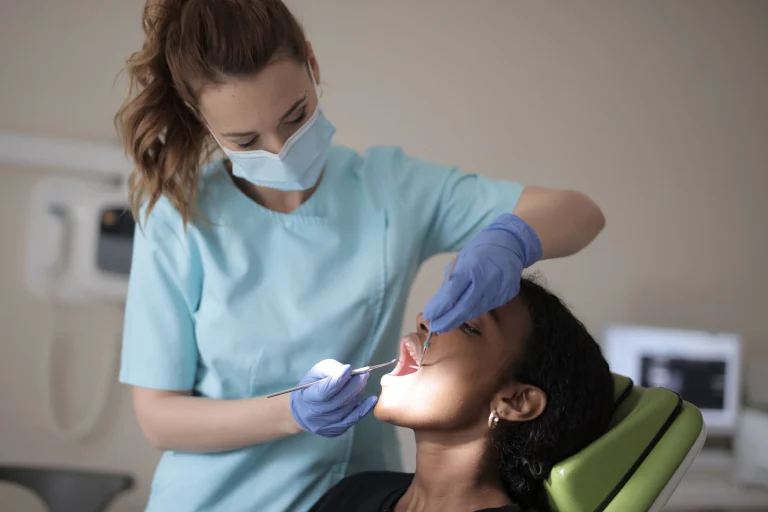
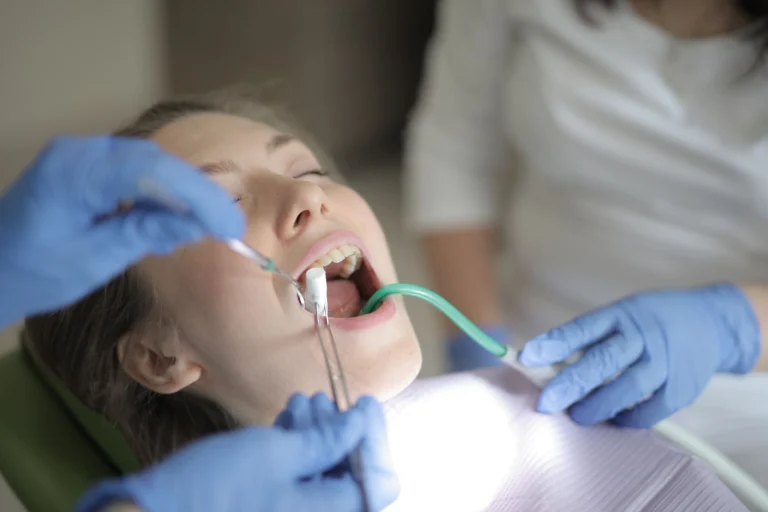
Dr. Haywood examines the sore and the tissue around it, and looks for anything that might be causing irritation, such as a sharp tooth, a worn filling or a denture that rubs. You will be asked how long the sore has been there, whether it has happened before, and about your health and medications.
An oral cancer screening
The practice screens the soft tissues of the mouth, throat and tongue. ViziLite screening uses a special solution that turns abnormal cells blue so they are easier to see under its light, and it can detect signs of oral cancer in as little as ten minutes. The screening is quick and pain-free. Learn more about oral cancer screening in Timonium.
A closer look if something needs it
If an area needs more attention, non-surgical techniques for identifying cancer, including t-blue staining and Oral CDX cellular analysis, are available right in the office, and Dr. Haywood explains what the findings mean and your next steps.
Fixing a dental cause
When a sore comes from the teeth or dental work, the fix is usually straightforward: smoothing or repairing a broken tooth or filling, adjusting a denture or appliance, or treating an infected tooth or gum.
Keeping your mouth healthy between visits
- Look inside your mouth once a month in good light: cheeks, gums, the roof and floor of the mouth, and the sides and underside of the tongue. You will notice changes sooner.
- Keep dentures clean and have their fit checked if they start to rub.
- Protect your lips from the sun with a lip balm that contains sunscreen.
- Avoid tobacco and vaping, and limit alcohol. See how smoking and vaping affect your mouth.
- Stay on schedule with checkups. The practice recommends an oral cancer screening once a year for all patients over eighteen.
- Manage dry mouth, which leaves tissue more easily irritated. See why dry mouth is dangerous for your teeth.
Paying for your visit
The practice is out of network with all dental insurance companies. You pay at the time of your visit, and the office files the claim on your behalf so your plan can reimburse you. Health savings and flex plans are welcome. Financing is available through CareCredit, with no-interest options for up to 12 months, and Cherry, with payment plans from 3 to 24 months. See financing options.
Frequently asked questions
How long is too long for a mouth sore?
Most common sores heal within one to two weeks. If a sore hasn’t healed in about two weeks, or keeps coming back in the same spot, have it examined.
Is a canker sore the same as a cold sore?
No. Canker sores form inside the mouth and aren’t contagious. Cold sores are blisters, usually on or around the lips, caused by a virus, and they are contagious.
Should I wait for my checkup to show the dentist a sore?
No. If you notice anything in your mouth that concerns you, call the office rather than waiting for your next routine visit, and the team can schedule an exam.
Does an oral cancer screening hurt?
No. It is quick and pain-free, and it is part of your regular general dentistry appointment.
Can a broken tooth cause a mouth sore?
Yes. A sharp edge on a broken tooth or filling can rub the tongue or cheek and keep a sore from healing. Repairing the tooth removes the cause.
Have a mouth sore checked in Timonium
If a sore in your mouth is lingering, returning or just worrying you, it is worth a look. Request an appointment or call (410) 453-9399. The office of Dr. Steven W. Haywood, DDS is at 108 W Timonium Rd, Ste 200, Timonium, MD 21093. For more guides, visit the blog.
Ready to see your future smile?
A mouth sore that won't heal? Have it checked in Timonium.