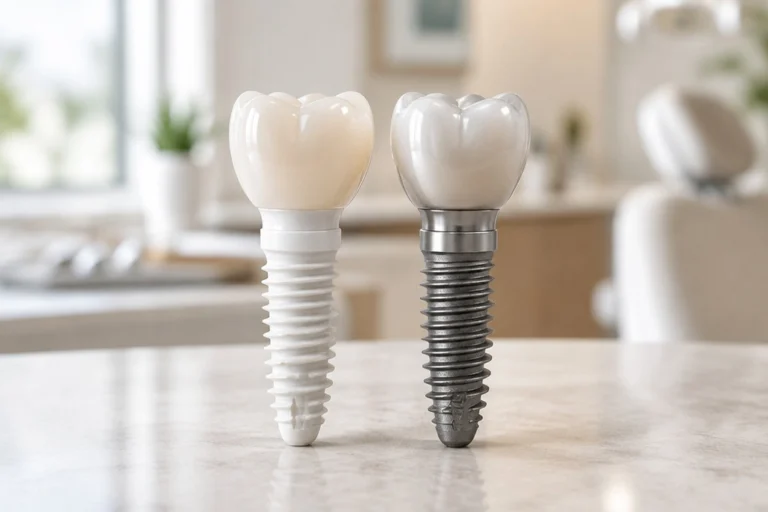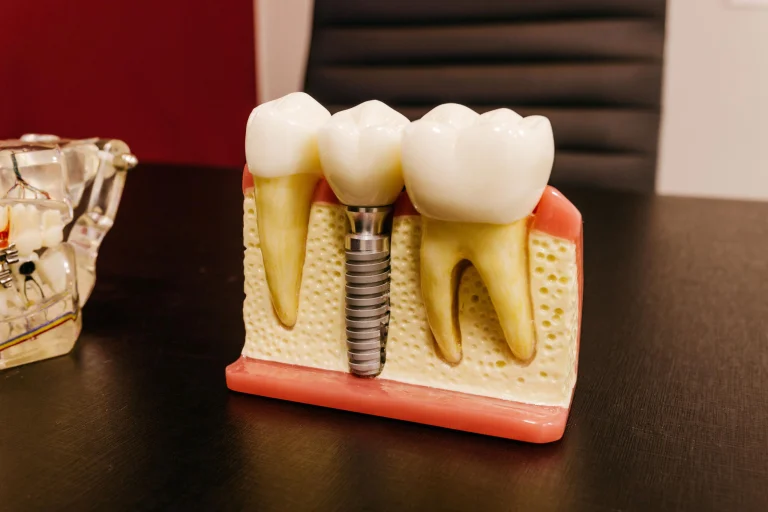
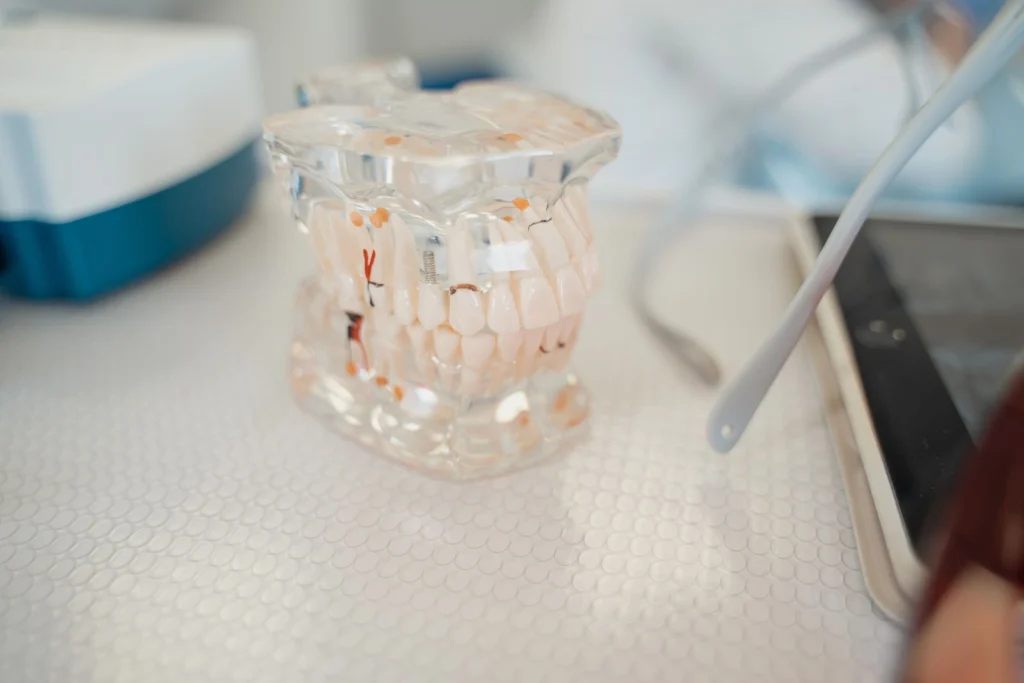
A dental implant is a replacement for the root of a tooth. It is a small post, usually titanium, placed in the jawbone, where bone fuses around it. Once it has healed, it holds a new tooth on top: a single crown, part of a bridge, or a full set of teeth. Because it replaces the root as well as the part you see, an implant stands on its own without leaning on the teeth beside it.
That is the short answer. This guide goes a little deeper into what dental implants are made of, the parts that make up an implant tooth, how implants are sized, and what they can hold, using the way Dr. Steven W. Haywood, DDS plans implants at the Timonium, MD office.
The three parts of an implant tooth
Most implant teeth are built from three pieces that work together.
The implant
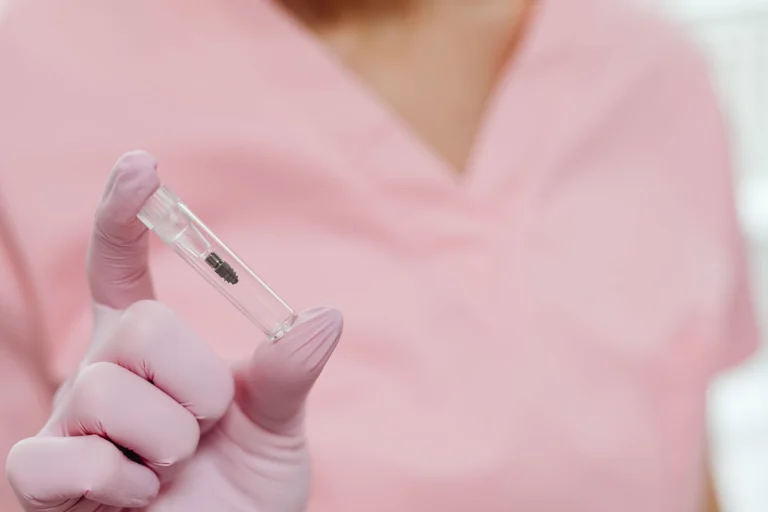
The implant itself is the “screw” that replaces the root. It sits below the gum line in the jawbone and is the foundation for everything else. You never see it once treatment is finished.
The abutment
The abutment is the connecting post. It attaches to the implant and rises just above the gum to support the new tooth. For front teeth, where the result shows every time you smile, the practice uses customized ceramic abutment posts.
The crown or teeth
The crown is the tooth you see and chew with. It is either screwed or cemented onto the abutment or onto the implant itself, and at the practice single implant teeth are finished with porcelain crowns. When several teeth are missing, the same foundation can carry a bridge or a full arch of teeth instead of a single crown.
How an implant becomes part of your jaw
After an implant is placed, the bone around it needs time to fuse to its surface. That bond is what lets an implant take chewing forces the way a natural root does. At the practice, implants need at least 6–8 weeks of healing after surgery before a single tooth is restored, and full integration into the bone takes longer than that. From the first visit to the finished tooth, the whole process can take several months.
Implants that heal properly over the first 6–12 weeks after placement are considered to have lifetime potential, as long as they are looked after. Current thinking is that implants may last a lifetime: they don’t decay, and they seem far less affected by gum disease than natural teeth.
What are dental implants made of?
The material matters to many patients, and there are two main choices.
Titanium implants
Titanium implants are the most common and successful type. Titanium works well with bone, which is why it has become the standard material for implant posts. Titanium also affects how implants are cleaned later: it can’t be scraped with the stainless-steel instruments used on teeth, so implants are cleaned with specialized titanium or plastic instruments instead.
Ceramic and zirconia implants
Ceramic and zirconia implants are also available and are essentially the holistic implant of choice for patients who would rather avoid metal. The full comparison is in our guide to zirconia dental implants. They cost more than traditional titanium implants. If a metal-free mouth is important to you, raise it at your consultation. Holistic dentistry at the practice includes testing dental materials for biocompatibility before they are used.
How implants are sized
Implants are made in specific lengths and widths, so each one can be sized for the space it fills and the bone available. By definition, full-size implants are 2.8 mm or larger in diameter.
Front teeth are a good example of why size matters. The bone in the front of the jaw is often thinner and less dense, so smaller implants are virtually always used there, placed with computer-guided surgery. Whether a smaller implant suits your case is something Dr. Haywood assesses from your X-rays and a 3D scan. You can read more on the dental mini-implants and implant care page.
What dental implants can hold
An implant is a foundation, and the same foundation supports several kinds of replacement teeth.
- One tooth: a single implant and crown replace one missing tooth without touching its neighbors. See single tooth implants.
- Several teeth in a row: an implant bridge uses two or more implants to hold three or more joined teeth, so you don’t need an implant for every gap.
- A removable full or partial set: snap-on implant teeth clip onto implants, usually four or five in the upper jaw and at least two in the lower.
- A fixed full set: fixed full-arch teeth are screwed or cemented onto at least four implants and only come out at the office.
For help matching these options to your own situation, read dental implants from one tooth to a full mouth.
How implants differ from bridges and dentures
A traditional bridge fills a gap with a false tooth held by crowns on the teeth either side, so those teeth have to be prepared to support it. A removable partial denture comes in and out and usually grips nearby teeth with metal clasps. A conventional full denture rests on the gums.
An implant is different because it replaces the root. That is why it can stand alone, and why it helps prevent the bone deterioration that follows when a root is missing. In this office, a single implant is regularly less expensive and more conservative than a traditional bridge. None of this means an implant is right for everyone, and a consultation is where the options are weighed for your mouth.
Who can get dental implants?
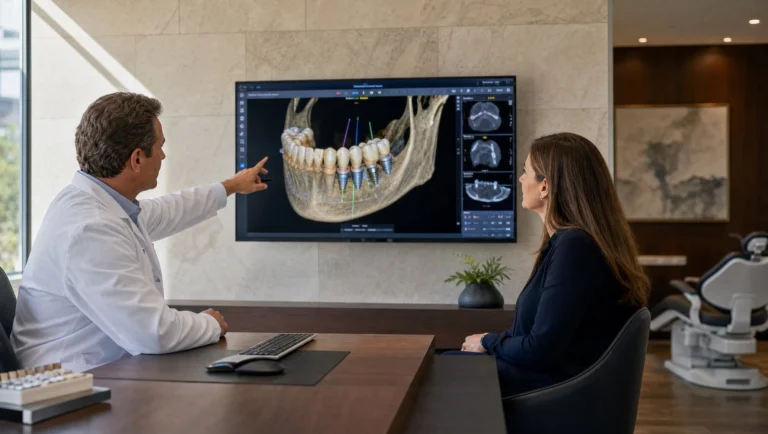
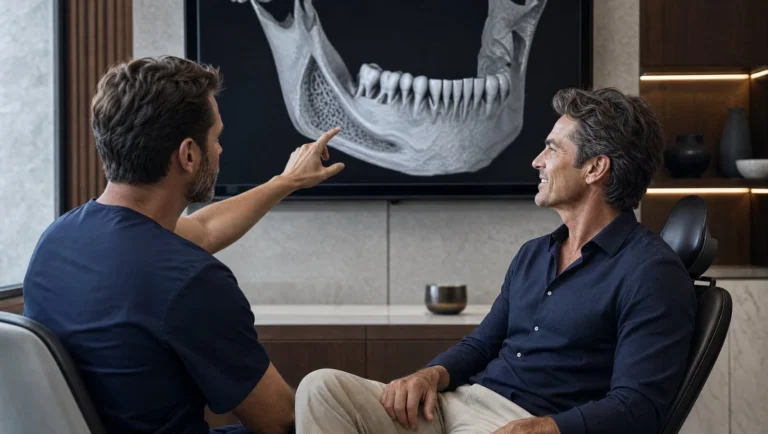
A full exam is the only way to know. Dr. Haywood reviews x-rays or a cone beam CT scan to check the quality and quantity of your bone and goes over your health history. The practice uses a low-dose Green CT scanner, and if you need bone grafting you’ll know at that same visit.
- Active gum disease is treated before implants are placed.
- Thin bone can often be built back up with grafting.
- Smokers can have implants, though they are somewhat less successful.
If you have been told elsewhere that implants aren’t possible, or you already have an implant plan from another office, second opinions here are always complimentary.
Looking after implants once you have them
Implants don’t get cavities, but the gum around them attaches more weakly than it does around a natural tooth. That is why cleanings every 3–4 months are recommended for implant patients, along with good home care and a custom night guard if you grind or clench. For a simple routine, read how to care for dental implants in 4 steps.
Paying for dental implants
The practice is out of network with all dental insurance companies. You pay at the time of your visit, and the office files the claim on your behalf so your plan can reimburse you for what it covers. Health savings and flex plans are welcome. Financing is available through CareCredit, with no-interest options for up to 12 months, and Cherry, with payment plans from 3 to 24 months. For what drives an implant fee, read how much dental implants cost in Timonium.
Frequently asked questions
Are dental implants permanent?
They are designed to be a long-term replacement. Implants that heal properly are considered to have lifetime potential, provided they are looked after with regular professional cleanings and good home care. Ignore them, just like teeth, and they can be lost.
Do implant teeth look natural?
They are built to. Single implant teeth are finished with porcelain crowns, and front implants use smaller implants and custom ceramic abutments so the new tooth suits your smile.
Can an implant get a cavity?
No. Implants don’t decay. The gum and bone around them still need care, because plaque collects in the slightly deeper pockets around an implant.
Is a mini implant the same as a regular implant?
Both replace a root, but they differ in width. Full-size implants are 2.8 mm or larger in diameter, and smaller implants are chosen where the space or bone calls for them. Your scan shows which suits you.
Talk to Dr. Haywood about dental implants
Dr. Steven W. Haywood, DDS is a Fellow of the International Congress of Oral Implantologists with over 35 years of experience, and every phase of implant care, from the 3D scan to the finished teeth, happens in one office. Learn more about dental implants in Timonium, request an appointment or call (410) 453-9399. The office is at 108 W Timonium Rd, Ste 200, Timonium, MD 21093.
Ready to see your future smile?
Wondering if implants suit you? Book a consultation and 3D scan in Timonium.