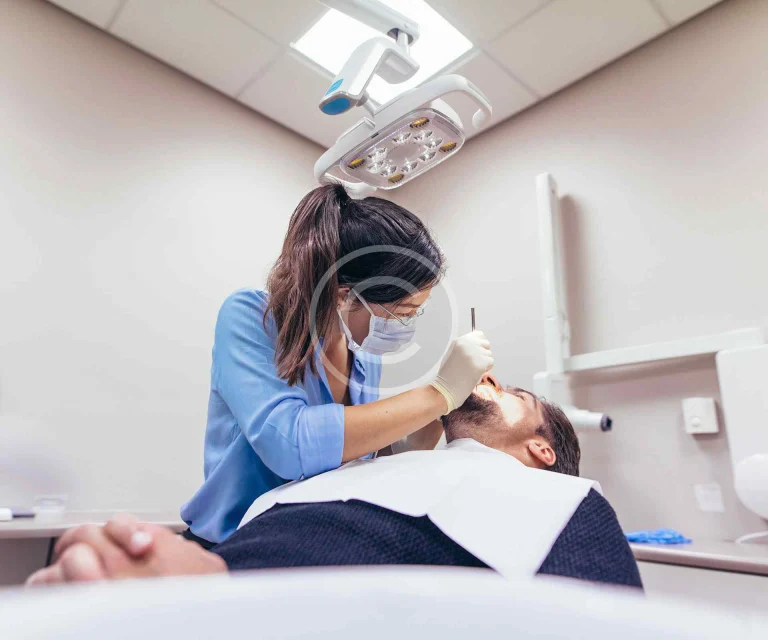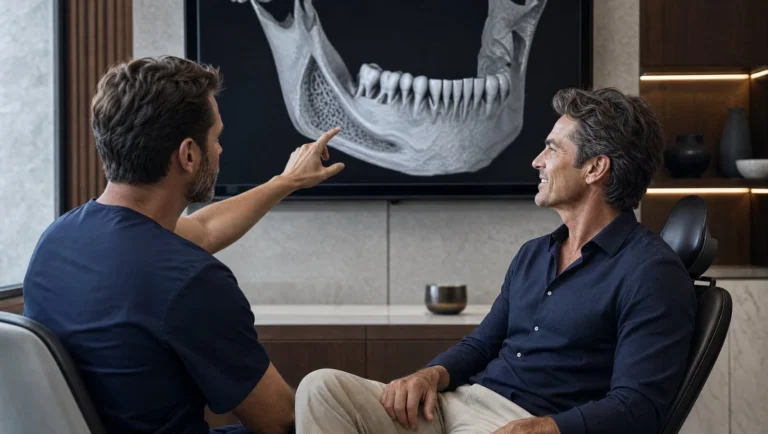
If you want dentures, start with a dental exam, not a denture. The first visit shows whether any of your teeth can be saved, whether you need a full or partial denture, whether implants would make it more secure, and whether teeth need to come out first. From there the path is straightforward: plan any extractions, have the denture designed and fitted, learn to wear it, and keep up with adjustments while your mouth settles.
This guide walks through that path step by step, the way it works at the Timonium, MD office of Dr. Steven W. Haywood, DDS, so a first denture feels like a plan rather than a leap. If you already know what you want to ask, read denture consultation questions to ask your dentist.
Step 1: find out whether any of your teeth can be saved
Wanting dentures usually starts with teeth that hurt, break or embarrass you. Before any of them are removed, it is worth knowing what can be kept. The practice’s goal is to preserve natural teeth, and all options are discussed before an extraction is recommended. A root canal, for example, can save a tooth even after a serious infection.
Keeping some teeth changes what kind of denture you need, and teeth that can support a good final result are kept. At the same time, if your teeth are beyond repair, an honest exam says so, and you can move forward without wondering.
Step 2: learn the main types of dentures
Both removable and permanent dentures are available at the practice.
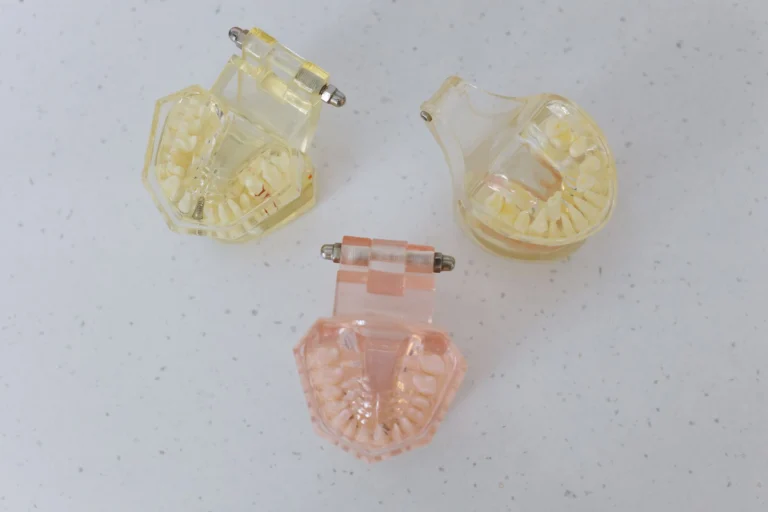
Full dentures
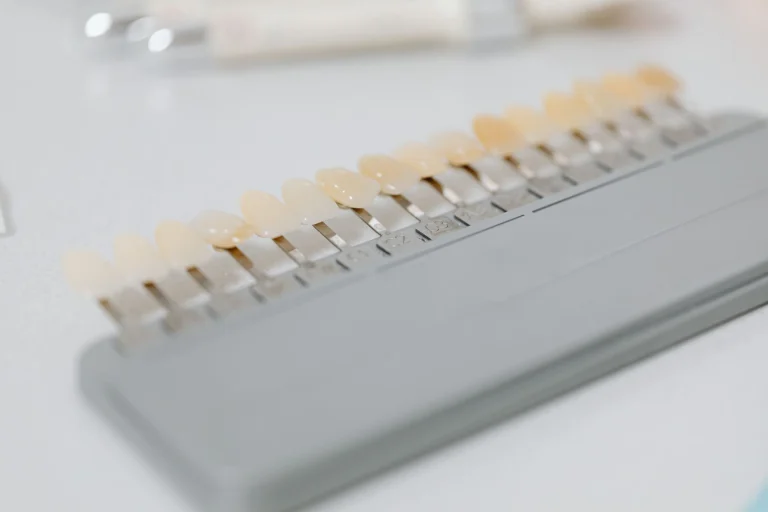
A full denture replaces all the teeth in an arch. High-end custom full dentures are made with time and care for a natural look and a comfortable fit.
Partial dentures
A partial denture fills gaps when some healthy teeth remain. A conventional partial usually holds on with metal clasps, while a partial secured by implants needs no clips or wires, and a tooth can be added later if you lose another.
Immediate or transitional dentures
These are delivered as soon as the remaining teeth that can’t be restored are removed, so you don’t go without teeth. They serve as a bandage over the sockets while your gums and bone heal. Transitional dentures are only for that healing period, and permanent dentures may be recommended afterward.
Implant-supported dentures
Dentures can snap or lock onto dental implants, so they don’t slip or click, and implants support the jawbone and help prevent bone deterioration. All-on-4 is a permanent denture option supported by implants that can be placed in as little as one appointment. See snap-on implant teeth.
Step 3: decide whether your first denture should sit on implants
This is the biggest choice in a first denture, and you don’t have to make it all at once.
- Lower dentures: the implant-supported denture is the standard of care recognized by the ADA for a lower denture.
- Starting small: many people choose a lower snap-on denture on two implants for financial reasons, and more implants can often be added later.
- Adding implants later: implants can be placed under dentures you already have, although new, properly constructed dentures are often recommended for the best long-term value.
For a side-by-side look at removable and fixed options, read how implant dentures work.
Step 4: plan extractions and the day your teeth come out
When teeth can’t be saved, extractions are performed with gentle care, and sedation is available if you feel anxious. Laughing gas is offered as a complimentary service and lets you drive yourself home; oral conscious sedation is a pill taken about an hour before, so you’ll need a ride.
If you receive immediate dentures, the first day follows a clear routine: keep the dentures in for 24 hours, bite on a gauze pad for 30–45 minutes, use a cold pack on the outside of your face to help with bleeding and swelling, take your prescribed medications, don’t rinse vigorously, and eat soft, cold foods. Seeing a little blood on your pillow the next morning is normal. That morning, rinse gently. Read more about tooth extractions.
Step 5: have your denture designed and made
A denture is custom work. At the practice, dentures are made with the branching technique, which isn’t taught in dental schools and which Dr. Haywood learned from Dr. Jack Turbyfill. It is paired with the best teeth, the best plastics and lab technicians personally trained by Dr. Turbyfill. Dr. Haywood is specially trained in prosthodontics, and the practice takes its time with every step so the denture fits comfortably and looks natural.
Step 6: learn to wear your new teeth
Learning to wear new dentures, particularly full dentures, is much like learning a new sport. It takes practice and patience, so try not to get discouraged at first.
- Talking: talk to yourself, read aloud and sing. You should sound normal within a very short time.
- Eating: cut food into small bites, choose easy-to-chew foods and chew slowly. Don’t plan to eat your first meal in public.
- Saliva: you may salivate more at first; this usually settles within a few minutes to a few days.
- Adhesive: some people feel more comfortable with an over-the-counter adhesive, especially with full dentures. Remove all of it every day.
Step 7: keep up with adjustments as you heal
As the sockets heal, immediate dentures get loose and need to be adjusted several times. Wear them regularly so sore spots can be found at your adjustment visits. At the end of 3 months, the denture is relined in-house to fit tighter. Bone usually takes a year to heal completely, and at the end of that year the denture is sent for a lab reline, which is usually done within a day. If a denture ever feels loose later on, read loose dentures: causes and fixes.
Step 8: set up a daily care routine
Take your denture out for at least 8 hours each day, preferably at bedtime, to avoid sores and fungus. Clean it after meals, and at night brush it and soak it in water, mouthwash or a denture cleaner. Don’t let it dry out, and clean it over a basin with a washcloth and some water in case you drop it. Keep regular dental visits too, so the fit and bite can be checked and you can be screened for oral cancer.
Paying for your first denture
The practice is out of network with all dental insurance companies. You pay at the time of your visit, and the office files the claim on your behalf so your plan can reimburse you for what it covers. Health savings and flex plans are welcome. CareCredit offers no-interest options for up to 12 months, and Cherry offers payment plans from 3 to 24 months. See financing options.
Frequently asked questions
Do I have to have all my teeth pulled to get dentures?
No. If some healthy teeth remain, a partial denture may suit you, and teeth that can support a good result are kept.
Will I be without teeth after extractions?
Not if you choose immediate dentures, which are delivered as soon as the remaining teeth are removed. With full-arch implant treatment, temporary teeth are placed while the implants heal.
Will my dentures look natural?
That is the aim. The practice designs dentures that look natural, function well and fit comfortably, using the branching technique and carefully chosen teeth and plastics.
Can I get implants after I already have dentures?
Yes. Implants can be placed under existing dentures, and new, properly constructed dentures are often recommended for the best long-term value.
Start your denture plan in Timonium
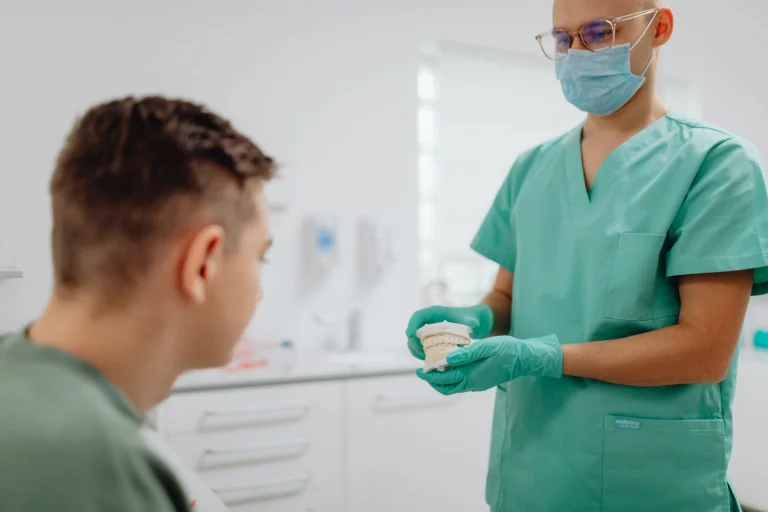
The first step is a relaxed consultation where Dr. Haywood evaluates your mouth and your goals. Learn more about dentures in Timonium, request an appointment or call (410) 453-9399. The office is at 108 W Timonium Rd, Ste 200, Timonium, MD 21093.
Ready to see your future smile?
Take the first step: book a relaxed denture consultation in Timonium.