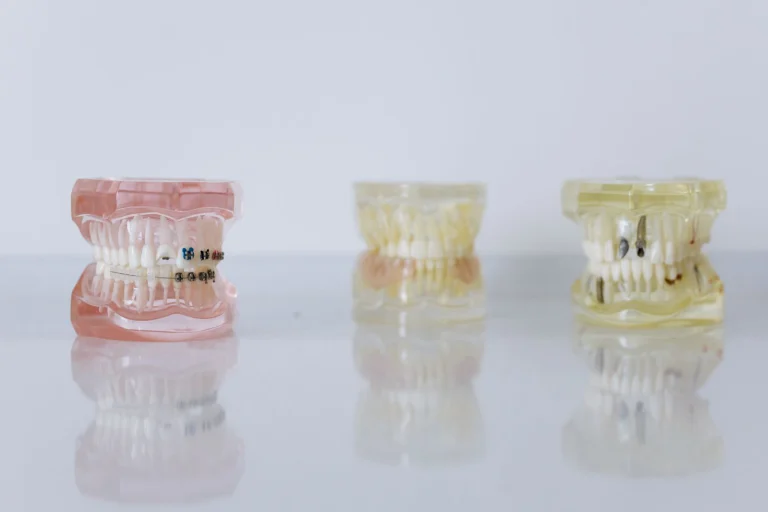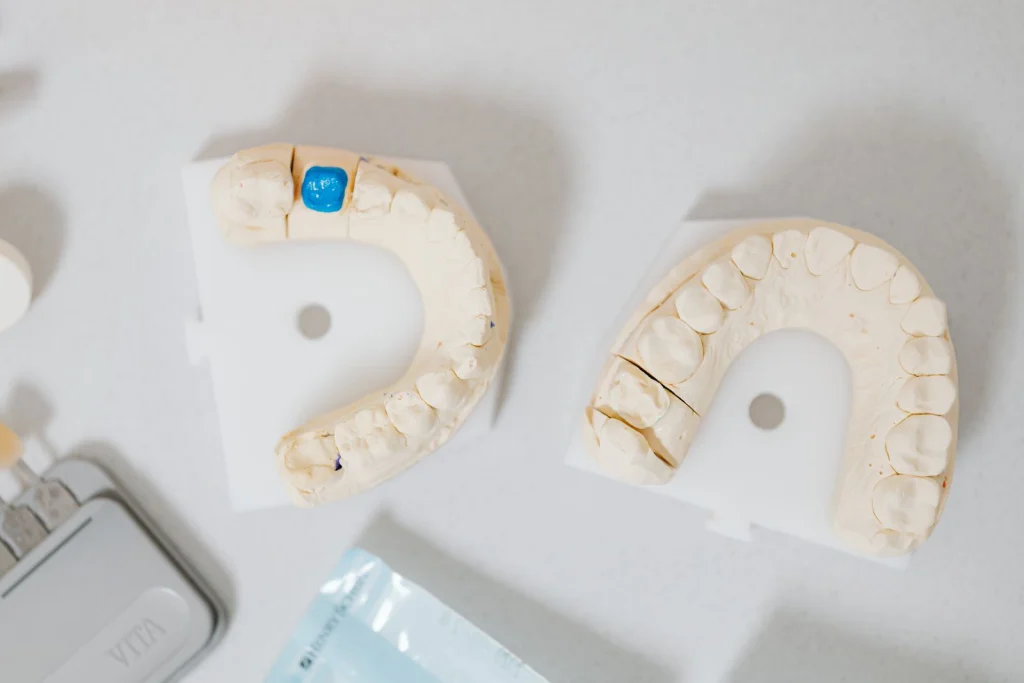
You are an ideal candidate for a dental crown when a tooth is too damaged, weakened or cracked for a filling or onlay to hold it together, when a tooth has had a root canal, or when a crown is needed to anchor a bridge or top an implant. You are usually not a candidate when a smaller, more conservative repair would do the job, because a crown removes more healthy tooth than any other restoration. Choosing the best dental crown then comes down to three things: the right material, a precise fit and a natural color match.
This guide from the Timonium office of Dr. Steven W. Haywood, DDS walks through the signs that point toward a crown, the situations where a crown is the wrong choice, and what separates a good crown from a great one.
What a dental crown does
A dental crown, sometimes called a cap, is a covering that fits over the entire visible part of a tooth. At the practice, crowns are made from high-quality porcelain. A crown restores the shape of a damaged tooth, preserves the tooth structure that remains and protects it from further damage and decay. Each crown is made to replicate the color and translucence of your natural teeth, and a crown can often save a tooth that would otherwise need to be pulled.
Who is an ideal candidate for dental crowns?
A crown is usually the right choice in these situations.
A tooth that is extensively damaged
Crowns are for teeth that have been extensively damaged by decay or fracture, where too little healthy structure remains to support a filling or a bonded onlay.
A filled tooth that hurts when you chew
Discomfort in a tooth that already has a filling is often caused by tiny cracks on the chewing surface. Covering the tooth with a crown can relieve that pain and restore full function.
A tooth that has had a root canal
A tooth is fragile after root canal treatment. At the practice, every root canal is finished with a porcelain crown, which protects the tooth from breaking and helps keep it from being re-infected. See root canals.
A tooth worn down by grinding
Grinding and clenching wear enamel away and put small cracks into teeth. Worn and broken teeth can be rebuilt with crowns once the bite is set in the right position.
Anchoring a bridge
A traditional bridge uses crowns on the teeth on each side of a gap to hold a replacement tooth in place. See dental bridges.
A front tooth where a veneer won’t work
When a filled front tooth has chipped or stained and porcelain veneers aren’t a suitable solution, a crown may work well. Read crown or veneer for a front tooth? for how that choice is made.
When to choose a crown, and when not to
A crown is a big step for a tooth. To fit one, the tooth is shaped on every side, including healthy enamel that was never damaged. That is why the practice’s rule is simple: when a more conservative approach will work, such as a filling or a bonded onlay that keeps more of your healthy tooth structure, that is the first recommendation.
You may not need a crown if:
- The cavity is small. A tooth-colored composite filling, completed in a single visit, is usually enough.
- Only part of the tooth is damaged. An inlay or onlay can restore strength while conserving healthy structure a crown would remove. Onlays are conservative compared with traditional crowns and equally strong. Read inlays and onlays: less invasive than a crown.
- The problem is cosmetic. A healthy tooth with a chip, stain or gap is often better served by bonding or a veneer.
And a crown may not be enough if the tooth is split along its root or too broken down to restore. In that case, replacing the tooth, for example with a single dental implant, may be the better long-term choice.
How to choose the best dental crown
People searching for the “best dental cap” are usually asking what the crown should be made of. Material matters, but it is only part of what makes a crown last and look right.
1. The material
In general, dental crowns can be made from metal alloys, porcelain fused to metal, or all-ceramic materials. Metal can show as a dark line or a gray tone, especially near the gums. The practice specializes in all-ceramic, tooth-colored crowns, and as a mercury-free practice it never uses amalgam fillings. For patients who want their dental materials chosen with whole-body health in mind, holistic dentistry at the practice includes testing materials for biocompatibility.
2. The fit
A crown protects a tooth only if it seals well at the edges. Each crown at the practice is crafted personally for you from an impression of your prepared tooth. That impression is very important: it dictates the precision of the final crown, and more than one impression may be taken to get it right. At the fitting appointment, the crown is checked for an ideal fit before it is bonded.
3. The color and shape
A good crown should not stand out. Porcelain crowns are made to replicate the color and translucence of your natural teeth and can enhance the shape of a tooth as well. If you plan to whiten your teeth, it usually makes sense to whiten first, because porcelain doesn’t change color once it is made.
4. The bite
A crown that hits before your other teeth can make the tooth sore. After placement, if you feel you are biting first or harder on the crown, a simple adjustment fixes it.
5. The dentist’s judgment
The best crown is sometimes no crown at all. Choosing a dentist who starts with the most conservative option protects more of your natural tooth over your lifetime. Dr. Haywood has practiced cosmetic, restorative and implant dentistry for over three decades.
What getting a crown involves
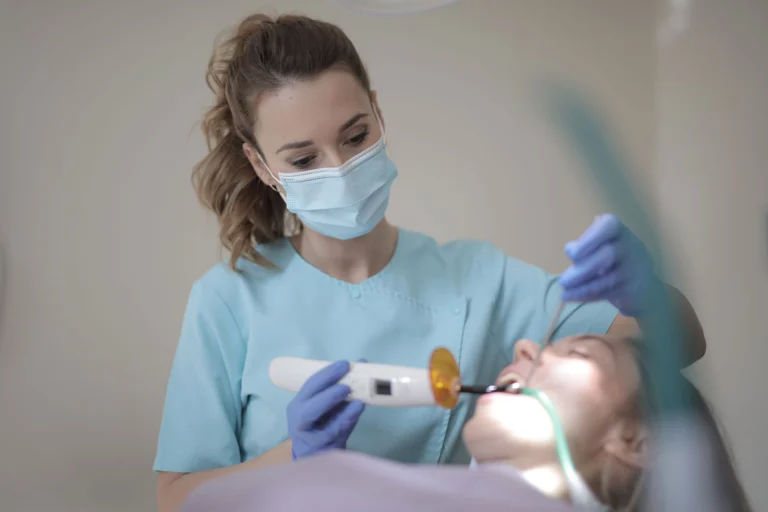
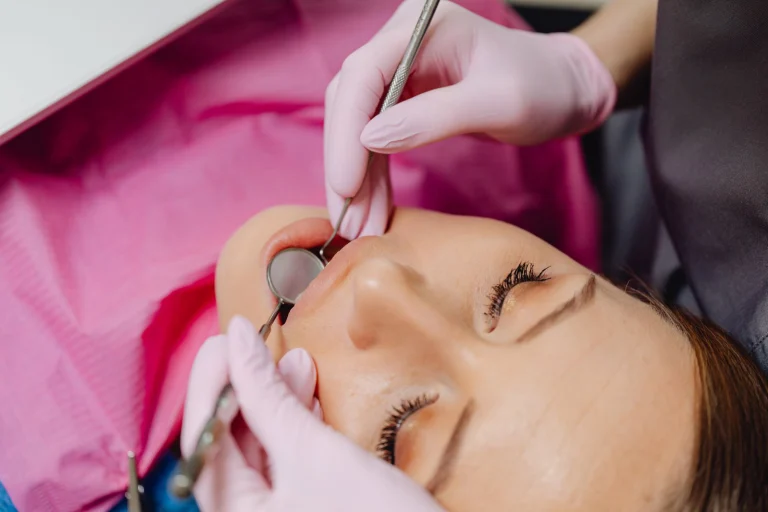
Crowns at the practice are usually completed in two appointments. At the first, the tooth is examined with digital X-rays and intraoral cameras, damaged structure and decay are removed, an impression is taken and you leave with a temporary crown. At the second, the permanent crown is checked for fit, bonded and polished. For a step-by-step look, including what to do with a temporary and how a crown fits around a root canal, read same-day crowns or two visits?
Making a crown last
- Brush and floss daily. The tooth under a crown can still decay at the edges.
- Keep regular cleanings and checkups so the edges can be checked.
- Don’t chew ice or use your teeth to open packages.
- If you grind your teeth, ask about a custom bite guard.
- If a crown ever feels loose or comes off, keep it and call the office. See what to do when a filling or crown falls out.
Cost, insurance and financing
Every case is different, so your fee is set after Dr. Haywood examines the tooth. The practice is out of network with all dental insurance companies: you pay at the time of your visit, and the office files the claim on your behalf so your plan can reimburse you for what it covers. Health savings and flex plans are welcome, and financing is available through CareCredit, with no-interest options up to 12 months, and Cherry, with plans from 3 to 24 months. See financing options.
Frequently asked questions
How do I know if I need a crown or a filling?
Crowns are for teeth that are extensively damaged or cracked, or that have had a root canal. When a filling, inlay or onlay can do the job, it comes first, because it keeps more of your natural tooth.
What is the best material for a dental crown?
It depends on the tooth, but for a natural look and a metal-free mouth, all-ceramic crowns are the practice’s specialty. Every crown is made from an impression of your own tooth and matched to your natural color.
Can a crown save a tooth that might need to be pulled?
Often, yes. A crown can save a tooth that would normally require extraction, so your natural smile lasts longer.
Does a crowned tooth need special care?
Care is mostly the same as for natural teeth: brushing, flossing and regular checkups. While you have a temporary crown, avoid sticky foods and pull floss out the side instead of popping it up.
Find out whether a crown is right for your tooth
The only way to know whether you are a candidate for a crown, or whether a more conservative repair will work, is an exam of the tooth. Request an appointment or call (410) 453-9399. The office of Dr. Steven W. Haywood, DDS is at 108 W Timonium Rd, Ste 200, Timonium, MD 21093. Learn more about dental crowns and the full range of restorative dentistry.
Ready to see your future smile?
Book an exam in Timonium to find out whether your tooth needs a crown.