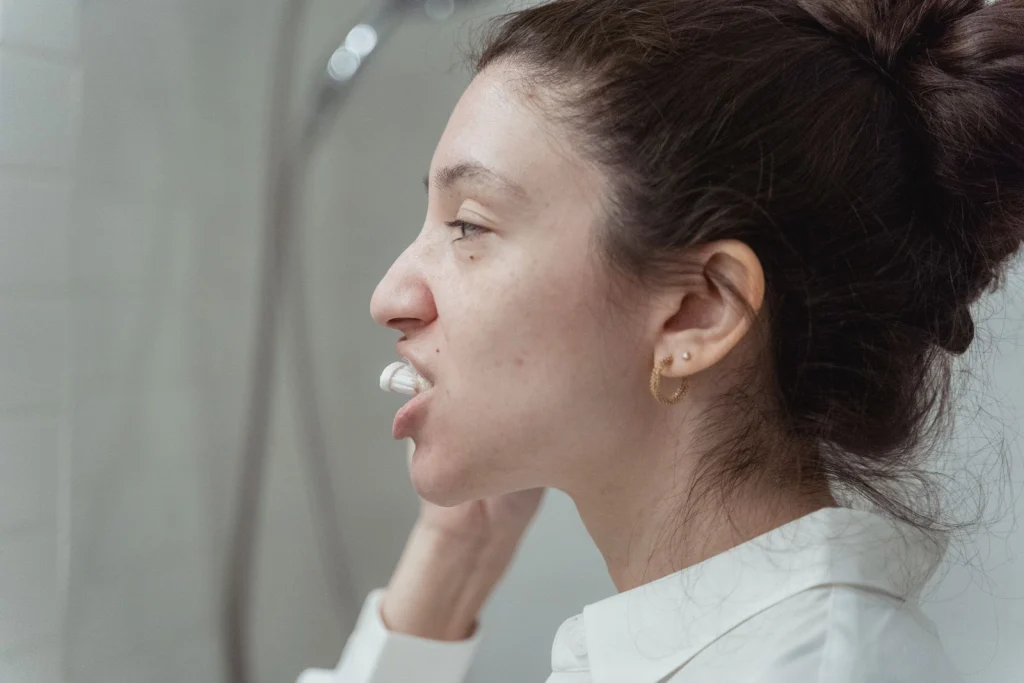
Most of the time, what your breath says is about your mouth: plaque, a coated tongue, dry mouth or gum disease. But breath can occasionally offer a clue about health elsewhere in the body. A fruity smell, an ammonia-like odor or sour breath that comes with heartburn has been associated with certain conditions, from blood sugar problems to reflux. A clue is not a diagnosis. Your breath can’t tell you what is wrong on its own, so the sensible approach is to rule out the mouth with a dental visit, notice any other symptoms, and talk to your doctor when something doesn’t add up.
This article from the Timonium office of Dr. Steven W. Haywood, DDS explains what different breath changes can be linked to, when to see a dentist and when to see a doctor, and how a dental exam helps sort one from the other. For the everyday causes of bad breath and how to fix them, read bad breath causes and halitosis treatment.
Start with the mouth
Before looking further, it helps to know that the mouth is by far the most common source of breath odor. Bacteria break down food particles and dead cells and release smelly compounds. They collect in plaque along the gumline, on the back of the tongue, between the teeth and in deep gum pockets. Other oral sources include:
- Plaque and food left between the teeth
- A coated tongue
- Gum disease and infection
- Decay, broken fillings or an infected tooth
- Dentures or appliances that aren’t cleaned well
- Dry mouth, which lets bacteria build up
Because these are so common, a dental check is usually the right first step when breath changes and doesn’t improve with good brushing and cleaning between your teeth.
What your breath may say about your gums
Bad breath or a bad taste that keeps coming back is one of the signs of gum infection. Bleeding or receding gums, bad breath and deep pockets in the gums all point to infection that is worth treating. Gum disease is also more than a mouth problem: the health of your gums has been linked to serious health risks such as diabetes and cardiac disease.
At the practice, oral DNA testing can identify which bacteria are behind gum disease, and experienced hygienists lead non-surgical care such as scaling and root planing. See gum disease treatment in Timonium and read danger zone: 5 warning signs of gum disease.
Breath changes that can point beyond the mouth
The descriptions below are general health information, not a way to diagnose yourself. Each of these smells can have more than one cause, and many have harmless explanations.
A sweet or fruity smell
Fruity or nail-polish-like breath can happen when the body burns fat for fuel and produces ketones. That can occur with fasting or a very low-carbohydrate diet. It has also been associated with poorly controlled diabetes. If fruity breath comes with intense thirst, frequent urination, nausea, vomiting, confusion or fast breathing, seek medical care right away. If you have diabetes, read a dentist for diabetics in Timonium.
An ammonia or urine-like smell
Breath that smells like ammonia has been associated with kidney problems, because the kidneys help clear waste from the blood. It is not a common sign on its own, and it usually appears alongside other symptoms, such as fatigue or swelling. Mention it to your doctor if you notice it.
A musty or sweet, stale smell
An unusual musty odor has been associated with serious liver disease. This is rare and typically accompanied by other clear signs of illness, such as yellowing of the skin or eyes. Those symptoms need prompt medical attention.
Sour breath with heartburn
Acid reflux can bring stomach contents up toward the throat, leaving a sour taste and odor. If sour breath comes with heartburn, a burning throat or frequent throat clearing, talk to your doctor. Acid that reaches the mouth can also wear tooth enamel, so let the dental team know too. Read acidic foods and your tooth enamel.
Breath linked to the nose, sinuses and throat
Post-nasal drip, sinus infections and small, hardened deposits in the tonsils can all cause unpleasant breath that brushing doesn’t fix. A cold or allergy season can make breath worse for a while. If it lingers, your doctor can check your nose and throat.
Morning breath and dry mouth
Saliva flow drops during sleep, so almost everyone wakes up with some morning breath. Breath that stays bad all day can be a sign of ongoing dry mouth, which is often caused by medications, mouth breathing or not drinking enough water. Dry mouth also raises the risk of tooth decay. Read why dry mouth is dangerous for your teeth.
Smoke and tobacco breath
Smoking and vaping leave their own odor, dry the mouth and are hard on the gums. Tobacco use is also implicated in oral cancer. Read how smoking and vaping affect your teeth and gums.
When to see a dentist and when to see a doctor
See a dentist first if you notice
- Bad breath or a bad taste that doesn’t improve with brushing and cleaning between your teeth
- Bleeding, swollen or receding gums
- A toothache, a broken filling or a tooth that is sensitive to biting
- Pus around the gumline or a bump on the gum
- Loose teeth or a bite that feels different
- A sore, patch or lump in your mouth that doesn’t heal
See your doctor if you notice
- Fruity breath with thirst, frequent urination or unexplained weight loss
- Ammonia-like breath with fatigue or swelling
- Sour breath with regular heartburn
- Breath odor that persists after a dental exam finds your mouth healthy
Get urgent medical care if you notice
- Fruity breath with vomiting, confusion or rapid breathing
- Unusual breath with yellowing of the skin or eyes
- Swelling in the face or neck with fever or trouble swallowing or breathing
How to check your own breath
It is hard to judge your own breath, because your nose gets used to it. A few simple ways to get a better sense:
- Ask someone you trust for an honest opinion.
- Check the back of your tongue. A white or yellow coating often means bacteria are building up there.
- Smell your floss after cleaning between your back teeth. An odor there points to trapped plaque or food.
- Notice patterns. Is it worse in the morning, after certain foods, during a cold, or all the time?
Write down what you notice and bring it to your appointment. Patterns help the dentist and your doctor narrow down the cause.
How a dental visit helps sort it out
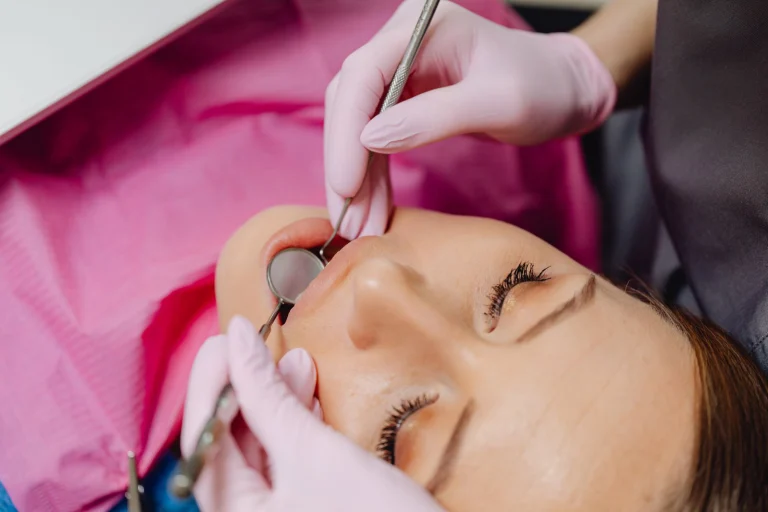
Your first appointment starts with a conversation about your dental concerns, health history and medications. Dr. Haywood carefully evaluates your teeth and gums and takes X-rays and photos. Digital X-rays help spot decay, infection and abnormalities early, and intraoral cameras let the team zoom in on each section of your mouth. An oral cancer screening is part of the check-up. Cleaning appointments last a full 60 minutes, which gives the hygienist time to remove plaque and tartar thoroughly and check your gums.
If your mouth is healthy and the odor continues, that is useful information to take to your doctor. See general dentistry in Timonium and oral cancer screening.
Paying for your visit
The practice is out of network with all dental insurance providers. You pay at the time of your visit, and the office files the claim on your behalf so your plan can reimburse you for whatever it covers. Health savings and flex plans are welcome, and financing is available through CareCredit, with no-interest options for up to 12 months, and Cherry, with plans from 3 to 24 months. See financing options.
Frequently asked questions
Can bad breath be a sign of something serious?
Occasionally. Most bad breath comes from the mouth, but persistent or unusual breath odor can sometimes be linked to gum infection or to conditions elsewhere in the body. If a dental exam doesn’t find a cause, talk to your doctor.
Why does my breath smell fruity?
Fruity breath can happen with fasting or a very low-carbohydrate diet, and it has also been associated with poorly controlled diabetes. If it comes with thirst, frequent urination, vomiting or confusion, seek medical care promptly.
Can a dentist tell if you have diabetes?
A dentist can’t diagnose diabetes. Gum problems, dry mouth or slow healing may prompt a suggestion to check with your doctor, and if you already have diabetes, sharing that helps the team plan your care.
Can stomach problems cause bad breath?
Acid reflux can cause sour breath and a bitter taste. Most bad breath, though, starts in the mouth, so a dental check is a good first step.
Get your breath and gums checked in Timonium
A dental exam is the quickest way to find out whether your breath is telling you something about your mouth. Request an appointment or call (410) 453-9399. The office of Dr. Steven W. Haywood, DDS is at 108 W Timonium Rd, Ste 200, Timonium, MD 21093, serving Timonium, Lutherville, Cockeysville, Towson and Hunt Valley. New patients are always welcome.
Ready to see your future smile?
Rule out your mouth first. Book a dental exam in Timonium.