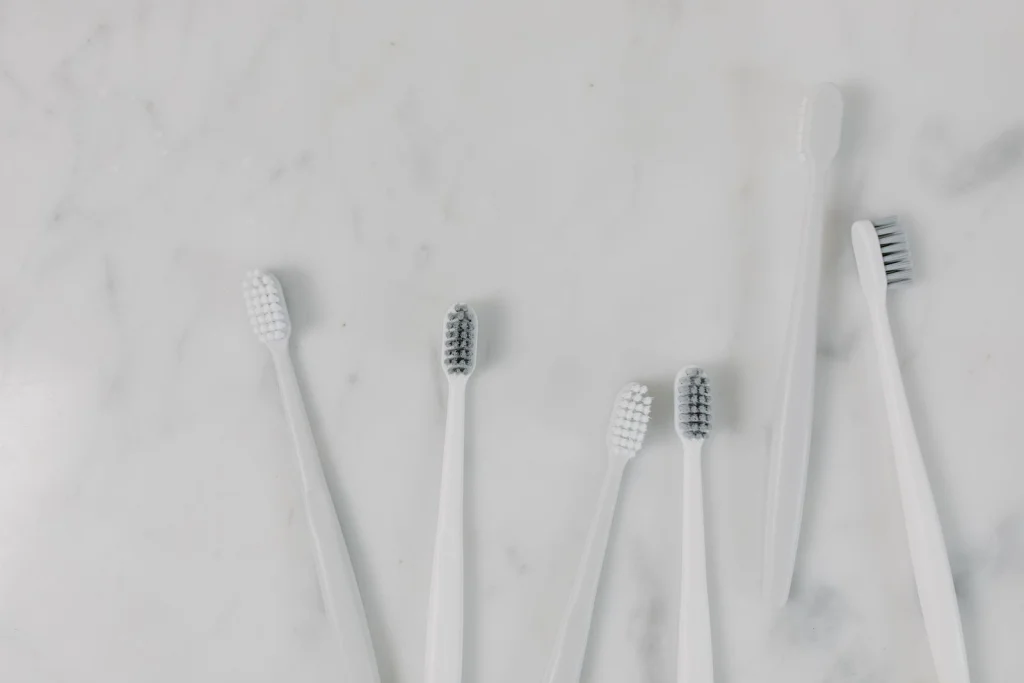
The best manual toothbrush for most people has three things: soft bristles, a head small enough to reach behind your back molars, and a handle you can hold comfortably at an angle to your gumline. Those features matter far more than the brand, the price or the color. A plain, soft, well-sized brush used gently for about two minutes, twice a day, cleans teeth well.
The office of Dr. Steven W. Haywood, DDS in Timonium doesn’t recommend particular toothbrush brands. Instead, this guide walks through what to look for, feature by feature, how to match a brush to your own mouth, and how to use it so it does its job.
Is a manual toothbrush still a good choice?
Yes. An electric toothbrush can make good brushing easier for some people, especially anyone with limited hand movement, braces or a habit of rushing. But a manual brush cleans well when your technique is good. It is also simple, quiet, easy to travel with and inexpensive to replace often. For a full comparison, read is an electric toothbrush better than manual?
What makes the best manual toothbrush: bristles
Choose soft bristles
Soft bristles flex along the gumline and slip slightly beneath it without scraping. Medium and hard bristles can feel like they clean more, but combined with heavy pressure they can wear enamel and irritate or push back the gums over time. If you have sensitive teeth or gums that have already receded, an extra-soft brush is worth trying.
Harder isn’t cleaner. Plaque is soft and comes away with gentle, careful strokes. Read smart brushing beats aggressive brushing for the signs you may be pressing too hard.
Bristle patterns
Toothbrush packaging describes many bristle designs. None is right for everyone, so choose the one that lets you reach your gumline and back teeth comfortably:
- Flat trim. Bristles cut to one even length. Simple and easy to control.
- Rippled or wavy. Bristles of different heights, meant to follow the curves of the teeth.
- Angled or crisscross. Bristle tufts set at angles, designed to reach between teeth and along the gumline.
- Tapered or extra-fine tips. Thin bristle ends that some people find gentler along sensitive gums.
Check the bristle ends
Rounded bristle ends are gentler on the gums than sharp cut ends. Most soft brushes have them, but it is worth checking the package.
Head size and shape
A brush head that is too big is one of the most common reasons back teeth get missed. The head should be small enough to fit comfortably behind your last molars on the top and bottom, including the far side of each back tooth.
- A compact head suits smaller mouths, crowded teeth and anyone who gags easily.
- A tapered or narrow tip can help reach behind the last molars and around crooked teeth.
- A slightly longer head covers more tooth surface at once, which some people with larger mouths prefer.
If you are unsure, pick a smaller head. You can always take a few more strokes; you can’t make a large head fit where there is no room.
Handle and grip
The handle decides how well you can control the angle and pressure of each stroke.
- Non-slip grip. A rubberized section helps with wet hands.
- Thicker handle. Easier to hold if you have arthritis or trouble gripping a thin handle. An electric brush is another option in that case.
- Angled neck. A slight bend can make it easier to reach back teeth and the inner surfaces.
- Flexible neck. Some handles give a little under pressure, which can remind heavy brushers to ease off.
Handle materials
Handles come in plastic and in plant-based materials such as bamboo. Both can work well; it is mostly a personal choice. If the materials in your everyday products matter to you, it may help to know that the practice chooses dental materials with the whole body in mind, avoiding mercury, fluoride, nickel and bisphenol plastics. Learn about holistic dentistry at the practice.
Extras you can take or leave
- Tongue cleaner on the back of the head. Handy, though brushing your tongue with the bristles or using a separate scraper works too.
- Rubber tips or gum stimulators. Optional. Gentle brushing along the gumline matters more.
- Color-fade bristles. A reminder to replace the brush, though worn or splayed bristles tell you the same thing.
- Independent seals. Some toothbrushes carry the American Dental Association’s Seal of Acceptance, which shows the product has been evaluated for safety and effectiveness.
Matching a brush to your mouth
Dental implants and bridges
Implants are brushed and flossed much like natural teeth, but with extra attention. Interdental brushes, end-tuft brushes and careful use of an electric or manual toothbrush are recommended. Bridges need special floss threaders or other aids to reach and clean every area properly.
Clear aligners
With Invisalign, you take the aligners out to eat, drink, brush and floss, so you can brush normally with any soft brush. Brushing before putting aligners back in keeps food from being held against your teeth.
Sensitive teeth or receding gums
Choose an extra-soft brush and a light touch. If sensitivity is new or getting worse, have it checked. Read about sensitive teeth causes and treatment.
Children
Children need a child-sized head and a handle they can hold, with an adult helping until they brush well on their own. Letting a child pick the color can help. Read when brushing is a battle.
How to use a manual toothbrush well
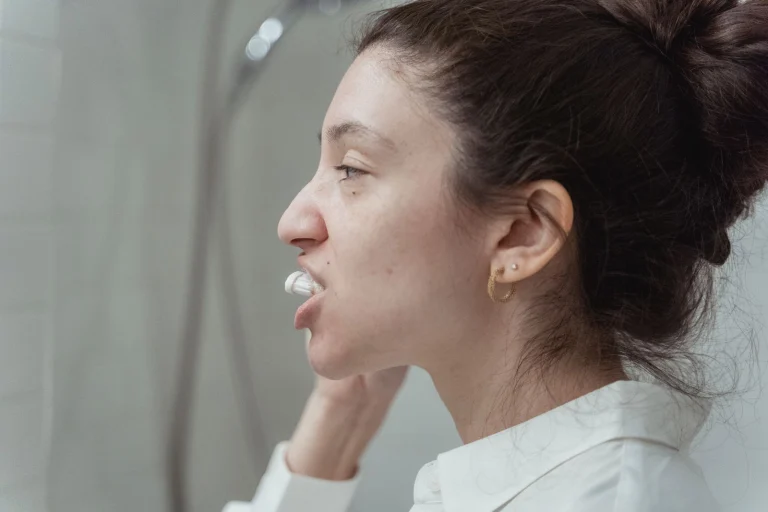
- Hold the brush at an angle, with the bristles pointed toward the gumline.
- Use short, gentle strokes, a tooth or two at a time. Let the bristles do the work.
- Follow the same path every time: outer, inner and chewing surfaces, top and bottom.
- Take about two minutes, twice a day.
- Brush your tongue, working from back to front.
- Rinse the brush, shake it out and store it upright to air dry. Don’t share it.
For the spots most people miss, read 3 tips to make brushing count. Replace the brush when the bristles look worn or splayed; see how often should I replace my toothbrush?
What about toothpaste?
For anyone who prefers to avoid fluoride, the practice offers calcium rebuilding treatments to help strengthen enamel for patients of all ages. If you aren’t sure which toothpaste suits your teeth, bring it up at your visit. Read how fluoride works and fluoride-free options at home.
What no toothbrush can do
Even the best brush can’t clean between teeth, and it can’t remove tartar once plaque has hardened. Clean between your teeth every day with floss, floss picks or a water flosser. Cleaning appointments at the practice last a full 60 minutes, giving the hygienist time to remove plaque and tartar thoroughly and check your gums, and a professional cleaning every six months is recommended. Bleeding or tender gums are worth mentioning at that visit, since they can be a sign of gum disease.
Paying for your visit
The practice is out of network with all dental insurance providers. You pay at the time of your visit, and the office files the claim on your behalf so your plan can reimburse you for whatever it covers. Health savings and flex plans are welcome, and financing is available through CareCredit, with no-interest options for up to 12 months, and Cherry, with plans from 3 to 24 months. See financing options.
Frequently asked questions
What manual toothbrush do dentists recommend?
Look for soft bristles with rounded ends, a head small enough to reach your back molars and a handle you can control comfortably. The practice doesn’t recommend specific brands; the right brush is the one that fits your mouth and that you use gently every day.
Is a soft or medium toothbrush better?
For most people, soft. Soft bristles clean plaque well and are kinder to gums and enamel, especially if you tend to press hard.
Are expensive manual toothbrushes better?
Not necessarily. A basic soft brush with a well-sized head, replaced regularly, cleans as well as a pricier one. Spend on features that help your own mouth, such as a thicker grip or a compact head.
Should I switch to an electric toothbrush?
Either type cleans well when used gently and consistently. An electric brush can help if you have limited hand movement or tend to rush. Read electric vs. manual toothbrushes.
Get your brushing checked in Timonium
At your next cleaning, ask the team how your brushing looks and whether your brush suits your teeth and gums. Request an appointment or call (410) 453-9399. The office of Dr. Steven W. Haywood, DDS is at 108 W Timonium Rd, Ste 200, Timonium, MD 21093, serving Timonium, Towson, Hunt Valley, Lutherville and Cockeysville. Learn more about general dentistry and dental cleanings.
Ready to see your future smile?
Ask about your brushing at your next 60-minute cleaning in Timonium.