Dentistry is important because your teeth can’t repair serious damage on their own. A cut on your skin heals and a broken arm knits back together, but a cavity doesn’t fill itself in, worn enamel doesn’t grow back, and gum and bone that have been lost to infection don’t return by themselves. Most of this damage also starts without pain. Dentistry exists to find these problems early, stop them from spreading and rebuild what has been lost, which is the best reason of all to take your dental health seriously.
This article from the Timonium office of Dr. Steven W. Haywood, DDS explains why teeth are different from the rest of the body, what tends to happen when dental problems are left alone, and what dentistry can do that brushing and flossing at home can’t.
Why teeth are different from the rest of your body
Much of your body is built to heal. Skin replaces itself, muscles recover and bones rebuild after a break. Teeth work differently.
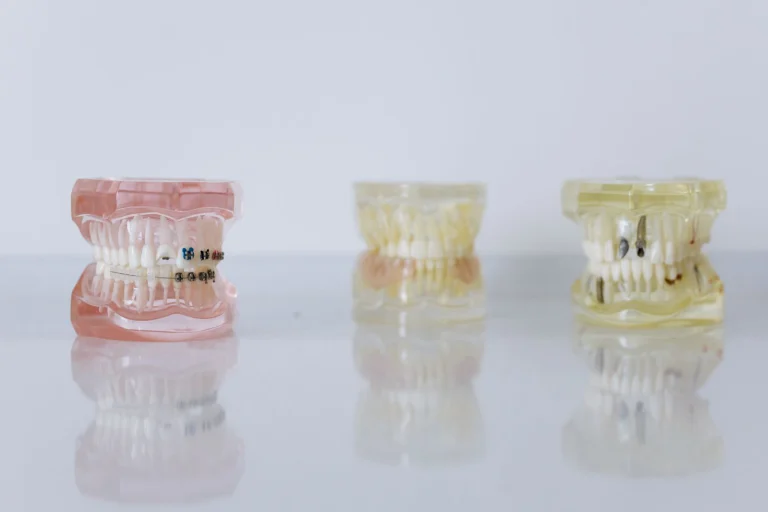
- Enamel, the hard outer layer of a tooth, has no living cells. Once it is worn, chipped or eaten away by decay, your body can’t make more of it.
- Dentin, the layer under the enamel, is softer. Decay usually spreads faster once it reaches this layer.
- The pulp at the center of the tooth holds the nerve and blood supply. When bacteria reach it, the tooth can become infected and painful.
- Gums and bone hold each tooth in place. Gum disease can destroy this support, and what is lost doesn’t simply grow back when the infection is treated.
There is one important exception. Very early weak spots in enamel, before a true cavity forms, can sometimes be strengthened. That is why the practice offers non-fluoride calcium rebuilding treatments for patients of all ages, along with xylitol mints and lollipops that help reduce decay risk. But once a cavity has formed a hole in the tooth, only dental treatment can repair it.
What happens when dental problems are left alone
Dental problems rarely stay the same size. Because teeth can’t heal, most issues move in one direction until someone treats them.
A small cavity keeps growing
Decay caught early usually needs only a small filling. Left alone, it can spread through the enamel into the dentin and toward the nerve, and a tooth that once needed a simple filling may later need a crown or a root canal. Read why it’s better to prevent a cavity than fill one.
Infection can reach the inside of the tooth
When bacteria reach the pulp, the tooth can ache, become sensitive to hot and cold, or form an abscess. An infection like this won’t clear up by itself. Read oral infection: signs, causes and when to call.
Gum disease quietly removes support
Periodontal disease is the leading cause of tooth loss in adults, and it worsens as it progresses through its stages. Bleeding or receding gums, bad breath and deep pockets in the gums are signs of infection. The early stages can be controlled and even reversed, but once gum disease has advanced it can be managed and controlled rather than completely cured.
Cracks and wear add up
Grinding and clenching slowly wear down and crack enamel, often without you noticing. A small crack can grow, and worn teeth can change how your bite fits together. Untreated grinding wear can be very costly to repair later.
Why dental problems often don’t hurt until late
If teeth hurt the moment something went wrong, far more people would take their dental health seriously. The trouble is that early decay, early gum disease and slow wear usually cause no pain at all. By the time a tooth aches, the problem has often reached the nerve or the infection has spread.
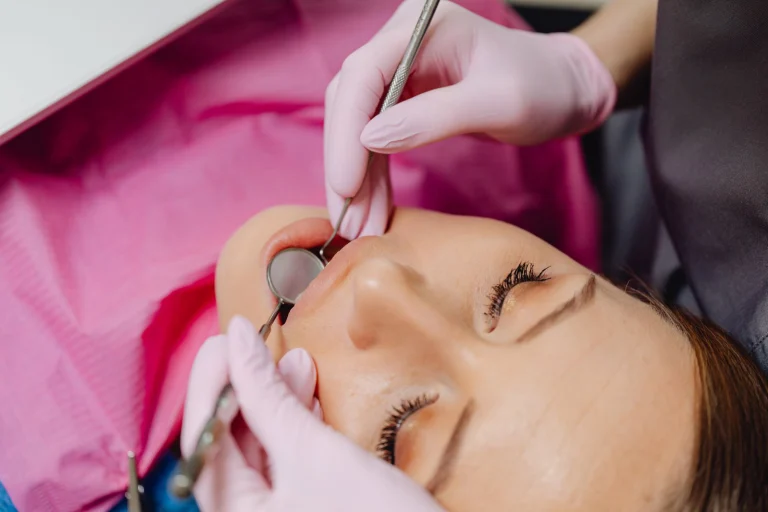
That is why “nothing hurts” is not the same as “nothing is wrong.” Regular exams are designed to find problems in the quiet stage, when treatment is smaller, simpler and more comfortable. Read don’t put off your dental exam.
Reasons to take your dental health seriously
Healthy teeth and gums affect far more than your smile. Some of the most practical reasons to look after them:
- You only get one set of adult teeth. Every repair replaces something that can’t regrow, so protecting natural tooth structure matters.
- Smaller problems mean smaller treatment. A filling is simpler than a crown, and a crown is simpler than replacing a missing tooth.
- Comfort. Treating problems early helps you avoid toothaches, sensitivity and dental emergencies.
- Eating and speaking. Healthy teeth let you chew a full range of foods and speak clearly.
- Your overall health. The health of your gums has been linked to serious health risks such as diabetes and cardiac disease. Ask about the connection between your mouth and the rest of your body at your visit.
- Early detection of oral cancer. Oral cancer is a serious, life-threatening condition, and early diagnosis increases the likelihood of more successful treatment.
For more on how dental health shapes daily life, read the value of dental health in everyday life.
Why is dentistry important? What it does that home care can’t
Brushing and flossing are the foundation of a healthy mouth, but they can’t do everything. Dentistry fills the gaps.
Finding what you can’t see
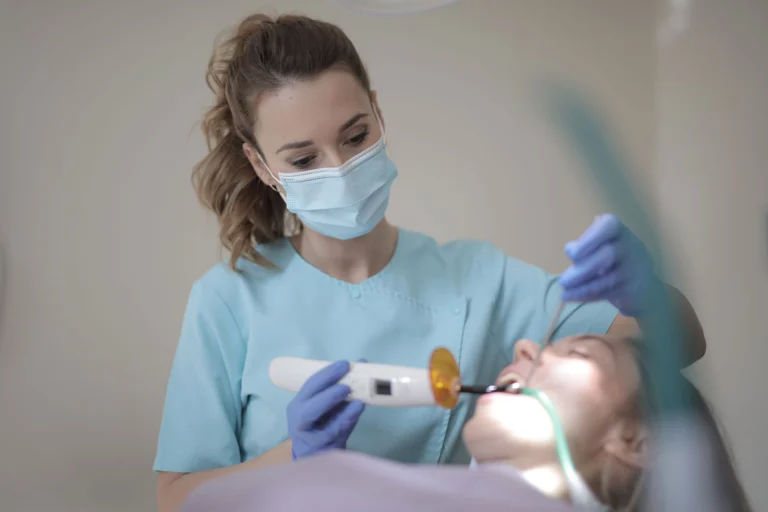
At the practice, digital X-rays appear on screen right away and use less radiation than standard dental X-rays. DIAGNOdent, a laser pen, can detect decay at its earliest stages, sometimes before it shows on an X-ray, and intraoral cameras zoom in so you can see what Dr. Haywood sees. See dental technology in Timonium.
Removing tartar and treating gums
Once plaque hardens into tartar, a toothbrush can’t remove it. Cleaning appointments at the practice last a full 60 minutes, and a professional cleaning every six months is recommended. If gum disease is found, experienced hygienists take the lead with non-surgical care such as scaling and root planing, and oral DNA testing identifies which bacteria are present. See dental cleanings and preventive care and gum disease treatment.
Screening for oral cancer
An oral cancer screening is part of your regular check-up. The office uses ViziLite, which helps make abnormal cells easier to see, and recommends that all patients over eighteen be screened every year. See oral cancer screening.
Repairing and protecting teeth
When a tooth is damaged, dentistry rebuilds it. As a mercury-free practice, fillings are tooth-colored composite that bonds to the tooth. Comfortable, clear bite guards custom-made for you help protect teeth from grinding wear, and jaw pain or frequent headaches can be evaluated for a TMJ disorder.
Taking it seriously doesn’t have to mean dreading it
For many people, the hardest part of taking dental health seriously is walking through the door. The office is spa-like, with paraffin wax hand treatments and aromatherapy. Laughing gas is offered as a complimentary service, and oral sedation is available. See sedation dentistry.
If it has been years since your last visit, you won’t be the first. Read neglected teeth: what can still be fixed.
Paying for your care
The practice is out of network with all dental insurance providers. You pay at the time of your visit, and the office files the claim on your behalf so your plan can reimburse you for whatever it covers. Health savings and flex plans are welcome, and financing is available through CareCredit, with no-interest options for up to 12 months, and Cherry, with plans from 3 to 24 months. See financing options.
Frequently asked questions
Why is dentistry important?
Because teeth can’t repair most damage on their own. Dentistry finds decay, gum disease and other problems early, often before they hurt, and repairs or controls them before they spread. It also includes screenings, such as oral cancer screening, that you can’t do for yourself.
Can a cavity heal on its own?
A cavity that has formed a hole in the tooth can’t heal. Very early weak spots in enamel can sometimes be strengthened before they become a cavity, which is one reason regular exams and preventive treatments such as calcium rebuilding matter.
Do receding gums grow back?
Gum tissue and bone lost to gum disease don’t grow back on their own. Treatment focuses on stopping the infection and protecting the support that remains, so the sooner gum problems are found, the more there is to protect.
Is it too late to start taking my dental health seriously?
No. Whatever the state of your teeth, an exam shows where things stand and what can be done. Treatment can be paced, and your plan is built around your needs, your comfort and your budget.
Protect your teeth with a visit in Timonium
The best time to deal with a dental problem is before it has a chance to grow. A check-up and cleaning show you exactly where your teeth and gums stand. Request an appointment or call (410) 453-9399. The office of Dr. Steven W. Haywood, DDS is at 108 W Timonium Rd, Ste 200, Timonium, MD 21093, serving Timonium, Lutherville, Cockeysville, Towson and Hunt Valley. New patients are always welcome. Learn more about general dentistry in Timonium.
Ready to see your future smile?
Find small dental problems before they grow. Book a check-up in Timonium.