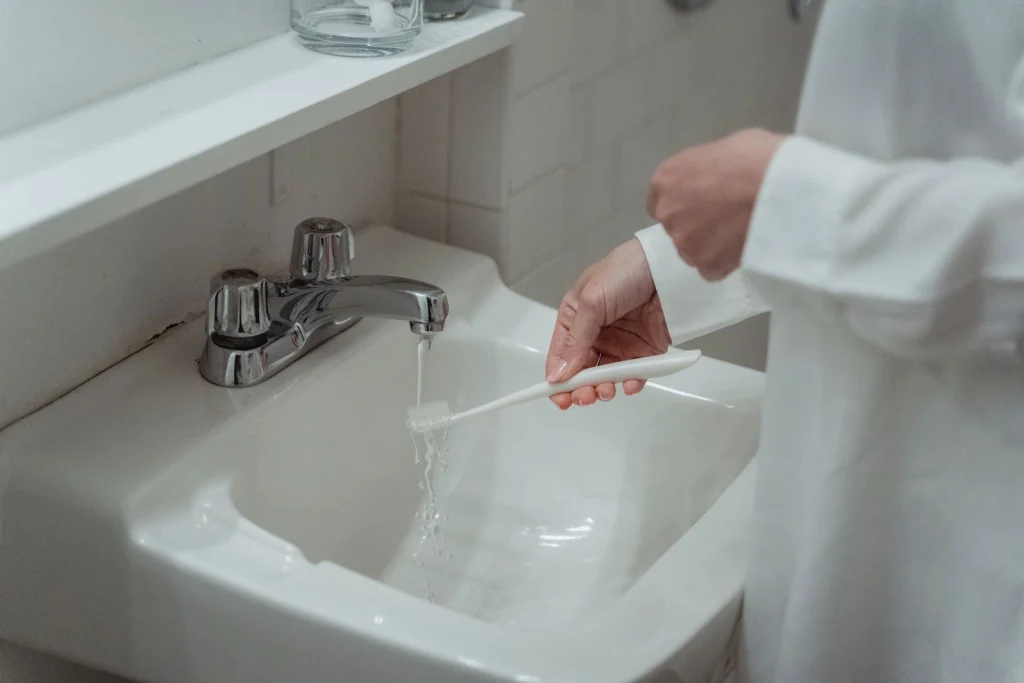
Mouthwash can be an optional extra for some children, but it is never a replacement for brushing, cleaning between the teeth and regular dental visits. A rinse only makes sense once a child can reliably swish and spit without swallowing, and it should be used with an adult nearby, in the amount the label directs, and stored out of reach. Many parents are better off putting their energy into a solid brushing routine and asking the dentist whether a rinse would add anything for their child.
This guide from the Timonium office of Dr. Steven W. Haywood, DDS explains what oral rinses can and can’t do for kids, the safety questions parents should think about, the kinds of rinses on the shelf, and simpler ways to protect children’s teeth.
What an oral rinse can and can’t do for kids
A rinse can leave the mouth feeling fresh and help wash away loose bits of food. Some rinses are made with ingredients meant to support enamel or reduce bacteria. That’s where the benefits stop.
What a rinse can’t do is remove plaque. Plaque is a sticky film that clings to teeth, and it needs to be physically brushed and wiped away. Swishing liquid over it doesn’t scrub it off. A child who rinses instead of brushing is still leaving plaque on their teeth, and a minty rinse can make a mouth feel clean when it isn’t.
Is mouthwash safe for children?
Swallowing
The main concern for young children is swallowing. Rinses aren’t meant to be swallowed, and small children often can’t control liquid in their mouths well enough to spit it all out. Wait until your child can consistently swish water and spit it into the sink before trying any rinse.
Alcohol
Some mouthwashes contain alcohol. For children, parents generally choose alcohol-free rinses, and adult mouthwash should be kept away from kids. Alcohol can also feel drying or sting sensitive mouths.
Strong flavors
Intense mint or a burning feeling can put children off. A milder rinse, if you use one at all, is more likely to be tolerated.
Storage
Keep all mouthwash, including children’s rinses, in a high cabinet with the cap closed. Brightly colored, sweet-smelling bottles can look like a drink to a small child. If a child swallows more than a small amount, contact Poison Control or your child’s doctor right away.
Types of rinses parents see on the shelf
Breath-freshening rinses
These mainly freshen breath and leave a pleasant taste. They don’t treat the cause of bad breath, which in children can include plaque on the teeth and tongue, a cavity or mouth breathing. Read bad breath causes and halitosis treatment.
Fluoride rinses
Some rinses contain fluoride, which is intended to strengthen enamel. For anyone who prefers to avoid fluoride, the practice offers calcium rebuilding treatments instead to help strengthen enamel for patients of all ages. If you are deciding whether to use a fluoride rinse for your child, talk it over with the team at your visit.
Prescription rinses
Occasionally a dentist or doctor prescribes a rinse for a specific problem. Use these only for the person they were prescribed for and exactly as directed.
“Natural” rinses
“Natural” isn’t a regulated term. Read the ingredient list, check for alcohol and look for whether the product is intended for children. The same questions apply to your family’s other oral care products. Read products to help your oral health at home.
When a rinse might help a child
- Braces or clear aligners. Food collects easily around orthodontic hardware, and a rinse after brushing can help loosen what’s left. It is an add-on, not a shortcut. See Invisalign Teen.
- A sore spot or lost tooth. Rinsing gently with warm water, or warm salt water for older children who can spit, is commonly used to keep a sore area clean.
- A child who likes the routine. For some kids, a rinse becomes a fun final step that keeps them interested in brushing.
If your child simply won’t brush, a rinse isn’t the answer. Read when brushing is a battle: tips for parents.
How to use a rinse safely
- Ask the dentist whether a rinse makes sense for your child.
- Choose an alcohol-free product labeled for children.
- Measure the amount the label directs. Don’t let your child pour it.
- Have your child swish gently, then spit everything into the sink.
- Stay nearby every time.
- Put the bottle away, out of reach, right after use.
- Follow the label about eating or drinking afterward.
Signs a rinse is covering up a problem
If your child needs a rinse to mask bad breath, has gums that bleed when brushing, complains of tooth pain or has white chalky or brown spots on the teeth, those are reasons for a dental visit, not a stronger mouthwash. Read are childhood cavities inevitable?
Better protection than any rinse
- Brushing, with help. Let your child brush, then check and finish the hard-to-reach spots.
- Cleaning between teeth once teeth touch. Read how to use a floss pick the right way.
- Water after snacks and sweets kept to mealtimes. Read how to limit sugar for kids.
- Xylitol mints and lollipops, which help reduce decay risk.
- Super sealants, which seal the pits and fissures of children’s teeth and come with a lifetime warranty.
- Calcium rebuilding treatments to help strengthen enamel without fluoride.
- A professional cleaning every six months, with digital X-rays and DIAGNOdent laser detection to find decay early. See dental cleanings and preventive care and general dentistry in Timonium.
Paying for your child’s care
The practice is out of network with all dental insurance providers. You pay at the time of your visit, and the office files the claim on your behalf so your plan can reimburse you for whatever it covers. Health savings and flex plans are welcome, and financing is available through CareCredit, with no-interest options for up to 12 months, and Cherry, with plans from 3 to 24 months. See financing options.
Frequently asked questions
When can my child start using mouthwash?
Not until your child can reliably swish and spit without swallowing, and only with an adult nearby. Even then, it’s optional. Ask the dentist whether it would help your child.
Should kids use a fluoride mouthwash?
Some rinses contain fluoride, which is intended to strengthen enamel. For anyone who prefers to avoid fluoride, the practice offers calcium rebuilding treatments instead, and the team can talk through the options for your child.
Can mouthwash replace brushing for kids?
No. A rinse doesn’t remove plaque. Brushing and cleaning between the teeth do.
My child swallowed some mouthwash. What should I do?
Check the label and contact Poison Control or your child’s doctor for advice, especially if the rinse contains alcohol or your child swallowed more than a small amount.
Protect your child’s smile in Timonium
If you’re weighing a mouthwash for your child, or just want a plan for stronger teeth, bring your questions to a checkup. Request an appointment or call (410) 453-9399. The office of Dr. Steven W. Haywood, DDS is at 108 W Timonium Rd, Ste 200, Timonium, MD 21093, serving families from Timonium, Lutherville, Cockeysville, Towson and Hunt Valley. A parent or legal guardian must be present during the consultation of a patient under the age of 18.
Ready to see your future smile?
Wondering if your child needs a rinse? Ask at a checkup in Timonium.