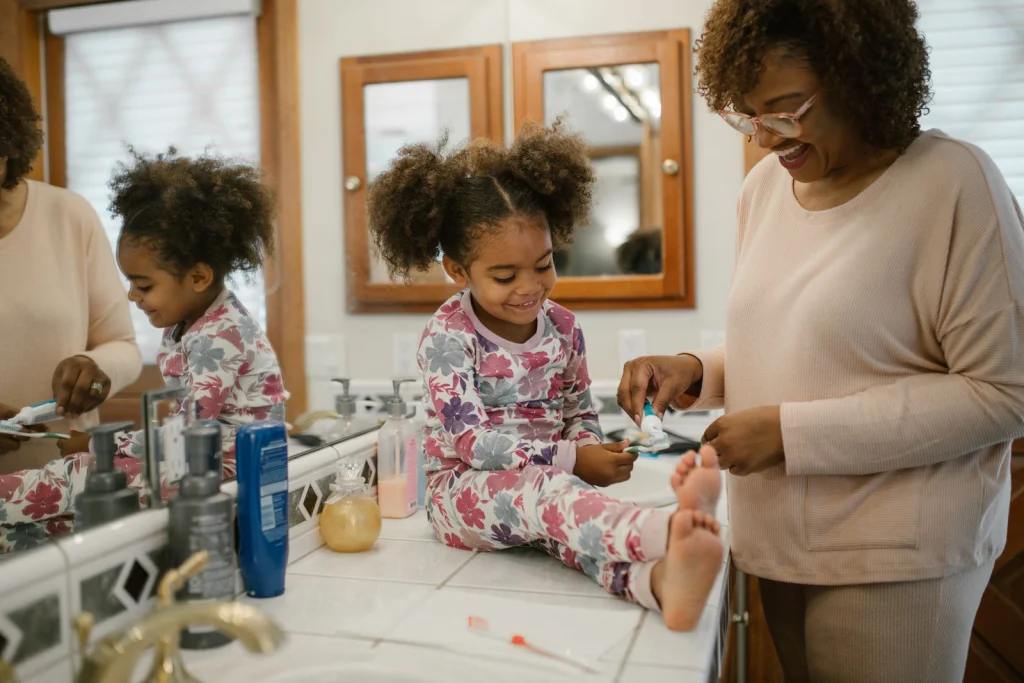
When your child cracks a tooth on the playground or wakes up with a swollen cheek, the first questions are who to call and how fast. Some children’s dental emergencies need the emergency room first, some need you to act within minutes, and many can be handled with a call to the dental office that same morning. This guide walks through the common ones, what to do at home before you reach help, and how the Timonium office of Dr. Steven W. Haywood, DDS handles urgent visits for children and families.
First: dental office or emergency room?
Go to the emergency room, or call 911, before you call any dentist if your child:
- hit their head and seems confused, unusually drowsy or is vomiting
- has bleeding from the mouth that does not slow with firm, steady pressure
- may have a broken jaw: the teeth no longer meet the way they did, or the jaw looks out of shape or is too painful to move
- has swelling that is spreading toward the eye or down the neck, or any trouble breathing or swallowing
Once your child is safe and stable, the teeth can be looked after. For a suspected broken jaw, a CT scan helps locate the fracture. For everything else on this page, start with a phone call to the dental office.
When to call Dr. Steven Haywood’s office
Call as soon as you can, and as early in the day as possible, so the team can care for your child around scheduled patients. Don’t wait until the end of the week, when offices may be closed. Dr. Haywood is available anytime for true dental emergencies for existing patients and their friends and families. New patients with emergency needs are seen on weekdays during normal business hours, based on the schedule’s availability.
Office hours are Monday 8:30 AM to 6:30 PM, Tuesday 8:30 AM to 5 PM, Wednesday 8:30 AM to 3:30 PM, Thursday 8:30 AM to 4:30 PM and Friday 8:30 AM to 4 PM. The office is closed on Saturday and Sunday. The number to call is (410) 453-9399.
A knocked-out tooth
This is the emergency where minutes matter most, so it helps to know the steps before it ever happens.
If it is a permanent tooth
- Find the tooth and pick it up by the crown, the white part you normally see, not by the root.
- Don’t scrub it. If it is dirty, rinse it briefly and leave any attached tissue alone.
- Put it in milk and call the office, or any dentist, immediately.
- Get seen right away. Time is of the essence: a knocked-out tooth can be saved if you are seen quickly enough. Knocked-out teeth can be treated for patients of any age, and cuts from the injury can be stitched.
If it is a baby tooth
A knocked-out baby tooth is usually not put back in, because pushing it into the socket can damage the permanent tooth developing underneath. Call the office anyway. A fall hard enough to knock out one tooth can also crack a neighboring tooth, injure the gums or push another tooth out of position, and those injuries need a look.
If only part of the tooth broke off
If only a piece of the tooth broke off, it probably can’t be reattached, but bring it with you in milk or a clean container.
A chipped or cracked tooth
Have your child rinse with warm water, and hold a cold compress against the cheek to ease swelling. Save any fragment you find. Then call, and describe what you see: a small chip on the edge, a larger break, a tooth that suddenly looks longer or shorter, or a tooth that hurts when your child bites.
Small chips are often cosmetic and can be repaired calmly. Dental bonding repairs a chip with tooth-colored composite resin that is sculpted onto the tooth and polished, usually in a single visit and typically with no anesthesia. Larger breaks may need more protection.
A break that shows pink or red inside the tooth, or causes sharp pain, should be seen quickly. Whether a cracked tooth can be saved depends on the crack: one along the gumline can normally be saved with restorative procedures, while a vertical crack that splits the entire root means the tooth can’t be saved.
Toothache and facial swelling
A toothache without swelling
Have your child rinse with warm water and gently floss around the sore tooth, because trapped food is a common cause of sudden pain. A cold compress on the outside of the cheek can help. Never put aspirin or any tablet directly against the gum, and ask your pediatrician or pharmacist which pain reliever and dose suits your child. A simple toothache is usually best handled at the next available appointment, but call and the team can talk you through your questions.
A toothache with swelling
Call the office right away. Tooth pain with a swollen face can mean a dental abscess, which usually starts when a tooth’s nerve becomes infected. The bacteria can spread through the jaw and cause swelling that can become life threatening. The pain may come and go with chewing or throb constantly. Antibiotics can slow the spread, but the tooth still needs emergency dental treatment. Read more about the signs of an oral infection.
Lip, tongue and cheek injuries
Children bite their tongues and split their lips often, and most of these injuries heal well. Clean the area gently with water, then press a clean cloth or gauze firmly against the cut and hold it there. A cold compress helps with swelling. If the bleeding will not stop, or the cut is deep or gaping, have it seen promptly; cuts from a dental injury can be stitched.
Something stuck between the teeth
Popcorn hulls, seeds and bits of hard candy are frequent culprits. Try gently flossing the area. Don’t use a pin, a toothpick or any sharp object, which can cut the gums and push the object deeper. If floss will not free it, call the office.
A lost filling or broken crown
A lost filling or a broken temporary or permanent crown is usually handled at the next available appointment. Keep the area clean, have your child chew on the other side, and call to book. If the tooth becomes very sensitive or painful in the meantime, mention that when you call.
Emergency pediatric dentist or family dentist?
Parents searching for an emergency pediatric dentist in Timonium, MD usually want two things: someone who will see their child promptly, and someone who will be patient with a scared child. Dr. Steven W. Haywood, DDS is a family dentist rather than a pediatric specialist. Family dentistry is part of the practice, and Dr. Haywood’s training includes a U.S. Air Force advanced residency with internships in oral surgery, orthodontics, endodontics, pediatric dentistry and oral facial prosthodontics.
Looking for a children’s dental clinic in Timonium?
The office is not a separate children’s dental clinic. It is one practice where parents, teenagers and children can be cared for, which many families find simpler: one office, one set of records and the same familiar faces at every visit. Family dentistry here includes checkups, cleanings and gum care, a comfortable micro-air filling process for people of all ages, and Invisalign Teen for teenagers. If you are not sure whether the practice suits your child’s age or needs, call and ask before you book.
A few things parents should know:
- A parent or legal guardian must be present during the consultation of a patient under the age of 18.
- Laughing gas is a safe and effective form of sedation for patients of all ages, and it is offered as a complimentary service. Learn about sedation dentistry.
- Fluoride is optional here and offers calcium rebuilding treatments to help strengthen enamel for patients of all ages.
- Payment is made at the time of service for emergency care. The practice is out of network with insurance companies, and the office files the claim so your plan can reimburse you for what it covers. HSA and flex plans are welcome, and financing is available through CareCredit, with no-interest options for up to 12 months, and Cherry, with plans from 3 to 24 months.
What happens at an emergency visit
The practice is prepared to get patients out of pain as soon as possible. If your child hasn’t seen a dentist recently, the standard of care requires the necessary X-rays and a thorough exam before treatment. Digital X-rays appear on screen right away, so you can see what the team sees, and they emit less radiation than standard dental X-rays. Dr. Haywood then explains all of the options based on what those findings show, and you decide together what happens next.
How to help prevent the next emergency
- Mouthguards for sports. Contact sports and activities with falls cause many knocked-out and chipped teeth. See our parent’s guide to sports mouthguards for kids.
- Cavities caught early. Many toothaches start as decay that could have been treated before it hurt. Super sealants completely seal the chewing surfaces of adult and children’s teeth, and the practice offers a lifetime warranty on them. Our guide to preventing cavities in children covers habits at home.
- Regular checkups. A professional cleaning every six months is recommended, and cleaning appointments at the practice last a full 60 minutes.
- Teeth are not tools. Teach children not to open packages or bottles with their teeth, and not to chew on pens or ice.
- Little ones on the move. For toddlers who are learning to walk and climb, see our toddler teeth Q&A.
And if a parent’s own smile needs attention while the family is in, the same office offers cosmetic dentistry in Timonium, from bonding a chipped front tooth to professional whitening.
Frequently asked questions
Should I put a knocked-out baby tooth back in?
Usually not, because it can harm the permanent tooth forming underneath. Keep the tooth, call the office and have your child’s mouth checked for other injuries.
What should I keep a knocked-out tooth in?
Milk. Put the tooth in milk and call the office, or any dentist, immediately. A knocked-out tooth can be saved if you are seen quickly enough.
Can my child be seen the same day?
Existing patients and their friends and families can reach Dr. Haywood anytime for true dental emergencies. New patients with emergency needs are seen on weekdays during normal business hours, based on availability, so call as early in the day as you can.
A tooth my child bumped is turning dark. Is that an emergency?
A tooth that darkens after a knock should be checked, especially if it is loose or tender or the gum nearby is swollen. Read more about why a single tooth changes color.
Does my child need a pediatric dentist?
Not necessarily. Family dentistry is part of the practice, but every child is different. Call the office, describe your child’s age and needs, and the team can tell you whether the practice is a good fit.
Call early if your child has a dental emergency
For an urgent problem, call (410) 453-9399 as early in the day as you can. For checkups and non-urgent visits, request an appointment online. The office of Dr. Steven W. Haywood, DDS is at 108 W Timonium Rd, Ste 200, Timonium, MD 21093, serving families from Timonium, Towson, Pikesville and Baltimore. Learn more about emergency dental care at the practice.
Ready to see your future smile?
Child with a dental emergency? Call the Timonium office early in the day.